


“What's really strikes me about ACA is the potential to shape the next generation of leaders on arms control and nuclear policy. This is something I witnessed firsthand as someone who was introduced to the field through ACA.”
The Right to Peaceful Use of Nuclear Energy: A Disputed Matter
March 2026
By Mark Goodman
The peaceful use of nuclear energy is a central element of nuclear nonproliferation policy and will feature prominently in the 2026 nuclear Nonproliferation Treaty (NPT) Review Conference April-May in New York. It
can be a unifying issue when it is recognized as a shared benefit that rests on shared principles, but it can become divisive when it leads to disputes over rights.

Developing countries often complain that their legal rights to the peaceful use of nuclear technology are being infringed by export controls applied by technology holders. Such disagreements raise questions about the nature of those rights and whether they have, in fact, been infringed and practical questions about how to bridge differences between nuclear suppliers and developing countries.
Peaceful Use of Nuclear Energy
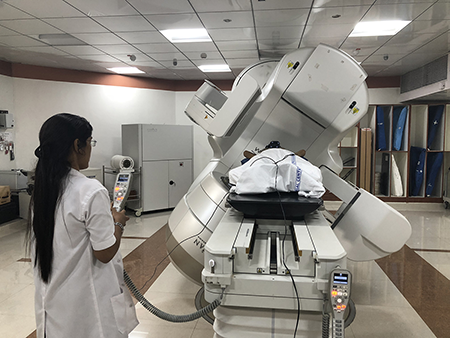
In the context of nuclear nonproliferation policy, peaceful use of nuclear energy refers not just to nuclear reactors that generate electricity, but also to the non-power applications of nuclear science and technology in areas such as radiation therapy for cancer and food preservation in agriculture. Unlike nuclear power, which is currently used in 31 countries, these non-power applications are nearly ubiquitous.
The NPT is the legal foundation of efforts to prevent the spread of nuclear weapons. It recognizes five states—China, France, Russia, the United Kingdom, and the United States—as nuclear-weapon states and commits all other parties to forsake nuclear weapons. As part of the bargain, the treaty recognizes the right of states to use nuclear energy for peaceful purposes, and its parties agree to facilitate exercise of that right.1
The treaty addresses this issue primarily in Article IV (see Figure 1), stating in its first paragraph that the NPT does not affect the right of states to develop and use nuclear energy. The treaty does not grant this right; it recognizes it as part of the broader sovereign right of states to use natural resources to serve their national interests. The NPT also does not expand this right; it says it must be exercised in conformity with the nonproliferation obligations in Articles I and II and subject to the international monitoring required by Article III. A nuclear program inconsistent with those articles—one that operates in secret or involves the production or transfer of nuclear weapons—is not protected by this right.
The second paragraph of Article IV expresses the right of states to engage in nuclear cooperation and commerce by participating in “the fullest possible exchange” of material, equipment, and information for peaceful use of nuclear energy. This provision does not just recognize rights; it also establishes specific obligations: that all NPT parties facilitate that “fullest possible exchange” and that states “in a position to do so” contribute to the further development of peaceful applications of nuclear technology “with due consideration for the needs of the developing areas of the world.” These two obligations provide concrete benefits for all NPT parties, recognizing the particular needs of developing countries.2
Figure 1: Article IV of the NPT 1. Nothing in this Treaty shall be interpreted as affecting the inalienable right of all the Parties to the Treaty to develop research, production and use of nuclear energy for peaceful purposes without discrimination and in conformity with Articles I and II of this Treaty. 2. All the Parties to the Treaty undertake to facilitate, and have the right to participate in, the fullest possible exchange of equipment, materials and scientific and technological information for the peaceful uses of nuclear energy. Parties to the Treaty in a position to do so shall also co-operate in contributing alone or together with other States or international organizations to the further development of the applications of nuclear energy for peaceful purposes, especially in the territories of non-nuclear-weapon States Party to the Treaty, with due consideration for the needs of the developing areas of the world. |
Article III, which provides for the International Atomic Energy Agency (IAEA) to apply safeguards to monitor the peaceful nuclear programs of non-nuclear-weapon-states, contains a related provision. It states that “safeguards … shall be implemented in a manner designed to comply with Article IV of this Treaty, and to avoid hampering the economic or technological development of the Parties or international co-operation in the field of peaceful nuclear activities.” Although IAEA safeguards should not impede peaceful nuclear programs, this provision does not limit the ability to impose penalties if a state fails to comply with its safeguards obligation, or if the IAEA cannot verify that its nuclear program is entirely peaceful.
Differing Interpretations
Since the NPT was negotiated in the 1960s, there have been disagreements over specific rights to use nuclear energy for peaceful purposes. The disputes center on what the rights in the NPT mean and, beyond what the NPT specifically provides, what rights states should have. Developing countries often complain that nuclear export controls,3 which reinforce the NPT but go beyond its requirements, infringe their rights, although there is little empirical evidence to support this.4
Some states have asserted not only the sovereign right to make decisions about their nuclear energy and fuel cycle programs, but also the obligation of other states to respect those decisions. Iran, in particular, claims that international sanctions imposed over its nuclear program and attacks on its nuclear facilities violate its rights under the NPT. When the nature of these rights is in dispute, it can clarify matters to focus on what the NPT requires, what it permits, and what it prohibits.
During the NPT negotiations and since, some states have sought explicit recognition of a right to all parts of the nuclear fuel cycle, including uranium enrichment and spent fuel reprocessing. Uranium enrichment can be used to produce nuclear reactor fuel as well as highly enriched uranium for weapons, while reprocessing of spent fuel can be used to produce plutonium for weapons. The NPT is silent on this issue. Although the treaty does not establish an explicit right to any specific nuclear technology,5 it generally permits enrichment and reprocessing if these technologies are not used to produce nuclear weapons.
The NPT negotiating record and the U.S. NPT ratification record both support this understanding. The United States told other states during the NPT negotiations that enriching uranium and stockpiling enriched uranium were not prohibited if the enrichment process and the enriched uranium product were placed under IAEA safeguards to verify that the process was not misused and the product was not diverted for weapons. The Lyndon Johnson administration told the U.S. Senate the same thing during NPT ratification hearings in 1968.6
Although there is a presumption that nuclear activities carried out under IAEA safeguards are peaceful, that presumption is not absolute. If a state violates IAEA safeguards, either by diverting nuclear material or by carrying out nuclear activities in secret, that presumption would no longer be justified. In 2003, for example, the IAEA confirmed allegations that Iran was pursuing nuclear activities it had not declared to the agency, and its Board of Governors subsequently found Iran in noncompliance with its safeguards obligations.7 The United States concluded that Iran’s undeclared nuclear program was intended to produce nuclear weapons,8 a violation of its NPT Article II obligation, and the IAEA later reported information on the possible military dimensions of Iran’s nuclear program.9 The Iranian case shows that the question of whether specific nuclear fuel cycle activities are permitted depends not on the rights expressed in Article IV but on the specific prohibitions and requirements in Articles I, II, and III.
Right of Access to Nuclear Technology
Developing countries also have asserted that third parties’ efforts to limit access to nuclear technology violate their right to develop all elements of the nuclear fuel cycle. They argue that the “fullest possible exchange” should entail giving states full access to nuclear fuel cycle technology. They object to restrictions on “sensitive” fuel cycle technologies, arguing that the NPT does not distinguish between “sensitive” and other nuclear technologies.
But Article IV does not spell out a right of access to any specific nuclear technology, nor does it impose an obligation on countries that hold such technology to provide it to others. The negotiating record shows that this lack of specificity was deliberate.10 Several countries proposed amendments that would have spelled out rights to fuel cycle technology and obligations to supply nuclear fuel, but those amendments were not adopted. The United States made clear that the undertaking to “facilitate the fullest possible exchange” of nuclear technology would not override existing laws, policies, or regulations, including intellectual property rights and export control policies, and was not intended to compel suppliers to provide nuclear material or technology.11
Over the years, developing countries have charged that some nuclear export controls and sanctions measures violate Article IV. They do not object to all export controls, as the NPT itself requires IAEA safeguards controls on exports of nuclear material and specialized nuclear equipment, a form of export control.12 The Nuclear Suppliers Group (NSG) has developed export control guidelines that go beyond what the NPT requires.13 The guidelines cover dual-use equipment and technology and impose stricter controls on sensitive nuclear technologies, including enrichment and reprocessing.
Although some countries object that these controls impede nuclear cooperation, most recognize that the NSG multilateral export control guidelines reinforce the NPT nonproliferation goals. Suppliers argue that export controls facilitate cooperation by building confidence that the fruits of that cooperation will not be misused or diverted to make weapons.14 The NPT does not bar states from imposing such controls or from entering into agreements that lay out the terms for nuclear cooperation between governments, as most NSG members do.
Sanctions have been used as a nonproliferation enforcement tool in cases of noncompliance. The UN Security Council imposed sanctions against Iraq, North Korea, and Iran in response to findings of noncompliance by the IAEA board. Those sanctions—based on provisions of the UN Charter giving the Security Council responsibility for maintaining international peace and security—imposed restrictions on nuclear activities and cooperation. The IAEA similarly suspended the rights and privileges of membership in cases of noncompliance. The UN and the IAEA predate the NPT, and the NPT did not affect their ability to impose those sanctions.
UN sanctions often begin with nuclear constraints but later expand to include broad economic measures designed to pressure a country to comply. States have also imposed sanctions that go beyond the UN requirements. Complaints about sanctions generally focus on their economic and humanitarian impact and their unilateral nature, rather than on the limits they place on nuclear cooperation.
Leading nuclear suppliers have sought to limit the spread of enrichment and reprocessing through export controls and also by providing incentives for states to rely on international markets for nuclear fuel. They argue that reliable supplies of enriched uranium, backed by formal supply assurance mechanisms, would enable states to avoid the cost and technical challenge of developing domestic enrichment capabilities.15
However, when U.S. President George W. Bush proposed in 2004 to provide reliable access to nuclear reactor fuel to countries that would renounce enrichment and reprocessing,16 some reacted with suspicion that this was an attempt to deprive them of their right to nuclear fuel cycle technology. Yet voluntary participation in fuel supply assurances can contribute to nonproliferation and can help resolve cases of noncompliance.17
Practical Impacts
The historical record shows steady expansion of international cooperation that helps NPT parties enjoy the benefits of peaceful uses of nuclear energy, science, and technology. Although it predates the NPT, the IAEA has been one of the main vehicles for developing peaceful nuclear energy applications and providing assistance to help NPT members use nuclear technology to meet their national development needs in energy, health, agriculture, industry, and resource management.
Since the NPT opened for signature in 1968, the IAEA’s annual expenditures for such assistance have risen steadily from $2.5 million in 1968 to $156 million in 2024. This increase is about 50 percent more than can be explained by increases in prices, population, and IAEA membership; it is also roughly 50 percent more than the increase in global GDP.
The NPT helped drive this growth. Donors have given additional funds to IAEA projects that assisted NPT parties as a tangible benefit of joining the treaty and a concrete demonstration of their commitment to the NPT bargain. At the NPT Review Conference in 2010, the United States and Japan helped launch the IAEA Peaceful Uses Initiative and other donors have since contributed.18
Successive IAEA directors-general have launched a series of flagship initiatives to meet development needs using nuclear technology. For example, the Rays of Hope initiative is expanding access to radiation therapy to treat cancer in low- and middle-income countries.19 Another example is the sterile insect technique, which uses radiation to sterilize male insects and suppress diseases that plague people and livestock, such as sleeping sickness in Africa and screwworm in the Americas.20
Most nuclear cooperation takes place through agreements between governments and contracts between companies. This type of cooperation spurred the expansion of nuclear power from just six countries in 1968 to over 30 countries today. In 2025, more than 30 countries set a goal of tripling nuclear power use by 2050 as a way to reduce greenhouse gas emissions and limit climate change.21 The use of nuclear research reactors for research, training, and the production of radioisotopes for medical and other uses has spread to all corners of the globe, and the use of radioisotopes and other radiation techniques is practically universal.
Debates over the scope and nature of rights to the use of nuclear energy for peaceful purposes tend to be both bitter and pointless. Some states will object to text that asserts a right of access to certain technologies, just as others will object to text calling for constraints on such access. Expressions of rights have no practical effect, and the only text that can gain consensus is one that quotes or refers to provisions of the NPT without elaboration.
Rather than debating rights in the abstract, the 2026 NPT Review Conference would do well to focus on practical actions that help further realize those rights. In the multilateral context, the record is quite strong. NPT review conferences have provided the impetus to make additional resources available to meet developing countries’ needs. The last treaty review cycle saw a new focus on ways to better align the application of nuclear technology cooperation with development needs and to mobilize international development assistance to make that technology more widely available.22
To reach consensus, the next review conference will need to navigate a few potential sticking points. Iran will likely assert that Israeli and U.S. attacks against Iranian nuclear facilities last June violated the NPT because they infringed upon Iran’s right to use nuclear energy for peaceful purposes. Many countries, but not all, consider attacks on nuclear facilities to violate the laws of war. The 2022 NPT Review Conference foundered because Russia blocked consensus over text critical of its full-scale invasion of Ukraine that year, including its attacks on and seizure of Ukrainian nuclear facilities. As with past review conferences, reaching consensus will depend on finding a formulation that treats this issue in a generic manner rather than insisting on text that explicitly criticizes any one of the participating countries.
Another delicate issue is how to address the uses of nuclear energy and nuclear technology for sustainable development in light of the U.S. positions on those issues. The United States sought to delete or limit references to the UN Sustainable Development Goals and climate change in the resolutions adopted by the IAEA General Conference in 2025. There is no path to consensus by isolating the United States, so negotiators will need flexibility to replace specific terms with more general references to international development assistance and national development needs, and to replace endorsement of disputed points with factual statements.
The upcoming review conference will face many issues on which views are divided, but there are time-tested ways to bridge those divisions if the parties have the political will to find them.
ENDNOTES
1. Mark Goodman, “Common misconceptions about the NPT: A practitioner’s guide,” Bulletin of the Atomic Scientists, August 14, 2025.
2. The preamble to the NPT contains similar text, expressed in terms of principles rather than legal requirements.
3. Giovanna Maletta, Mark Bromley, and Kolja Brockmann, “Non-Proliferation, Nuclear Technology and Peaceful Uses: Examining the Role and Impact of Export Controls,” EU Nonproliferation Consortium, Non-Proliferation and Disarmament Papers, No. 95 (April 2025).
5. Henry Sokolski and Sharon Squassoni, “Actually, the NPT doesn’t guarantee a right to make nuclear fuel,” Bulletin of the Atomic Scientists, August 15, 2025.
6. Mohamed Shaker, The Nuclear Non-Proliferation Treaty: Origin and Implementation 1959-1979, Vol. I (1980), p. 251. The United States and the Soviet Union co-chaired the NPT negotiating committee, jointly drafted its text, and jointly decided how to respond to amendments proposed by other countries, so U.S. statements on this matter can be considered authoritative.
7. IAEA Board of Governors, “Implementation of the NPT Safeguards Agreement in the Islamic Republic of Iran,” Resolution adopted September 24, 2005 (GOV/2005/77).
8. U.S. Department of State, “Adherence to and Compliance With Arms Control, Nonproliferation, and Disarmament Agreements and Commitments,” August 2025, p. 80; Gregory F. Treverton, “CIA Support to Policymakers: The 2007 NIE on Iran’s Nuclear Intentions and Capabilities,” CIA Center for the Study of Intelligence, May 2013, p. 16.
9. IAEA Director-General, “Implementation of the NPT Safeguards Agreement and relevant provisions of Security Council resolutions in the Islamic Republic of Iran,” November 8, 2011.
10. Shaker, 1980, pp. 293-338.
11. U.S. Department of State, “The U.S. Arms Control and Disarmament Agency During the Johnson Administration,” Vol. II, Part II.B: “Non-Proliferation of Nuclear Weapons,” FOIA Library case M-2018-04281, pp. 378, 426.
12. The Zangger Committee was established in 1971 to develop a common understanding of the NPT Article III.2 requirement to apply safeguards for exports of specialized nuclear equipment. It published its control list in 1974 and provides regular updates.
13. The Nuclear Suppliers Group was established in 1974 following India's nuclear test. It published export control guidelines in 1977 and provides regular updates to its control lists and guidelines, responding to changes in technology and proliferation-related events.
14. Kolja Brockmann, Mark Bromley, and Giovanna Maletta, “Implications of the UN resolutions on ‘international cooperation on peaceful uses’: Balancing non-proliferation and economic development,” Stockholm International Peace Research Institute, December 11, 2024.
15. IAEA, “Nuclear fuel assurance,” webpage accessed February 13, 2026.
16. The White House, “President Announces New Measures to Counter the Threat of WMD,” remarks to the press by President Bush at the National Defense University, February 11, 2004.
17. Frank von Hippel, Alexander Glaser, Zia Mian, and Seyed Hossein Mousavian, “A nuclear consortium in the Persian Gulf as a basis for a new nuclear deal between the United States and Iran,” Bulletin of the Atomic Scientists, June 2, 2025.
18. IAEA, Peaceful Uses Initiative (PUI), webpage accessed February 13, 2026.
19. IAEA, Rays of Hope, webpage accessed February 13, 2026.
20. IAEA, Sterile Insect Technique, webpage accessed February 13, 2026.
21. IAEA spokeswoman Mary Albon, “Two More Countries Join Global Pledge to Triple Nuclear Energy by 2050,” November 24, 2025.
22. UN Preparatory Committee for the 2026 Review Conference of the Parties to the Treaty on the Non-Proliferation of Nuclear Weapons, “Update on the Sustained Dialogue on Peaceful Uses to Support Enhanced Cooperation as Envisioned under Article IV of the Treaty on the Non-Proliferation of Nuclear Weapons,” working paper submitted by 37 countries, August 1, 2023 (NPT/CONF.2026/PC.I/WP.29).
Mark Goodman, a nonresident fellow at the Center for Nonproliferation Studies, retired from the U.S. Department of State in 2025 after a 30-year career working on international nuclear policy with a focus on the multilateral nuclear nonproliferation regime. He was involved in every NPT review cycle since 1995.