

"No one can solve this problem alone, but together we can change things for the better."
U.S.-Saudi Deal Said to Loosen Nonproliferation Vows
March 2026
By Kelsey Davenport
The United States negotiated a nuclear cooperation agreement with Saudi Arabia that does not require a more intrusive monitoring arrangement with the International Atomic Energy Agency (IAEA) and may allow some type of uranium enrichment, according to a report the Trump administration sent to Congress that was obtained by Arms Control Today.
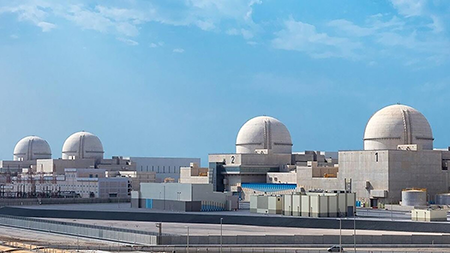
Saudi Arabia is expanding its civil nuclear program and announced plans to build two power reactors and fabricate nuclear fuel, including uranium enrichment. (See ACT, November 2023.) The United States had been reluctant to sign a nuclear cooperation agreement with Saudi Arabia over the proliferation risks posed by uranium enrichment without additional IAEA monitoring, due in part to Saudi threats to develop nuclear weapons if Iran does. (See ACT, April 2018.)
According to congressional sources, the United States and Saudi Arabia reached a compromise after years of negotiations, but it is unclear if Congress, which can review and block nuclear cooperation agreements, also known as “123 agreements,” will accept the nonproliferation obligations in the accord.
The administration has said little about the terms of the proposed 123 agreement, which must be negotiated before U.S. companies can transfer certain materials and technologies to a foreign country.
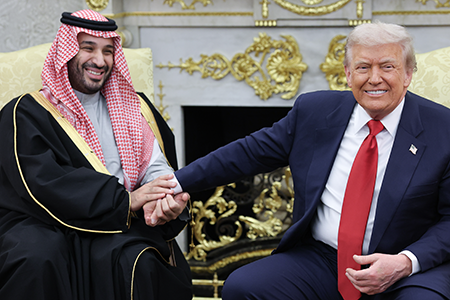
During Saudi Crown Prince Mohammed bin Salman’s visit to Washington in November, the White House announced a U.S.-Saudi framework for nuclear cooperation that “builds the legal foundation for a decades-long, multi-billion-dollar nuclear energy partnership” between the two countries “in a manner consistent with strong nonproliferation standards.” (See ACT, December 2025.)
The existence of the report to Congress on the agreement appears to confirm that the Trump administration relaxed U.S. demands that Saudi Arabia negotiate an additional protocol to its legally required safeguards agreement. The additional protocol would give the IAEA greater access to information about Saudi Arabia’s nuclear program and more tools to provide assurances that the program is peaceful.
According to a provision in the National Defense Authorization Act (NDAA) for fiscal year 2020, the administration must provide a report to Congress if a state has not negotiated and implemented an additional protocol with the IAEA. The president must submit the report on waiving the additional protocol to Congress 90 days before sending a Nuclear Proliferation Assessment Statement to Congress. The statement assesses how the nuclear cooperation agreement meets nine nonproliferation criteria set out in the Atomic Energy Act. Under the Atomic Energy Act, Congress has 90 days to review a nuclear cooperation agreement.
Arms Control Today reviewed a copy of the report, which was submitted to Congress around Nov. 24. According to the report, Saudi Arabia and the United States will enter into a “Bilateral Safeguards Agreement,” which will include additional verification measures and asserts that the agreement will give the IAEA the “necessary tools to verify the absence of diversion of nuclear material.”
The report does not specify how the bilateral agreement will compare to the additional protocol, but it does say that the bilateral safeguards will only apply to nuclear facilities where sensitive U.S.-Saudi nuclear cooperation is taking place. The additional protocol would have applied to the entire nuclear program and sites that support it.
The report does not explicitly state that the proposed agreement will allow a domestic Saudi-run enrichment program, but the text suggests it will. According to the report, the bilateral agreement, “with the involvement” of the IAEA, will employ “additional safeguards and verification measures to the most proliferation sensitive areas of potential nuclear cooperation between the Kingdom of Saudi Arabia and the United States (enrichment, conversion, fuel fabrication, and reprocessing).”
The report goes on to say that “nuclear material, equipment, or components will not be transferred to the Kingdom of Saudi Arabia subject to the 123 agreement until the proposed Bilateral Safeguards Agreement has entered into force.”
The NDAA states that the report must also describe “the manner in which such agreement would advance the national security and defense interests of the United States and not contribute to the proliferation of nuclear weapons.”
The Trump administration argues that the proposed agreement will benefit U.S. interests, saying in the report that U.S. involvement in the Saudi nuclear program will “prevent strategic competition from seizing an opportunity to undermine United States national security interests for decades to come.” The report also argues that the United States must seize the opportunity to expand nuclear cooperation to “reestablish our leadership in the global civilian nuclear energy market and reap the benefits of expanded influence in foreign countries hosting our reactors.”
The Trump administration may face obstacles in Congress, where there is longstanding bipartisan support for negotiating a so-called gold standard nuclear cooperation agreement with Saudi Arabia. The gold standard refers to a nuclear cooperation agreement similar to the one negotiated between the United States and the United Arab Emirates. Under that deal, the UAE committed to forgo uranium enrichment and plutonium reprocessing and adopt an additional protocol.
After the White House announced the Saudi framework for nuclear cooperation in November, the chair and ranking member of the Senate Foreign Relations Committee, Sens. James Risch (R-Idaho) and Jeanne Shaheen (D-NH), respectively, said independently that any nuclear cooperation agreement with Saudi Arabia must meet the gold standard.
Once the 123 agreement is delivered to Congress, members will have 90 days to review it. Congress can block the deal if both houses pass a resolution of disapproval; otherwise it will enter into force.