


"No one can solve this problem alone, but together we can change things for the better."
Debunking the Myth of a Unified China-Russia Threat
March 2026
By Georgi Ivanov
A growing narrative within U.S. strategic circles frames the deepening partnership between China and Russia as a monolithic, coordinated threat, particularly in the military domain. This perspective finds support from various analysts who posit the two nations as a single challenge and explore ways to counter their alignment. More importantly, this view is embedded in official U.S. strategic documents, notably the 2022 National Defense Strategy focus on a “near-simultaneous conflict with two nuclear-armed states,” a concept that the Atlantic Council discusses as “collaborative Chinese-Russian aggression in both theaters.”1
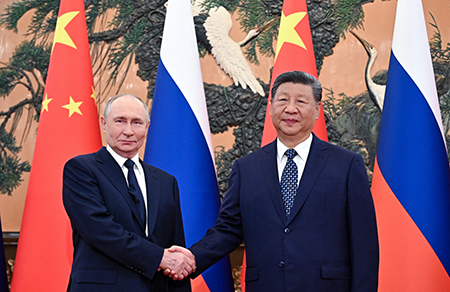
This might be a misleading construct, however. A closer examination reveals that Beijing and Moscow are not a joint military peer but separate and distinct competitors whose differing doctrines and competing strategic objectives prevent any meaningful integration of their strategic military capabilities.
The perception of a combined threat serves as a valuable political narrative. It rationalizes the U.S. military buildup by framing the separate modernization efforts of China and Russia as a unified challenge, which in turn justifies a significant portion of U.S. defense spending and the need to maintain its dominant military position. One example is the U.S. development of expensive hypersonic weapon programs such as the Army’s Long-range Hypersonic Weapon (LRHW), which is positioned as a necessary counterweight to China’s growing medium-range systems (including the Dongfeng-17 and the latest Dongfeng-26 variants) and Russia’s medium-range hypersonic missiles, such as the Zircon and Oreshnik.
Yet these Chinese and Russian systems were designed to provide attack options against potential regional adversaries, not the United States itself. Both countries already have intercontinental ballistic missiles to hold the U.S. homeland at risk. In contrast, according to a Congressional Research Service report, the Army’s new Multidomain Task Force, in which the LRHW is a key component, is explicitly structured to counter China and Russia.2 It is planned that the second task force, which supports the European theater of operations, will be deployed in Germany, while the first, third, and fourth task forces will be deployed to the Indo-Pacific region.
‘Us versus Them’
This “us versus them” framework allows the United States to further set agendas and rally resources effectively at both domestic and international levels. At the same time, this perception also introduces substantial dangers. It can misguide policymakers, lead to unrealistic strategic assessments, and deepen distrust in the strategic environment, ultimately undermining arms control and escalating risks to strategic stability.
The core of the narrative is the overstated potential for nuclear cooperation between China and Russia. Their nuclear doctrines are fundamentally misaligned: Russia employs a nuclear first-use strategy backed by a nuclear-sharing policy that asserts the right to use tactical nuclear weapons,3 while China adheres to a strict no-first-use policy, viewing its arsenal as a minimal deterrent. Although China’s nuclear modernization program prompts speculation about a future doctrinal shift, no concrete evidence suggests that such a change is currently under consideration by Beijing.
Crucially, there is no integration of both states’ command-and-control systems—the most sovereign of military functions—thus precluding joint operational planning in the strategic nuclear domain. For both states to be considered a dual threat, the last requirement necessarily must be met. Relying on concepts such as sequential nuclear deterrence, the process of testing each other’s boundaries step-by-step, is a risky strategy. Rather than reinforcing stability, it undermines arms control and acts as an obstacle to strategic predictability. Furthermore, Chinese and Russian nuclear postures reflect different stages of development: Russia possesses a mature, large-scale arsenal built over decades, while China has just begun expansion of its strategic forces. This adds to the problem of differing military capabilities, which inform different strategies and make it more complicated for further cooperation in the military sphere.
The operational divide between Beijing and Moscow is compounded by divergent and often competing foreign policy priorities. Militarily, Russia remains predominantly oriented toward Europe and Ukraine, despite its claimed “pivot to the East.”4 China, on the other hand, directs its resources and attention to the Indo-Pacific region as the primary theater of competition with the United States. This divergence is evident in the Chinese and Russian approaches to regional disputes: China maintains a position of neutrality on the military conflict in Ukraine, seeking to preserve a relative status quo in economic relations with the European Union, while Russia is deepening cooperation with the Association of Southeast Asian Nations,5 some of whom, such as the Philippines, are in a confrontation with China in the South China Sea.
Russia’s Own Agenda
These factors demonstrate that Russia’s goal in the region is not to support China’s strategic interests but to pursue its own agenda of diplomatic and economic cooperation.6 The same could be said for China regarding its European interests. Beijing actively avoids formal obligations of a potential military alliance with Moscow, understanding that such a pact would demand significant resources and run the risk of having Western sanctions imposed on its business affairs.7 Thus, a defense agreement, essential for conducting joint military operations in any domain, automatically would raise the question of entangling both states in each other’s regional issues.
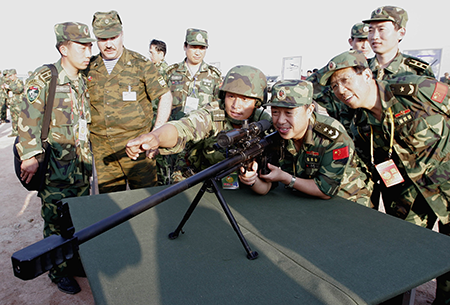
Simultaneously, a military alliance between the two states would not only include integrated planning of potential conventional military scenarios but would carry a nuclear dimension. The last issue remains an area where both states are far from agreement, as it would raise the question of hierarchy and directly infringe upon their sovereignty. A formal alliance would also impose legal and policy constraints that are difficult to reconcile with the need to preserve consensus, not only on external conflict issues, but also on cooperation with third parties. Taken together, these factors risk undermining their longstanding separate identities as autonomous centers of power.
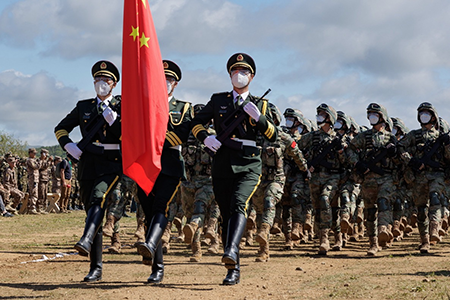
A more precise interpretation would be to consider the two countries not simply as a cohesive counterweight to the West, but rather as autonomous strategic players with often divergent interests. That is not to say that China and Russia do not share similar trajectories or interests in countering and deterring U.S. influence. Still, it would be a significant misinterpretation to present them as interconnected, dependent forces, informal military, or even nuclear-weapon allies. They enjoy close political ties, perform joint military drills, exchange technologies, and cooperate economically, yet they also harbor hidden insecurities about each other. As highlighted in a 2022 Center for Strategic and International Studies report, these underlying weaknesses, including enduring historical distrust and a significant power imbalance, fundamentally define their relationship.8
Acknowledging that strategic overextension resulting from a dual-threat policy is unsustainable, U.S. President Donald Trump´s administration has shifted from a “Pax Americana” to a “Pact Americana” framework.9 Although the core U.S. strategic objective of deterring two competitors on two fronts is retained, the operational and tactical approaches to its implementation were revised. This new model entails a deliberate delegation of military and economic responsibilities to allied and partner nations.
Consequently, deterrence within the dual-threat framework would be maintained not primarily through direct, unilateral U.S. engagement, but via a network of empowered regional collaborators, meaning that alliances must deliver measurable benefits rather than rely predominantly on U.S. commitments. European NATO allies offer a notable example, as they are now increasing defense spending and making concerted efforts to assume greater responsibility for their own security.
The August 2025 U.S.-Russia summit produced slight signals of a shift away from the U.S. dual threat policy toward diplomatic engagement between the two nuclear-armed states. Nonetheless, these overtures remained circumscribed to the diplomatic domain and did not alter core military posturing. Concurrent military modernization initiatives, such as the Trump administration’s “Golden Dome” missile defense program, continue unabated. As specialists note, such programs could alter the foundational calculus of strategic deterrence, indicating that military preparedness for dual-front engagement remained an overriding priority for the United States.10
Similarly, recent developments such as heightened diplomatic engagement among China, North Korea and Russia, including public pledges for deeper ties, are cited sometimes as evidence of a consolidating bloc.11 Yet, a symbolic demonstration of unity also should not automatically be interpreted as a sign of underlying strategic unanimity. States can show strength and cooperate closely in certain areas while maintaining fundamental conceptual disagreements on core issues of foreign policy and military strategy. This is evident even within established alliances. One example is NATO, where members Hungary and Slovakia have diverged from consensus on issues such as support for Ukraine, thus prioritizing distinct national interests over bloc solidarity.
No Guarantee of Strategic Alignment
In other words, an alliance is not a guarantee of strategic alignment and readiness for coordinated action, let alone a strategic partnership without any formal military obligations. Although ties between China and North Korea, and between North Korea and Russia may be deepening, the foundational bilateral concerns between China and Russia persist. A show of strength is precisely that—a diplomatic and strategic signal; it does not automatically resolve inherent divergences in national interest or fully integrate complex security architectures. A true military integration between China and Russia would require binding measures far exceeding their current cooperation, compelling them to act as a single entity. At the moment, such a development remains doubtful, given political and economic circumstances.
To frame Beijing and Moscow as a monolithic threat rather than independent strategic actors is to engage in a strategic overassessment, one that risks becoming a self-fulfilling prophecy by driving policies that push these separate competitors closer together than their natural interests would dictate. Formulating national strategies through a dual‑threat lens, constructing adversarial narratives, and operationalizing them in policy produces precisely the expected result. The adversaries constructed by such discourse are compelled to respond to the measures enacted against them.
Recent developments, such as missile defense consultations between China and Russia in November 2025,12 illustrate this dynamic. These discussions, meant as a signal to Western policymakers, can plausibly be traced to prior U.S. deployments of strategic and tactical offensive missile systems in proximity to both states’ borders—most notably, the Typhon Missile System deployed in the Philippines and Denmark in 2024, followed by deployments in Australia and Japan in 2025; the LRHW system in Australia in 2025; and M142 High Mobility Artillery Rocket System sales to the Baltic States and Taiwan.
No comparable deployments of Chinese or Russian systems exist near U.S. borders. The hypothetical reaction of the United States to such developments, were they to occur, would be unimaginable, underscoring the profound asymmetry inherent in this dynamic. Yet the subsequent protests to U.S. missile deployments issued by Beijing and Moscow,13 coupled with their joint declaration to undertake coordinated countermeasures,14 are often dismissed or ignored, further exemplifying the operational logic of the dual-threat approach. Within this cycle, the initial state actor’s decisions and anticipatory framing provoke responsive actions from the targeted states. These actions are then cited as confirmation of the original threat narrative—despite the first actor’s foresight regarding the likely consequences of its own measures.
The Russia-North Korea case serves as a counterexample that fundamentally calls into question the dual-threat notion. Moscow’s alliance treaty with Pyongyang includes an explicit military clause (Article 4), promising immediate assistance by any means disposable to the parties, in the event of an armed attack on either of them.15 This provides a factual basis for analyzing a nascent alliance between two nuclear-armed states. In contrast, the status of the China-Russia relationship remains a strategic partnership, lacking any formalized military obligations. Understanding this critical distinction between a binding military commitment and enhanced situational cooperation is essential for crafting pragmatic and effective policy grounded in reality.
ENDNOTES
1. Greg Weaver and Amy Woolf, “Requirements for nuclear deterrence and arms control in a two-nuclear-peer environment,” Atlantic Council, February 2, 2024.
2. Congressional Research Service, “The Army’s Multi-Domain Task Force (MDTF),” Library of Congress, December 17, 2025.
3. Hans M. Kristensen, Matt Korda, Eliana Johns, and Mackenzie Knight, “Russian nuclear weapons,” 2025. Bulletin of the Atomic Scientists, Vol. 81, No. 3, 2025, p. 213.
4. Nivedita Kapoor, “Russia’s Pivot to Asia – A 10-Year Policy Review,” Valdai Discussion Club, March 21, 2022.
5. Ministry of Economic Development of the Russian Federation, “Russia and ASEAN countries to sign new Strategic Cooperation Program in September 2025,” August 22, 2025.
6. Richard J. Heydarian, “Fallout: Ukraine Crisis Upends Russia’s Role in the South China Sea,” Center for Strategic and International Studies, March 25, 2022.
7. Vita Spivak, “How Sanctions Have Changed the Face of Chinese Companies in Russia,” Carnegie Endowment for International Peace, May 18, 2023.
8. ChinaPower Project, “What Are the Weaknesses of the China-Russia Relationship?” Center for Strategic and International Studies, accessed February 24, 2026.
9. Jahara Matisek and James Farwell, “Trump’s national security strategy: from Pax Americana to Pact Americana,” Australian Strategic Policy Institute, May 2, 2025.
10. Daryl G. Kimball, “Golden Dome: Doubling Down on a Strategic Blunder,” Arms Control Today, June 2025.
11. Nectar Gan, Yoonjung Seo, and Yong Xiong, “Xi and Kim pledge deeper ties a day after unprecedented show of unity with Putin at Chinese military parade,” CNN, September 5, 2025.
12. Ministry of Foreign Affairs of the Russian Federation, “Russia and China held consultations on missile defense and missile aspects of strategic stability,” November 11, 2025.
13. President of Russia, “Joint statement by the Russian Federation and the People’s Republic of China on deepening comprehensive partnership and strategic cooperation entering a new era in the context of the 75th anniversary of the establishment of diplomatic relations between the two countries,” May 16, 2024.
14. President of Russia, “Joint Statement by the Russian Federation and the People’s Republic of China on further deepening comprehensive partnership and strategic cooperation in a new era in commemoration of the 80th anniversary of the Victory of the Soviet Union in the Great Patriotic War, the Victory of the Chinese people in the War of Resistance against Japanese Aggression and the formation of the United Nations,” May 8, 2025.
15. Ministry of Foreign Affairs of the Russian Federation, “North Korean-Russian Treaty on Comprehensive Strategic Partnership,” December 4, 2024.