

“For half a century, ACA has been providing the world … with advocacy, analysis, and awareness on some of the most critical topics of international peace and security, including on how to achieve our common, shared goal of a world free of nuclear weapons.”
Conference Chief Seeks to Rebuild NPT Credibility: An Interview with Ambassador Do Hung Viet of Vietnam, president of the 2026 NPT Review Conference
April 2026
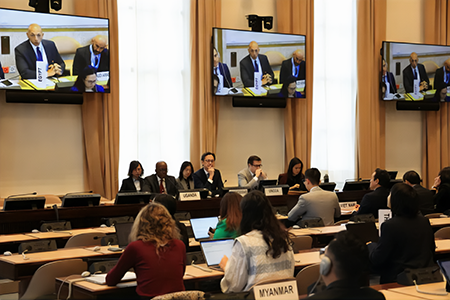
For 56 years, the Treaty on the Non-Proliferation of Nuclear Weapons, more commonly the nuclear Nonproliferation Treaty (NPT), has been the bedrock of the system of international norms and agreements designed to reduce and eliminate nuclear risks. With 191 states-parties, it has the widest adherence to any arms control agreement. Five of the signatories—China, France, Russia, the United Kingdom, and the United States—are recognized as nuclear-weapon states and the rest of the signatories are non-nuclear-weapon states.
Under the treaty, the first group commits to pursue complete disarmament and to eschew helping others develop or acquire nuclear weapons, whereas the second group agrees to forgo developing or acquiring nuclear weapons. The NPT’s contributions to security have been significant, but as states-parties prepare to hold their 2026 NPT Review Conference from April 27 to May 22 in New York to take stock of the treaty and agree on a future plan of action, the challenges to progress are formidable, including fractures between the United States and its allies, a Russian war in Ukraine, a U.S.-Israeli war against Iran, a nuclear buildup in several countries, and an impasse in arms control negotiations.
Arms Control Today’s publisher, Daryl G. Kimball, and its chief editor, Carol Giacomo, interviewed Conference President Do Hung Viet, Vietnam’s UN ambassador, about his expectations for the meeting. This interview, conducted before Israel and the United States struck Iran February 28, has been edited for space and coherence.
Arms Control Today: As UN Under-Secretary-General and High Representative for Disarmament Affairs Izumi Nakamitzu recently noted, the 2026 Review Conference comes at a “moment of profound challenge for international peace and security. Multilateral cooperation, and the architecture that underpins it, is under huge strain. Geopolitical tensions are high and rising, while dialogue among nuclear-weapon states has stagnated. Decades of hard-won progress in nuclear disarmament and nonproliferation—progress that has significantly contributed to global stability—are being reversed.” In your view, has the NPT succeeded in improving international peace and security? Why do you think it’s still important today, not only to the five recognized nuclear-armed states, but also to the non-nuclear-state majority?
Ambassador Do Hung Viet: I think you framed it well in saying that the NPT is the bedrock of international security. I think this is the understanding and the view of a vast majority of state-parties to the NPT. It has served us really well over the past decades. If we look at the numbers alone, when the NPT itself was adopted and ratified and came into effect, there was an expectation that the number of nuclear-weapon states would increase—the number is in the thirties. But up to now, the NPT has been quite successful in limiting that number.
Secondly, I think it has really served as a cornerstone for good-faith discussions and dialogues, and building trust within the international community that security can best be preserved by not possessing nuclear weapons, rather than [by] getting access to them. This is extremely important because it builds the trust that is needed in an atmosphere [in which] there is continuous competition among the major powers, [and] also many regional competition disputes and conflicts. And with the NPT, that has really been limited.
Thirdly, I think the NPT has been successful in facilitating the peaceful use of nuclear energy and science and applications. I was in Vienna a couple of weeks ago, and I visited the [International Atomic Energy Agency's] Seibersdorf lab, and really could see with my own eyes how much benefit nuclear energy can indeed bring, especially in the developing world, ranging from healthcare to environmental protection to waste management to water management and, of course, power generation. The NPT has created the framework for the use of nuclear energy in the much broader sense.
So, I think the NPT has truly succeeded. Today it is facing a lot of strain, but it is still extremely important that we work to maintain this important framework to perhaps rebuild the credibility that the NPT has and the trust that the international community has in the NPT and in a multilateral rules-based framework in general.
ACT: How do you rebuild trust? How do you think that the upcoming NPT conference can help reverse the negative trends?
Viet: Since I have taken up this job as president of the review conference, I have tried my best to really be in a listening mode, to hear the concerns, the priorities, the expectations of state-parties. I think the most important aspect of the RevCon is to create a space for state-parties to share these concerns and priorities with each other, create a space for dialogue among not only the nuclear-weapon states but between nuclear-weapon states and non-nuclear-weapon states, between developed and developing countries, between those who have access and those who do not have access to nuclear energy, to create this space for dialogue, which ultimately, I believe, enhances trust. And that basically is the virtue of multilateralism and multilateral cooperation. Now, I intend to create and facilitate such a space.
I have heard in my consultations complaints about how the process has been run in past review conferences, where some feel that they have been left out of the conversation, that there were things going on that they were not informed of or they could not participate in, not having the capacity to participate in, which led to the discussion about strengthening the review process that we have seen going on since the last review conference in 2022. So, I intend to build on those discussions, try to be a bit innovative without being disruptive, try to improve the process itself, improve how the conference is run, so as to allow all delegations, no matter how big or small, to be able to participate in all of the meetings, in all of the discussions, and to ensure that this process is run in a most efficient and transparent and inclusive manner. I think that may help us all come out of the conference with a bit more confidence in the review conference itself and the process that is run.
ACT: As you know, the benchmark for every successful NPT review conference is trying to achieve one that produces a final conference document that reviews implementation of the treaty and outlines an agreed forward-looking action plan. Why is that an important purpose of the conference?
Viet: The success of any review conference has indeed been defined by a single, or a set of, outcome documents. But in my consultations, there are also other views. Some delegates believe that we need a big document that has a review part, kind of looking back, and also the forward-looking part covering every single aspect of the treaty and what’s going on. At the other end of the spectrum, some have mentioned that we should have different metrics for success, that the success of the conference should not be defined solely by an outcome document [but perhaps by] particular outcomes—for example, some delegates are talking about the universalization of the comprehensive safeguards agreement, which now we’re trying to get the three remaining countries to sign onto. They say that can be attributed as a success of the NPT conference.
But to me—and this message I have been trying to [convey to] all state-parties in the consultations—we do need a consensus outcome document. This is important for a couple of reasons. Number one, we have seen two consecutive review conferences without such an agreement. Of course, in today’s world, when a conference or a UN meeting [ends] with no outcome document, it won’t immediately be labeled as a failure. [But that has happened] twice already [with review conferences], and a third time without such an outcome document, I think, will send an extremely negative signal to the international community.
It may not put an end to the NPT itself, but as UN Undersecretary-General Izumi Nakamitzu has often put it, it may hollow out the NPT. We may lose the credibility of the NPT itself, and the review process. To me, an outcome document will show to the world, our constituencies, our people, that they can still rely on the NPT for their security, and that they can be confident that governments are still working towards ensuring better security for all through these dialogues and discussions and sticking to the commitments that they have.
ACT: How are you organizing your preconference consultations? You’ve had some regional workshops. Are you in consultation with the five nuclear-armed NPT members? Tell us a little bit more about your style of these consultations and what more might take place before April 27.
Viet: I started my consultations in October and I have done four regional consultations in Hanoi for the Asia-Pacific group, in Addis Ababa for the African group, in Amman for the Middle East and North African group, and most recently in Panama City for the Latin America and Caribbean group. I’ve also had my consultations in New York and in Vienna with the Non-Aligned Movement, with the East European group, with the Western European and other states group. I have also visited some capitals, including four of the five nuclear-weapon states. And I plan next week to be in Geneva, again to have these consultations with our colleagues there, and then also visit Moscow. So, again, the approach is to ensure that I understand fully the concerns and priorities of all state-parties.
ACT: As you said, achieving a final conference document is seen as important. Are you planning any approach that might be different from the past review conferences in terms of how the final conference document is put together? For instance, are you planning to put out an early draft before the conference or at the beginning? Conferences go by very quickly. Are you going to be using the tool of recruiting formal or informal friends of the chair? What are your plans to deal with the procedural mechanics of consultations at the meeting?
Viet: I mentioned earlier that I’m trying to be a little bit innovative with the structure of the conference…. I am making these proposals, keeping in mind that we all want the conference to be effective, efficient. I want to emphasize, in particular, that the conference is inclusive and transparent in its running. So, when it comes to the outcome document, I intend to prepare a draft to be presented to state-parties earlier on, maybe in the middle of the second week of the conference. That will allow the main committees to start discussions surrounding the draft outcome document and allow, basically, a bit more than two weeks for the negotiations of such outcome document. This is kind of a lessons-learned process that I’ve learned from previous conferences, including president of the last review conference, Ambassador Gustavo Zlauvinen [of Argentina]. The issue of the so-called group of friends has also come up several times. Now, to me, everyone is a friend.
ACT: Or you hope. [laughter]
Viet: I have to say that it is difficult to identify a smaller group that I should call friends and excluding others who may understand that they may not be seen as my friend. So, I try to avoid that track. Instead, I’m trying to make the best use of the mechanics or the institutional makeup of the conference itself. So, there is the bureau of the conference; there is the general committee, which coordinates the overall work of the conference with 34 vice presidents; and then the chairs of the main committees. There are other frameworks within the institutional makeup of the conference that I think can really be used in a more efficient manner and still, at the same time, ensure that it is representative, that it is inclusive, and basically has legitimacy, to ensure that everyone can say that they have been part of the process.
ACT: The treaty stands on three pillars—nonproliferation, peaceful uses of nuclear energy, and disarmament—and a longstanding goal agreed to at past NPT meetings has been to strengthen International Atomic Energy Agency safeguards and expand the number of states that have an additional protocol agreement with the IAEA. However, since the United States withdrew from the Iran nuclear agreement and bombed Iran’s nuclear facilities last year, the IAEA has not been allowed to return to key sites in Iran. Meanwhile, some states that have shown an interest in nuclear energy, such as Saudi Arabia, do not have additional protocol agreements in place. What can be done to strengthen support for effective safeguards at this conference?
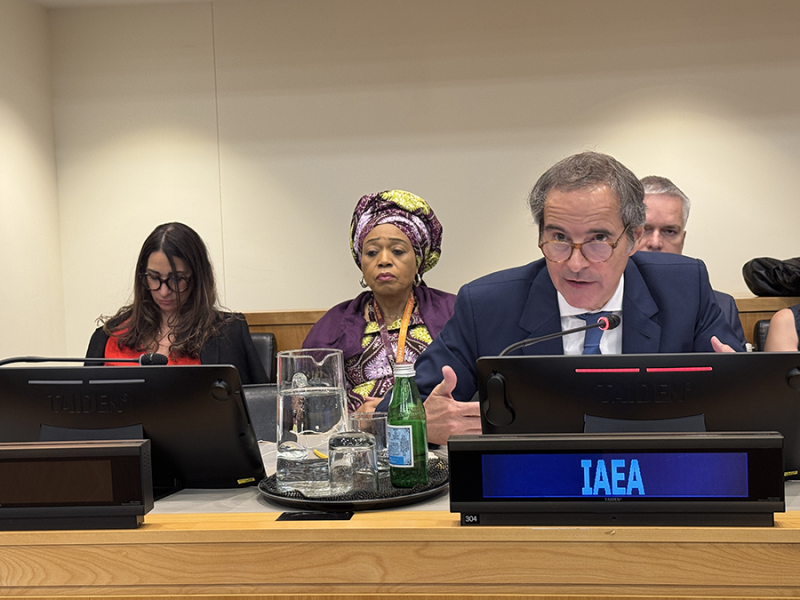
Viet: I think the overall message is a very strong support for the important role that the IAEA continues to play, as well as the safeguards and safeguards agreement. There is a very concrete outcome that we are trying to achieve, which is the universalization of the comprehensive safeguards agreement, trying to get the remaining three countries to sign on to them. At the same time, there is a lot of concern about proliferation, not only by Iran, but also other countries that are talking about getting access not only to peaceful uses of nuclear energy but even having their own nuclear weapons programs. This is a major concern that we are hearing from countries from Asia to Europe to the Middle East. So, the discussions on these issues, I believe, will be quite heated at the review conference. Certainly, there will be state-parties expressing their concerns about the Iran nuclear program.
At the same time, I think there will be countries raising their concerns about attacks against nuclear facilities under IAEA safeguards. There will also be concerns raised about naval nuclear propulsion and how IAEA safeguards would apply to them, should they be treated any differently. Other issues of concern may include other regional issues, from [North Korea] to Ukraine. So, these are major issues, I believe, that will be raised and discussed at the review conference. How will they impact the final outcome of the conference will depend very much on how we frame this, and how we are able to get our heads together and find solutions, so that they do not become issues that may force one or two countries to block the outcome itself.
ACT: One other issue that may come up in 2026 is the issue that apparently derailed the 2022 conference, which took place just weeks after Russia’s full-scale invasion of Ukraine, and that was divisions over language relating to safety, security, and control of nuclear power stations in Ukraine. What solutions might help bridge the differences that emerged in 2022?
Viet: The situation in Ukraine continues to be of concern to the international community. Next week [editor’s note: February 24], the UN will be holding another emergency session on the fourth anniversary of the start of the conflict. So, it remains one of the issues that I think will be at the center of the review conference discussions. To me, any of the regional issues that we’ve been talking about, be it [North Korea], Iran, or Ukraine, may ultimately block the adoption of an outcome document. What I have been trying to discuss with state-parties is to find ways that we can frame these issues, not as specific conflicts or disputes, but rather as matters of principles when it comes to how countries should abide by their safeguards obligations, how nuclear facilities or IAEA safeguards must be protected and not attacked. Basically, I’m trying to find a new way to approach these issues, rather than going into the details of each situation, because if we go in that direction, it may be extremely difficult to get agreement on issues that may not be of particular relevance to the NPT itself but are much broader geopolitical issues that we have not been able to find solutions to in other multilateral frameworks.
ACT: Have you had a chance yet to engage with those states in those regions, Iran in particular, about the review conference?
Viet: I have, indeed. I had my bilateral discussion with our Iranian colleagues, and Iran was part of the consultations I held with the Middle Eastern and North African countries. So, I have heard from Iran, and I will continue to consult with them during this process.
ACT: As you prepare for this meeting, U.S. President Donald Trump is threatening a major attack on Iran if it doesn’t agree to restrict or eliminate its nuclear program. I’m wondering how you’re trying to deal with that, which is a rather volatile factor.
Viet: Yes, the NPT and the NPT review conference are not in a vacuum. They are impacted significantly by externalities of what’s going on around the world. Look at the 2022 review conference. Just a couple of months before that, we had this major statement [from the five permanent members of the UN Security Council], which was really positive and then the conflict in Ukraine happened, which many believed led to, ultimately, the conference failing to produce an outcome document. So, for this coming conference, too, I think there will be issues really beyond my control that may happen. I just need to brace myself for these unpredictabilities [sic] and try my best to work with what I have, basically, to try and reach an agreement.
ACT: Let me follow up on a regional issue that was one reason why the 2015 review conference did not reach a final outcome document: the objective of achieving a weapons-of-mass-destruction-free zone in the Middle East. There have been some developments in recent years, including an annual meeting under UN auspices of most of the regional parties. Do you anticipate this will be a major problem at the RevCon, or is this issue on a more even trajectory?
Viet: I do expect this to be a very difficult issue. This is of critical importance to our colleagues in the Middle East and they continue to emphasize how important it is for the region, in particular given what is going on there at the moment. What they have been telling me is, because of the conflict that has been going on, this issue [has increased in] importance. On the other hand, we have other colleagues who are not very keen to commit too much on this particular issue. I probably will need to see how this plays out. When it comes to the structure of the conference, I will try to frame this within the framework of nuclear-weapon-free zones rather than a regional issue so that it will be discussed together with the other established nuclear-weapon-free zones. Hopefully, with such an approach, we’ll see more lessons learned from the other regions and have some inspiration for what can be done in the Middle East.
ACT: As we discussed, the New Strategic Arms Reduction Treaty has expired. The United States has spoken in favor of pursuing arms control and disarmament on a multilateral basis. These are issues that relate to the core NPT Article 6 obligations, mainly of the nuclear-armed states to engage in good-faith negotiations to end the arms race and advance disarmament. In the current climate, keeping in mind that there also are stresses and threats to the Comprehensive Test Ban Treaty (CTBT), do you believe that states-parties, particularly the nuclear five, are in a position to recommit to their obligations? How important is progress in this area, given that there has been so little movement on disarmament for the last 10 or more years?
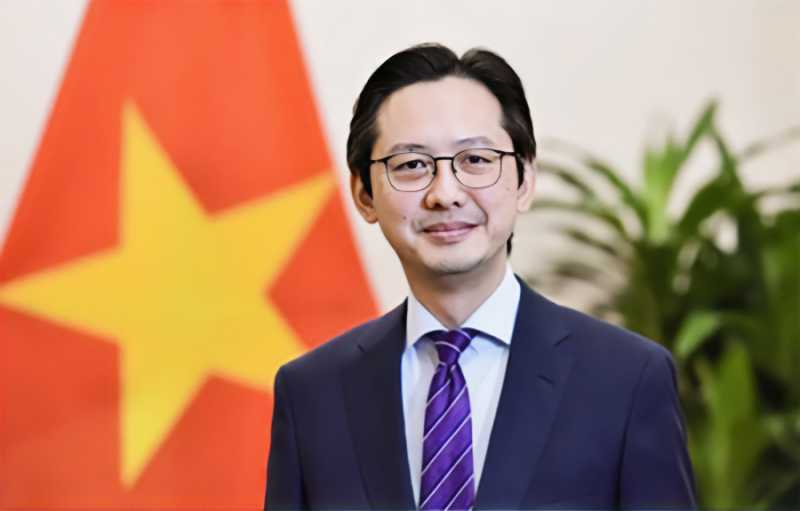
Viet: One of the biggest concerns that the vast majority of state-parties have shared with me is the backtracking on past commitments. So, the expectation is the conference will need to make sure that the past commitments are reaffirmed. But how to frame that and how to address that will be much more difficult in practice because how can states reaffirm commitments they made in fundamentally different security circumstances in the past?
There are already talks about potential nuclear testing, for example, allegations of one country having conducted nuclear tests, and potential testing on an equal basis. What will that mean to the commitment to their [testing] moratoria, to expediting the ratification of the CTBT? These are very difficult issues that we will need to deal with. To me, any outcome document will probably have to reaffirm the past commitments in order for it to be accepted by the vast majority of state-parties. I also hope and believe that we will need to make some particular progress, as well, when it comes to specific measures to reduce the risk of nuclear war. So, risk reductions will be an important topic. The other important topic will be transparency and accountability. Hopefully, we’ll be able to get the support needed for it to fly. I do not expect in the current circumstances to have any major new commitment, but rather very practical steps that may be achievable within the next cycle, the next five years. So, that is the direction that I’m working on.
ACT: On nuclear risk reduction, what are states discussing as potential tangible action steps? The concept of risk reduction is a broad one. There are specific things and there are general things, but are there any emerging themes from your consultations?
Viet: Not at the moment, no. There are certain groups that are preparing their working papers, proposing certain approaches, but I think probably the most important thing I have seen is the P5 process that had resumed more recently. Although still at a low level, and not only focused on nuclear weapons or the NPT per se, at least that grouping is meeting, is having NPT as part of their discussions. That is a positive step that I’ve been encouraging.
ACT: In addition to disarmament issues, the conference agenda calls for a review of negative security assurances, which perhaps have risen in importance given concerns about recent threats of nuclear weapons use by Russia and other states, and the Israeli and U.S. attacks on Iranian nuclear facilities. Based on your consultations, how might the conference reinforce the credibility of assurances that non-nuclear-weapon states will not be subject to nuclear threats or nuclear attack?
Viet: This issue of negative security assurances does come up in the regional consultations in the discussions I have, but we have not been able to go into that in depth on the substance. The state-parties are basically reaffirming how important it is that we continue to work on legally binding negative security assurances for non-nuclear-weapon states and work to advance the nuclear-weapon-free zones.
ACT: You mentioned nuclear-weapon-free zones a couple of times. Many of our readers will know that they involve protocols, signed by the nuclear-weapon states, which in part extend negative security assurances to the states in the zones that they will not be subject to nuclear attack. Some states, the United States in particular, have not ratified its protocols to three zones—Central Asia, Africa, the South Pacific. Is that being discussed as one measure to reinforce the negative security assurances because once the United States does ratify those protocols, they become legally binding on all five nuclear-weapon states. Or are there other specific ideas regarding negative security assurances being floated?
Viet: Yes indeed. Many delegates have been talking about how the nuclear-weapon states should ratify the protocols, including the U.S., of course. The focus in particular has been on the Bangkok Treaty, the Southeast Asian Nuclear-Weapon-Free Zone, because none of the nuclear-weapon states have ratified that protocol. This is partly because the Bangkok Treaty itself does not allow for any reservation and countries in the region are still talking about how or whether they will accept any forms of reservation. Up to now, only one country has expressed its readiness to ratify the protocol without reservation, and as such may be accepted by the ASEAN states. But the issue is really to get all the others to also join. Continued consultations are being conducted on how to get around that requirement by the treaty itself.
ACT: What role can civil society play at the review conference and beyond? Is there something that civil society can do that it isn’t doing so far?
Viet: I think civil society has a very important voice and really, civil society must make its voice heard. In current circumstances, I feel that it has been quite silent probably because there are so many other day-to-day issues that are coming up. Or maybe that is my feeling, living here in the United States. But I have not been able to really hear a collective or coordinated voice from the civil society when it comes to the danger of nuclear weapons and other dangers we are facing these days. We see the so-called doomsday clock, for example, moving closer to midnight than ever before but I don’t feel like that has really caught the attention of the American public, in particular, that much. I am just hoping that the civil society can again mobilize and make their voices heard and really continue to have this impactful engagement in the process.