


"I find hope in the work of long-established groups such as the Arms Control Association...[and] I find hope in younger anti-nuclear activists and the movement around the world to formally ban the bomb."
Analysis: U.S. Negotiators Were Ill-Prepared for Serious Nuclear Talks With Iran
April 2026
By Kelsey Davenport
Less than 48 hours before the U.S. and Israeli coordinated strikes on Iran began February 28, U.S. Special Envoy Steve Witkoff and Jared Kushner, President Donald Trump’s son-in-law, met Iranian Foreign Minister Abbas Araghchi in Geneva for a third round of Omani-mediated talks aimed at reaching a nuclear agreement.
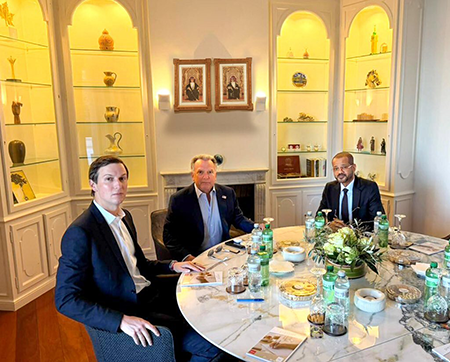
Despite Omani Foreign Minister Badr bin Hamad Al Busaidi’s assessment that the two sides had made “substantial progress” toward a nuclear deal during the February 26 talks and agreed to meet again March 2 for technical talks,1 Trump told reporters that he was “not happy” with what had been achieved or the “way [Iran is] negotiating.”2 The following day, the United States and Israel illegally attacked Iran, using Tehran’s nuclear program as one justification.
Subsequent statements from International Atomic Energy Agency (IAEA) Director- General Rafael Mariano Grossi and U.S. intelligence officials contradicted Trump’s March 4 comment that “if we didn’t hit within two weeks, [Iran] would have had a nuclear weapon.”3 Grossi said in a March 2 press conference that the IAEA saw no sign of a “structured nuclear weapons program.”4 Meanwhile, Director of National Intelligence Tulsi Gabbard testified to Congress March 18 that “Iran’s enrichment program was obliterated” by U.S. strikes in June 2025 and that “There has been [sic] no efforts since then to try and rebuild [Iran’s] enrichment capability.”5
Although Iran could technically use its uranium enriched to 60 percent U-235 to build a bomb, it is far more likely that it would enrich the material to weapons-grade levels, or 90 percent U-235, before converting it to the metallic form necessary for a nuclear warhead. The 2026 U.S. worldwide threat assessment, published in March, also does not indicate that Iran had made a decision to weaponize its nuclear program or restart activities necessary to build a bomb.6
Preconceived Decision
By the time the third round of talks ended in Geneva, Trump had likely already made the choice to go to war.7 It is unlikely that any outcome short of complete Iranian capitulation to U.S. demands at the negotiating table would have averted the military strikes.
Trump’s dissatisfaction and impatience with the negotiating process appear to have been fed, in part, by Witkoff’s and Kushner’s accounts of the U.S.-Iran talks. Comments made by Witkoff in two background briefings with reporters February 28 and March 3, as well as media appearances since the strikes began, made clear that Witkoff did not have sufficient technical expertise or diplomatic experience to engage in effective diplomacy. His lack of knowledge and mischaracterization of Iran’s positions and its nuclear program throughout the process likely informed Trump’s assessment that talks were not progressing and Iran was not negotiating seriously.
The Arms Control Association received recordings and transcripts from several participants in Witkoff’s two news briefings. The association has not seen a copy of the Iranian proposal from the February 26 talks but has heard descriptions of it from officials familiar with the contents. The description coincides with media reports: After a multiyear pause on uranium enrichment, Iran would resume an enrichment program based on fueling certain planned research reactors. Iran would not accumulate enriched uranium gas and would agree to broad IAEA oversight. The scope of the proposed enrichment program was based on what was likely an overly ambitious 10-year reactor plan and included enriching uranium up to 20 percent U-235 with up to 30 cascades of advanced IR-6 centrifuges.8
Araghchi later confirmed that Iran also offered to blend down its stockpile of uranium enriched to 60 percent U-235, a level near weapons-grade (90 percent U-235), to lower levels.9
The Iranian proposal, as presented, did not meet the maximalist terms that the White House demanded, including no enrichment, dismantlement of Iran’s nuclear facilities, and removal of enriched uranium gas from Iran. Nor did it appear to be sufficiently restrictive from a nonproliferation perspective to be an effective bulwark against weaponization. It is unclear how Iran proposed to combine or sequence the actions it presented, and there were no detailed discussions on monitoring and verification provisions, according to an official who asked the Arms Control Association not to be identified.10
Yet the proposal showed some flexibility in the Iranian position. It was also an opening offer and unlikely Iran’s bottom line. As Grossi said in an interview with the CBS show, “Face the Nation,” that aired March 22, there was “no agreement” and “no alignment” on many issues under discussion, but “maybe” a deal was possible.11 Even Witkoff said in the March 3 briefing call that Iran’s draft included some interesting features. Trump, however, appeared uninterested in a drawn-out negotiating process. This suggests Iran either misread how long the window for diplomacy would remain open or Witkoff did not make clear the U.S. timeframe.
Although further negotiations may have revealed that the gulf between the White House demands and the Iranian positions was irreconcilable, Wikoff’s failure to comprehend key technical realities suggests he misunderstood the Iranian nuclear proposal and was ill-prepared to negotiate an effective nuclear agreement or advise Trump as to whether Tehran was negotiating in good faith. The following analysis examines key misstatements and misconceptions in the post-attack briefings, conducted primarily by Witkoff.
1. Witkoff perceived the Tehran Research Reactor as a threat and a ploy. It is not clear why.
Some of Witkoff’s most puzzling and factually challenged statements during the March 3 telephone briefing with reporters centered on the Tehran Research Reactor, which is used to produce medical isotopes. The reactor, supplied by the United States, became operational in 1967. Originally, it ran on 90 percent enriched U-235 fuel, which is weapons grade, but later was converted by Argentina to run on 20 percent enriched uranium fuel.
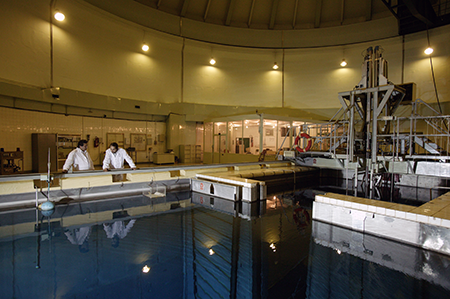
Witkoff’s emphasis on the reactor was odd because it is not engaged in proliferation-sensitive activities, and previous statements from U.S. officials, including Trump, suggested that the United States was open to Iran continuing to operate reactors for civil nuclear and research purposes. His concern appeared to be based on assumptions that Iran would use fuel production for research reactors as a justification to move back to the threshold of nuclear weapons.
During the briefing, Witkoff claimed there was “subterfuge” at the reactor and that it was being used to stockpile uranium fuel “to bring it towards a weapons-grade enrichment level.” This assessment seemed based primarily on Witkoff’s conclusion that Iran possessed an “overabundance” of fuel for the reactor. He alleged that “the seven-to-eight years’ supply of fuel that they had been retaining at [the reactor] was being stockpiled along with all the other stockpiling that had been done at Natanz, Esfahan, and Fordow. So, the claim that they were using a research reactor to do good for the Iranian people was a complete and false pretense to hide the fact that they were stockpiling there.”
The fuel that Iran has stockpiled for the reactor is not hidden, and its existence should not come as a surprise. The IAEA has tracked the reactor’s fuel and documented in its May 2025 report on Iran’s nuclear program that Iran had 45.5 kilograms of U-235 enriched to 20 percent in fuel assemblies.12 This amount is about a seven-to-eight-year supply for the reactor, which uses roughly 5-7 kilograms of 20 percent enriched uranium per year.
The stockpile size was more than what was strictly necessary for continued operations, but that is neither alarming nor surprising. Fluctuations in the fuel supply were documented by the IAEA in publicly available reports. Politically, the decision to keep a multiyear supply may have been driven in part by past challenges in obtaining fuel.13 Iran also imported fuel for the reactor from Russia in incremental shipments, thereby contributing to the supply.
It is unclear why Wikoff appeared to view excess reactor fuel as nefarious. From a proliferation risk perspective, the 45.5 kilograms of 20 percent enriched uranium in the fuel assemblies is far less than the amount of 20 percent material that is necessary to produce a bomb’s worth of 90 percent enriched uranium and was only a small fraction of Iran’s overall stockpile. According to a September 2025 IAEA report, Iran had, in UF6 gas form, as of June 13, 2025:
- 6,024.4 kilograms of uranium enriched up to 5 percent U-235,
- 184.1 kilograms of uranium enriched up to 20 percent U-235, and
- 440.9 kilograms of uranium enriched up to 60 percent U-235.14
Perhaps most importantly, enriched uranium in the form of fuel assemblies poses less of a proliferation risk than the material stockpiled in UF6 gas, the form that is necessary for further enrichment. If Iran wanted to use the 45 kilograms for weapons purposes, it would need to convert the material back to gas form before enriching it. Israel destroyed Iran’s conversion facility during the strikes last June. Presumably, Iran intended to rebuild its conversion facility as part of its February 26 proposal, but U.S. intelligence had not reported that Tehran had made any attempt to do so, as of March 2026. Thus, it is unclear why Witkoff claimed in his March 3 briefing that the stockpile of fuel meant that “the only other use it could be, would be to bring it towards a weapons-grade enrichment level.”
Witkoff also claimed that the reactor was not producing medical isotopes. The IAEA’s regular reports do not provide information about the facility’s products, but they do provide information about reactor operations, which contradict Witkoff’s claims that the reactor was a ruse. The agency noted its accountancy and monitoring of the irradiated reactor fuel assemblies, which supports the conclusion that the facility has been operating, and in several reports, such as those issued in 2023, notes when Iran has loaded new fuel assemblies into the reactor.15 Grossi did say in his March 22 interview that Iran’s use of the reactor was “limited,” which may have contributed to Witkoff’s concerns, but the reactor itself and the enriched uranium form of fuel elements do not pose a proliferation risk.
The IAEA reports do not appear to contain any recent concerns about misuse of the reactor. In 2003, Iran acknowledged conducting plutonium separation experiments at the facility that were not declared to the IAEA,16 but that does not appear to be what Witkoff is referring to, because it was more than 20 years ago and did not involve uranium enrichment.
Witkoff also made several other mistakes regarding the reactor, including saying that enrichment is going on there, which is not so. He also claimed that the IAEA “has not been able to make inspections in Iran” since Operation Midnight Hammer. Iran did suspend IAEA access to nuclear sites that were bombed in June 2025 in violation of its legally required safeguards agreement, but Iran has allowed the agency back to the Tehran Research Reactor, which was not bombed. A February 27 report from the IAEA noted that the agency inspected the hot cells at the reactor December 22, 2025.17 Inspectors did not raise concerns about the facility in that report. Grossi also confirmed to CBS March 22 that the IAEA continues to access the facility.
2. Witkoff’s suspicion of the reactor led him to prematurely dismiss the Iranian proposal.
Witkoff’s unfounded conclusion that the reactor was a nefarious ploy by Iran to stockpile 20 percent enriched fuel appeared to have negatively influenced his assessment of the proposal that Iran brought to the Geneva talks February 26. According to the March 3 backgrounder, Witkoff said Iran’s proposal for uranium enrichment was based on assessed needs for the Tehran facility and “a few other research reactors” that Iran planned to build over the next 10 years. Based on this plan, Iran determined the scope of an enrichment program, including enriching uranium up to 20 percent U-235. However, because Witkoff thought Iran was engaged in a “complete lie” about the Tehran reactor, he suggested that Iran’s proposal to enrich uranium up to 20 percent was deliberately designed to “peel off two months from the enrichment cycle.” Witkoff presumably meant Iran’s “breakout time,” or the time it takes to produce enough weapons-grade uranium for a bomb (25 kilograms of uranium enriched to 90 percent).
A limit of 20 percent enriched uranium was also unacceptable and demonstrated a lack of seriousness, Witkoff said, because it was “more than five times” what was allowed by the 2015 Iran nuclear deal, which capped enrichment at 3.67 percent. Those numbers are correct, but it appears that Witkoff was overly focused on the enrichment level as an indicator of risk and made erroneous assumptions about the implications of a ceiling of 20 percent enriched uranium on proliferation risk.
It is accurate that 20 percent enriched uranium can be enriched to weapons-grade U-235 more quickly than if Iran started with natural uranium or reactor-grade enriched uranium, which is less than 5 percent U-235. As Grossi said in the March 22 interview, 20 percent U-235 “is a lot of enrichment” and the assumption in the negotiations on enrichment was “zero or something very, very limited.”
Yet, it is challenging to assess the impact of enrichment to 20 percent on proliferation risk in isolation. It is unclear how Witkoff assessed that enriching to 20 percent U-235 would take two months off the breakout time or why he fixated on that as a metric. Breakout is a technical calculation influenced by a number of factors, including enrichment capacity (the number and efficiency of centrifuges), the enrichment level of the feed, and the size of the feed stockpile.
Witkoff did not seem to take into account the implications of Iran’s offer not to accumulate enriched uranium in assessing how Iran might break out and the proliferation implications of Iran’s plan. Furthermore, accounts of the February 26 meeting suggest that the negotiators did not conduct detailed discussions on monitoring and verification provisions, which have implications for how quickly the IAEA would detect any deviations from an enrichment plan.
It would not be surprising if, in the proposal, Iran overestimated its capacity to expand its civil nuclear program and its timeframe for reactor construction. Iran has frequently announced plans to build reactors that were never constructed. Nor would it be surprising if Iran had asked for a larger enrichment program than it was willing to accept; no negotiator puts their bottom line in an initial proposal. But Wikoff appeared to dismiss the idea of engaging with Iran on the premise of a needs-based enrichment program that would become operational after a multiyear pause because he misunderstood the operation of the Tehran Research Reactor.
3. Witkoff viewed Iran’s rejection of free nuclear fuel for life as a sign that Iran was not interested in diplomacy. The rejection should not have surprised him.
Witkoff said in the March 3 briefing that, after deciding that Iran’s proposed enrichment plan was based on the Tehran Research Reactor “lie,” he offered Iran “free fuel” for its research reactors. He claimed that “if it’s really about building radioisotopes and creating medicines” Iran will take the free fuel from the United States and abandon its own enrichment program. He said Iran rejected the offer by saying that free fuel was “an assault on our dignity.” He also expressed surprise that Iran had emphasized its “right to enrich.”
Witkoff said that he “figured it out” from Araghchi’s rejection that Iran was “angry for another reason” and was trying to “divert our attention away from the fact that all they really wanted to do was enrich.” Iran’s rejection of free fuel and emphasis on fueling its reactors should not have been a surprise to Witkoff. Nor should it have been viewed as a sign that Tehran was not negotiating in good faith. On a political level, Iran views enrichment as an issue of national sovereignty, a right conferred by the peaceful uses of nuclear energy provision in Article IV of the nuclear Nonproliferation Treaty. It is consistent with Iran’s past position for negotiators to reject any nuclear agreement if the price was zero enrichment.
Furthermore, why would Iran trust the United States to follow through? Trump withdrew from the Iran nuclear deal negotiated by the Obama administration—formally, the Joint Comprehensive Plan of Action (JCPOA)—in May 2018, despite Iran’s compliance, and participated in Israel’s strikes against Iran in June 2025 while diplomacy was ongoing. It is not surprising that Iran would have doubts about U.S. credibility.
There is also no indication that Witkoff raised or acknowledged the technical and legal hurdles to providing free nuclear reactor fuel. If the fuel were to come from the United States, for instance, that would require a negotiated nuclear cooperation agreement between Iran and the United States, a deal Congress could block. There also could be technical challenges and liability issues in fueling a reactor built in Iran.
Witkoff’s comments in the March 3 briefing suggest that he tossed the offer out to Iran without thinking through how to provide any assurance about how the United States could credibly implement such a proposal. A more experienced diplomat would not have been surprised by Iran’s reaction and would have been prepared to address questions about implementation.
4. Witkoff appeared to believe Iran had been engaged in nuclear weaponization efforts since 2003.
During the March 3 call with reporters, Witkoff was asked about something Grossi told press the previous day, that the IAEA does not see a “structured program to manufacture nuclear weapons” in Iran. Witkoff suggested that Grossi misspoke and said that Iran has “tested around weapons” since 2003. In a March 10 interview with CNBC, Witkoff made a similar statement, saying that “Everybody has known that [Iran has been] testing for weaponization since 2003.”18
Until 2003, Iran had an active nuclear weapons development effort, conducted in violation of its safeguard obligations. In a 2007 unclassified national intelligence estimate, the U.S. intelligence community assessed with high confidence that the organized nuclear weapons program ended in 2003.19 The IAEA similarly assessed in 2015 that Iran abandoned its organized weapons program in 2003, that some activities relevant to weaponization continued through 2009, but that there was no credible evidence of those activities after 2009.20
In its 2025 Worldwide Threat Assessment, the U.S. intelligence community stated that, “We continue to assess Iran is not building a nuclear weapon and that [Iranian Supreme Leader Ayatollah Ali] Khamenei has not reauthorized the nuclear weapons program he suspended in 2003, though pressure has probably built on him to do so.”21
It does appear that Iran has, in recent years and after Trump withdrew from the JCPOA, taken steps that would enable it to weaponize more quickly, if the political decision were made to do so. However, as the IAEA and U.S. intelligence statements make clear, there has so far been no decision to develop nuclear weapons or “testing for weaponization.”
5. Witkoff said the United States agreed that missiles were a regional issue, then described the lack of progress as an indicator Iran did not want a nuclear deal.
Following the U.S. attack in February, Trump and other senior officials, including Secretary of Defense Pete Hegseth, have pointed to Iran’s ballistic missiles as an “imminent threat” to the United States. (They were not.) Hegseth went further and said March 2 that Iran’s missiles and drones would enable Iran to develop a “conventional shield” to engage in “nuclear blackmail.”22
Witkoff made clear in the March 3 call, however, that the Trump administration made a deliberate decision to leave ballistic missiles out of its negotiations with Iran and “allow the region to talk about proxies and also to talk about ballistic missiles, because it’s a regional issue.” He said the missiles are an issue for the United States as well but addressing it at the regional level would streamline the process.
Delegating the missile issue to the other states in the Persian Gulf region to negotiate with Iran seems to undermine U.S. claims regarding the missile threat. The 2026 Worldwide Threat Assessment, published March 18, directly contradicts Trump’s claim in his recent State of Union address that Iran was developing “missiles that will soon reach the United States of America.” The intelligence community, however, assessed that Iran “developed space-launch vehicles that it could use to develop a military-viable [intercontinental ballistic missile] by 2035 should Tehran decide to do so.”23 If the Trump administration viewed Iran’s missiles as the kind of threat that warranted an illegal preventive strike, why tell Iran that negotiations over those systems should be explored on a regional basis?
Despite this, in his March 3 briefing, Witkoff accused Iran of making no effort to convene a regional discussion on missiles. This may be true, but if Iran were not expecting to talk to the United States about missiles, because Witkoff agreed it should be handled at the regional level, Iran’s failure to “talk about missiles” during the February 26 Geneva negotiations should hardly be viewed as a surprise or as an indicator of Iran’s view of the nuclear talks.
Needed: A Top-Notch Negotiating Team
Beyond these misperceptions, Witkoff’s statements are riddled with other errors that suggest that the New York real estate developer is out of his technical depth. At one point, he expressed surprise that Iran produces centrifuges (it has for decades) and referred to Iran’s IR-6 centrifuge as “probably the most advanced centrifuge in the world” (it is not). He also called Natanz, Fordow, and Esfahan “industrial reactors” (they are not).
The Trump administration’s failure to exhaust diplomacy and send a qualified team to negotiate with Iran is inexcusable, given the devastating consequences of the war that the United States and Israel have ignited. Although the attacks might set Iran’s nuclear program back, the proliferation dangers will not be eradicated through military strikes alone. At the end of this conflict, the Iranian government will retain the knowledge—and likely some of the key materials—necessary to develop and build nuclear weapons, and perhaps a greater political motivation to do so.
If there is a diplomatic opening to reach an effective nuclear deal with Iran in the future, Trump should replace Witkoff as his lead negotiator with an experienced diplomat and expert team. Witkoff’s failure to learn the nuclear file and surround himself with the technical expertise necessary to negotiate an effective deal has been a diplomatic disservice to U.S. and international nonproliferation goals.
ENDNOTES
1. Badr Albusaidi, “Full Transcript: Omani Foreign Minister Badr Albusaidi tells ‘Face the Nation’ a U.S.-Iran deal is ‘within our reach,’” Face the Nation with Margaret Brennan, CBS News, February 27, 2026.
2. Ben Johansen, “Trump says he’s unhappy with Iran negotiations,” Politico, February 27, 2026.
3. Donald Trump, “Transcript: President Trump Delivers Remarks at an Energy Ratepayer Protection Roundtable,” Senate Democrats, March 4, 2026.
4. “Press Conference with IAEA Director General Rafael Mariano Grossi,” IAEA video on YouTube, March 2, 2026.
5. Tulsi Gabbard, Opening statement in Senate committee testimony on the 2026 Annual Threat Assessment, Senate Select Committee on Intelligence, March 18, 2026.
6. Office of the Director of National Intelligence, “Annual Threat Assessment of the U.S. Intelligence Community,” March 18, 2026.
7. Mark Mazzetti, Julian E. Barnes, Tyler Pager, Edward Wong, Eric Schmitt, and Ronen Bergman, “How Trump Decided to Go to War,” The New York Times, March 2, 2026.
8. Dov Lieber, Alexander Ward, and Laurence Norman, “Why the U.S. and Israel Struck When They Did: A Chance to Kill Iran’s Leaders,” The Wall Street Journal, February 28, 2026; Email exchange between Kelsey Davenport and a European official, March 4, 2026.
9. “Transcript: Iranian Foreign Minister Abbas Araghchi on ‘Face the Nation with Margaret Brennan,’” CBS News, March 15, 2026.
10. Email from a European official who asked not to be publicly identified, March 4, 2026; email from a second official who asked not to be publicly identified to the author, March 17, 2026.
11. “Transcript: International Atomic Energy Agency Director-General Rafael Grossi on ‘Face the Nation with Margaret Brennan,’” CBS News, March 22, 2026.
12. International Atomic Energy Agency, “Verification and monitoring in the Islamic Republic of Iran in light of United Nations Security Council resolution 2231 (2015),” May 31, 2025.
13. Kelsey Davenport, “Official Proposals on the Iranian Nuclear Issue, 2003-2013,” Arms Control Association, October 2023.
14. IAEA, “Verification and monitoring in the Islamic Republic of Iran in light of United Nations Security Council resolution 2231 (2015),” September 3, 2025.
15. IAEA, “Verification and monitoring in the Islamic Republic of Iran in light of United Nations Security Council resolution 2231 (2015),” May 31, 2025.
16. IAEA, “Implementation of the NPT Safeguards Agreement in the Islamic Republic of Iran,” November 10, 2003.
17. IAEA, “NPT Safeguards Agreement with the Islamic Republic of Iran,” February 27, 2026.
18. “Transcript: U.S. Special Envoy for Peace Missions Steve Witkoff Speaks with CNBC’s ‘Money Movers’ Today,” CNBC, March 10, 2026.
19. National Intelligence Council, “Iran: Nuclear Intentions and Capabilities,” Washington, DC: Office of the Director of National Intelligence, November 2007, p. 7.
20. IAEA, “Board of Governors Final Assessment on Past and Present Outstanding Issues Regarding Iran’s Nuclear Programme Report by the Director General.” 2015.
21. Office of the Director of National Intelligence, “Annual Threat Assessment of the U.S. Intelligence Community,” March 18, 2025, p. 9.
22. Pete Hegseth, “Secretary of War Pete Hegseth and Chairman of the Joint Chiefs of Staff Gen. Dan Caine Hold a Press Briefing,” U.S. Department of War, March 2, 2026.
23. Office of the Director of National Intelligence, “Annual Threat Assessment of the U.S. Intelligence Community,” March 18, 2026, p. 11.