

“The Arms Control Association and all of the staff I've worked with over the years … have this ability to speak truth to power in a wide variety of venues.”
April 2026 Books of Note
April 2026
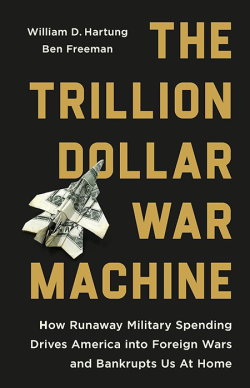 The Trillion Dollar War Machine: How Runaway Military Spending Drives America into Foreign Wars and Bankrupts Us at Home
William D. Hartung and Ben Freeman
Bold Type Books
November 2025
William D. Hartung and Ben Freeman uncover how the U.S. “war machine” has grown much larger than the “military industrial complex” that President Dwight Eisenhower once imagined. They present a framework to understand the war machine and offer a path toward shutting it down in order to reestablish U.S. security. This book reveals how politicians, lobbyists, Hollywood, universities, and others fuel the war machine to enrich a powerful elite at everyone else’s expense. From extensive costs to media promotion, this book exposes the real issues behind the war machine. The authors assert that relying on military spending to deliver “safety, security, and prosperity” is an outdated and misleading approach because the war machine weakens U.S. safety by pushing the country toward seemingly endless wars. They urge loosening the political grip of militarism to move toward reform. The authors highlight how the illusion of “military-fueled prosperity” stifles the ability to envision a livable world and say a new vision of U.S. foreign policy would abandon the supposed necessity of military domination. When Americans refuse to accept endless U.S. wars abroad, they take the first meaningful step toward breaking the war machine, the authors suggest. Arguing that public pressure is essential to reducing militarization, the book urges people across the political spectrum to oppose the war machine and pursue peace. They remind readers that the greatest cost of the machine is not the dollars spent, but the lives lost.—NAOMI SATOH
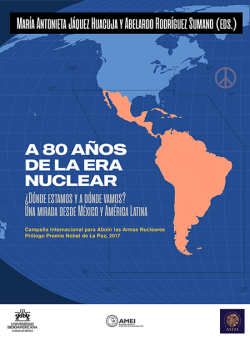
Eighty Years into the Nuclear Age: Where Are We and Where Are We Going? A Perspective from Mexico and Latin America
By María Antonieta Jáquez Huacuja and Abelardo Rodríguez Sumano (eds.)
The Mexican Association of International Studies (AMEI)
2025
The editors compiled viewpoints on nuclear weapons from Mexican and Latin American diplomats, academics, and civil society advocates in their book, A 80 años de la era nuclear, ¿dónde estamos y a dónde vamos? Una mirada desde México y América Latina, published in Spanish. Positing that past disarmament and security agreements were characterized by a unipolar international structure of the Cold War era that has limited development of a true balanced, multilateralist disarmament regime, Jáquez Huacuja and Rodríguez look for new, modern, multilateral solutions that include the Latin American and Caribbean regions. Throughout five sections, they make the case that the UN General Assembly should convene a new special session to “redefine guiding principles, revitalize multilateral commitment, give an effective voice to civil society, and address new strategic threats of the 21st century with a truly inclusive and transparent focus.” States in Latin America and the Caribbean “must assume leadership” to this end, they write. In an email exchange, Jáquez Huacuja told the Arms Control Association that “There are very few books on this issue in Spanish [and] with Latin American authors only, so we hope this can contribute to the reflection on nuclear disarmament issues in this very complicated time and age.”—LIBBY FLATOFF