


"In my home there are few publications that we actually get hard copies of, but [Arms Control Today] is one and it's the only one my husband and I fight over who gets to read it first."
France Announces Priorities for Global Partnership
March 2026
By Kelsey Davenport
France took over the presidency of a multilateral initiative combating weapons of mass destruction (WMD) proliferation and plans to increase the visibility of the group’s work in 2026.
The Global Partnership Against the Spread of Weapons of Mass Destruction was founded in 2002 by the Group of Eight industrialized countries (now the Group of Seven). Composed of 31 members, the Global Partnership uses a matchmaking process to pair donor expertise and funding with projects aimed at reducing WMD threats and proliferation. The chair of the G-7 serves as president of the Global Partnership and sets priorities for its work agenda.
In a January statement, France highlighted how the “evolving security landscape and the rapid advancement of technologies are reshaping the nature” of proliferation risks and pledged to adapt the initiative’s work to meet these challenges. Specifically, the French presidency will focus on three strategic objectives. First, France will focus on ensuring that the Global Partnership’s “governance and strategies are … robust and effective.” Second, France will look to “actively engage new countries and organizations” and potentially expand the initiative’s membership. Third, France will focus on enhancing communication and awareness, to highlight the initiative’s work and foster “deeper understanding” of WMD threats and solutions.
Canada, the president for 2025, highlighted the Global Partnership’s accomplishments over the past year in an outgoing message. The January statement said that the 31-member body launched a new strategy for addressing WMD-relevant technologies, such as artificial intelligence and gene editing, to identify how the partnership can use these tools for “deterrence, detection, and response.” Canada also noted that partnership members endorsed new biosecurity deliverables and a revised chemical security strategic vision.
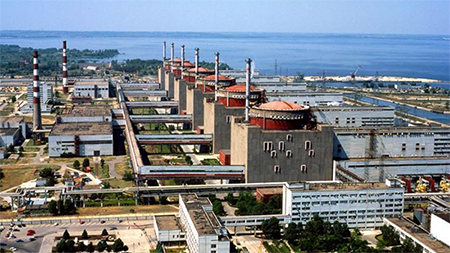
Under Canada’s presidency, the Global Partnership implemented 344 projects in 158 countries. Nearly half of the projects focused on enhancing nuclear and radiological security. Ukraine continued to be a priority for nuclear security work, as member states funded projects designed to enhance the protection of nuclear facilities and train law enforcement in counter-nuclear smuggling efforts. Partners also funded new nuclear security projects to identify and address cyber vulnerabilities in emerging technologies, such as small modular reactors, according to the annex.
More than 100 projects sought to mitigate biological threats, including continued efforts to build biosecurity capacity in Africa and Asia. Partner states also supported projects designed to enhance bio-detection capabilities.
Fifty-six projects focused on chemical security, including support for the Organisation for the Prohibition of Chemical Weapons’s work in identifying undeclared chemical weapons in Syria and mitigating the threats posed by Russia’s use of toxic chemicals against Ukraine.