


"I find hope in the work of long-established groups such as the Arms Control Association...[and] I find hope in younger anti-nuclear activists and the movement around the world to formally ban the bomb."
Trump’s Chaotic and Reckless Iran Nuclear Policy
March 2026 (published online Feb. 26)
By Daryl G. Kimball
Eight years after abandoning the 2015 nuclear deal that was effectively blocking Iran’s path to a bomb, and less than a year after Israeli and U.S. forces struck key Iranian nuclear facilities, U.S. President Donald Trump has dispatched his envoys to try to persuade Iran to permanently give up the option to enrich uranium or face another, possibly much larger, U.S. attack.
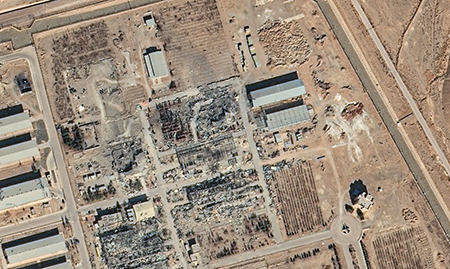
Renewed U.S. military strikes on Iran would be counterproductive, reckless, and unjustified on nonproliferation grounds. Such a war of choice against Iran, without congressional approval, would violate the Constitution and the 1973 War Powers Act. It also would violate Article 2(4) of the UN Charter, which prohibits the threat or use of force in international relations.
The June 2025 U.S attacks severely damaged Iran’s major uranium enrichment facilities, but not its resolve to retain a nuclear program or its nuclear know-how. Nor did the operation remove or help account for 440 kilograms of uranium enriched to 60 percent U-235 that Iran already had stockpiled.
Instead, the military operation derailed diplomatic talks and Iranian cooperation with the International Atomic Energy Agency (IAEA). As a result, the IAEA has not been able to access any of the bombed sites or to account for the nuclear material, which is a violation of Iran’s safeguards obligations.
Nevertheless, it is clear that it would take Iran years to fully rebuild its enrichment plants and months to enrich small amounts of uranium to bomb-grade and to process it into metal for a weapon. There is no imminent threat; Iran is not close to “weaponizing” its nuclear material so as to justify another U.S. attack.
Trump has not yet explained his case for war. He may believe the threat of strikes or “limited” attacks can force Iranian leaders to capitulate. That is highly unlikely. He has reportedly told advisers that if diplomacy or a targeted attack does not lead Iran to give in to his demands, he will consider a much bigger attack that is intended to drive the state’s leaders from power.
The reality is that even an ostensibly limited U.S. military strike runs a serious risk of unleashing an Iranian counterattack and prolonged regional conflict. Meanwhile, the leaders of nuclear-armed Israel are lobbying Trump to take an even more aggressive position and threatening to strike Iran’s ballistic missile sites themselves even if there is a new U.S.-Iran agreement to constrain the nuclear program.
Another wave of U.S. or Israeli attacks on Iran likely would drive Iranian leaders away from negotiations and strengthen the argument inside Iran that only possessing nuclear weapons can protect the state from external attack. Other nations in the Middle East and beyond likely will draw a similar conclusion, increasing the odds of expanded nuclear proliferation in the years ahead.
Instead, the United States and Iran should continue to work without delay to arrive at pragmatic solutions that address international concerns about Iran’s residual nuclear capabilities and materials stockpiles and remove the threat of a wider war.
Tragically, Trump’s negotiators are trying to address problems that had been addressed by the nuclear deal that Trump unilaterally abandoned in 2018, the Joint Comprehensive Plan of Action (JCPOA). That agreement imposed clear limits, prohibitions and intrusive IAEA inspection requirements on Iran that were to last for 10 or 15 years, with some being permanent. For example, the JCPOA barred any production of any highly enriched uranium by Iran through 2030.
Iran insists a new agreement to address concerns about its nuclear program is within reach. If each side refrains from insisting on maximalist positions, that may be possible.
At a minimum, Iran must finally allow a resumption of more intrusive IAEA inspections, and fully account for its nuclear material and centrifuge manufacturing sites. Given that Iran’s major enrichment plants and uranium conversion facilities are damaged or appear idle, Tehran should also agree to temporarily and voluntarily suspend uranium enrichment for a period of several years, which is not necessary for Iran’s current domestic nuclear energy needs. Iran reportedly made an offer that is closer to this formula on Feb. 26.
For his part, Trump should not insist on broad limits on Iran’s ballistic missiles, which leaders in Tehran see as essential to deter external attacks. Washington can and should extend targeted sanctions relief, recognize Iran’s right to pursue the peaceful use of nuclear energy as outlined in Article IV of the nuclear Nonproliferation Treaty, and agree that in the future Iran can engage in limited centrifuge manufacturing and low-level uranium enrichment as part of a new regional nuclear fuel consortium with other Gulf states.
Trump should also extend guarantees that there will be no further U.S. attacks and, given the threat of unilateral Israeli aggression, pledge that he will not provide U.S. support for Israeli attacks on any Iranian nuclear or military facilities so long as Iran and its regional proxies refrain from attacking Israel, the IAEA is allowed to do its work, and Iran meets its safeguards obligations.
The resumption of U.S.-Iranian nuclear talks is a critical opportunity to reduce proliferation risks and avert what would be an illegal, deadly, and counterproductive regional war.