


“For half a century, ACA has been providing the world … with advocacy, analysis, and awareness on some of the most critical topics of international peace and security, including on how to achieve our common, shared goal of a world free of nuclear weapons.”
Experts Assess NPT Review Conference
June 2026
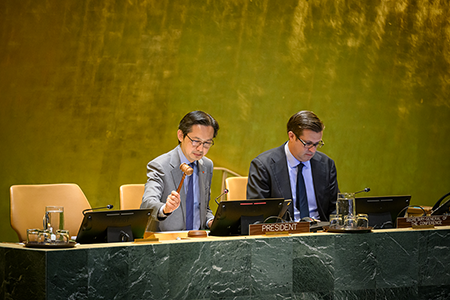
The steady buildup of Soviet/Russian and U.S. nuclear arsenals after World War II —by 1985 the two superpowers amassed roughly 63,600 such weapons between them—was so alarming that, over decades, international leaders created a web of treaties, norms and organizations to stem proliferation and encourage disarmament. Central to that network is the nuclear Nonproliferation Treaty and its process of holding review conferences every five years to examine how the NPT is holding up and what can be done to strengthen it in the future. Expectations for the 11th NPT Review Conference, held April 29-May 22 in New York, were never very high. The old international order is breaking down. China has firmly planted itself as a rising power pursuing an expanded nuclear arsenal. Moscow and Washington seem less likely to accept limits on weapons or even talk about them. Arms Control Today asked five veteran international diplomats to offer spot analyses on why the 2026 review conference failed, whether the landmark treaty still has value and what must be done going forward to address nuclear weapons risks.
NPT is ‘Battered and Bruised’
By Paul Meyer
NPT Diplomacy Needs More Emphasis
By María Antonieta Jáquez
NPT Conference Shows Path Forward
By Gustavo Zlauvinen
NPT Outcome Masks Depth of Disagreements
By Gaukhar Mukhatzhanova
Conference Fails Due to Politics, Not NPT
By Adam Scheinman
NPT is ‘Battered and Bruised’
By Paul Meyer
The nuclear Nonproliferation Treaty (NPT) has emerged from its 11th Review Conference battered and bruised. It may even be a case of “three strikes and you’re out” as the conference once again failed to agree on an outcome document.
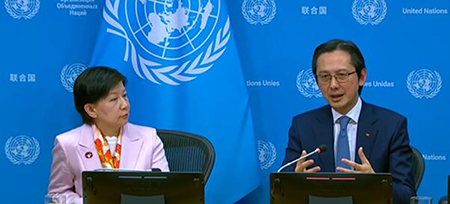
The internal contradiction evident among its members, whereby the treaty’s Article VI obligation to nuclear disarmament clashes with the perceived security benefits of nuclear arms on the part of the five nuclear-weapon states and their allies, was much in evidence. The latter grouping was largely successful in diluting or deleting more binding commitments proposed by the majority of the states-parties.
Notably, calls for the nuclear-weapon states to adopt no-first-use policies, which were included in initial drafts of the review conference outcome document, were deleted. So were calls on Russia and the United States to abide by the New Strategic Arms Reduction Treaty limits and references to the need to maintain or declare moratoriums on the production of fissile material.
Other significant proposals were watered down to the point of irrelevance. A conference “decision” that nuclear-weapon states should present national reports was reduced to a conference “welcome” of the “voluntary commitment” of the nuclear-weapon states to do so. Similarly, the “right” of non-nuclear-weapon states to receive legally binding negative security assurances was reduced to acknowledging the “interest” of these states in obtaining such assurances.
Egregious backsliding on prior obligations was also manifested. For instance, U.S. and Polish delegates contested the 2010 Review Conference text affirming the “catastrophic humanitarian consequences of any use of nuclear weapons.” They argued that while a nuclear war might generate such results, a mere detonation of a nuclear weapon would not, or that the reaffirmation of this text would undermine nuclear deterrence.
Backbiting among China, Russia, and the United States did not contribute to an atmosphere of common purpose. The U.S. accusation that China had violated the Comprehensive Test Ban Treaty (CTBT) with a low-yield nuclear test that the Comprehensive Test Ban Treaty Organization International Monitoring System was unable to detect impugned the authority of the treaty at the same time as the U.S. refusal to ratify the agreement (along with eight others) meant that supplementary verification provisions, such as on-site inspections, were not operable.
Reflective of the NPT’s performance deficits is the fact that the CTBT has yet to enter into force 30 years after its conclusion, even though it was the top priority for states-parties at the 1995 Review and Extension Conference, which resulted in the treaty’s indefinite extension. Many non-nuclear-weapon states may well feel buyers’ remorse for agreeing to this step, given that it has provided them scant leverage over the conduct of the nuclear-weapon states.
Current events are eroding the nonproliferation norm; the frayed authority of the NPT as displayed at this review conference will not help stem this deterioration.
Paul Meyer, an adjunct professor of international studies at Simon Fraser University, is a former Canadian ambassador for disarmament.
NPT Diplomacy Needs More Emphasis
By María Antonieta Jáquez
Review conferences of the nuclear Nonproliferation Treaty (NPT) attract comments that tend to equal their outcomes, or lack of them, to the success or failure of the treaty itself. We must value the review conferences for what they are.

The NPT was built as a contract. States that did not have nuclear weapons committed not to opt for them. They expected the right to enjoy the benefits of the peaceful uses of nuclear energy, and that those states possessing nuclear weapons would disarm in return. This is how the “grand bargain” is understood by most of the states-parties.
Article VIII of the treaty requires a conference every five years to examine the implementation of this contract. Review conferences are not amendment conferences, nor meetings to reconstitute the whole regime. The review clause responded to the fact that more provisions in the letter of the treaty apply exclusively to non-nuclear-weapon states than those that apply to nuclear-weapon states. Additionally, the treaty-recognized nuclear-weapon states coincide with the five permanent members of the UN Security Council, each with the so-called right to veto. Non-nuclear-weapon states must comply with obligations under International Atomic Energy Agency (IAEA) verification rules; otherwise, they can be subject to questions or even sanctions. So, the review conferences function as forums in which to assess whether nuclear-weapon states are fulfilling their part of the contract, particularly about nuclear disarmament.
This is why there is a high expectation that an agreed outcome by a review conference, accepted either unanimously or without a vote, would lock in progress in that area by the nuclear-weapon states. Now, we are facing the reality that compromises are less likely because of reinterpretations of the contract and of principles and standards.
However, the lack of an agreed review conference outcome does not represent the automatic demise of the NPT. Its states-parties, especially the non-nuclear-weapon states, will continue complying with the treaty. States-parties are constantly reiterating their commitment to the NPT, and this is not likely to change any time soon.
As a new review cycle starts, diplomacy and dialogue should be pursued with more emphasis. Lack of cooperation among the nuclear-weapon states and the fragmentation in their positions regarding past obligations and commitments brought uncertainty and a higher trust deficit to an already polarized environment. The division goes beyond the possession of nuclear weapons and is really about those believing that these weapons are the basis of international security, and the majority that does not think so. This must be addressed, with the understanding that the NPT is not aimed at justifying the existence and use of nuclear weapons, and that the security concerns of all non-nuclear-weapon states must be considered, not despite the geopolitical juncture, but because of the current conditions.
María Antonieta Jáquez is the coordinator for disarmament, nonproliferation, and arms control in the Secretariat of Foreign Affairs of Mexico. These comments reflect her personal views.
NPT Conference Shows Path Forward
By Gustavo Zlauvinen
The 11th nuclear Nonproliferation Treaty (NPT) Review Conference ended its work May 22 without adopting a final document. Most delegations, in their concluding remarks, expressed regret for that circumstance. Some even considered that not achieving consensus on a final document in three consecutive “failed” review conferences constitutes a serious blow to the treaty. However, one must not confuse failing to adopt a final document with failing to review the treaty’s obligations, and identify a way forward.
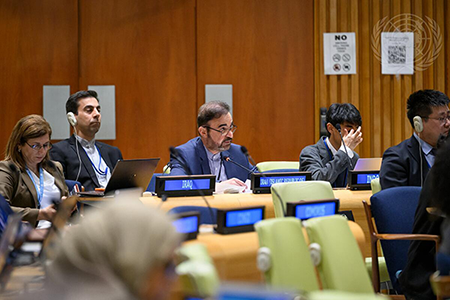
A final document was adopted by consensus in only four review conferences (1975, 1985, 2000, and 2010), whereas it was not achieved in seven cases (1980, 1990, 1995, 2005, 2015, 2022, and now 2026). This rather negative tally did not impede the treaty from continuing to pursue its goals and objectives, even during times of highly conflicting international geopolitics, as we are currently witnessing.
But for many government officials and representatives of civil society, the inability of states-parties to achieve consensus on a final document demonstrates that the 11th Review Conference was a failure.
This is a very simplistic, linear way of reasoning. The conference provided a platform for delegations to assess the status of implementation of the treaty’s provisions, albeit with strong disagreements, and to discuss the actions and decisions needed to correct it. This is exactly what the treaty requires member states to do every 5 years.
The fact that states-parties did not agree on a text that would reflect that assessment did not prevent delegations from leaving New York with a clear understanding of the current fractures: the conflicting issues and positions, the areas where progress is lacking, and more importantly, the specific cases of actual or potential treaty noncompliance.
Member states took home an “X-ray” of the status of the treaty—one that it is far from acceptable or desirable. They must carefully use the next review cycle to produce a diagnosis and identify processes and actions that could help resolve the fractures if they want to maintain the NPT’s credibility and relevance.
Gustavo Zlauvinen, Argentina’s ambassador to the International Organizations in Vienna, was the president of the 10th NPT Review Conference.
NPT Outcome Masks Depth of Disagreements
By Gaukhar Mukhatzhanova
The just-concluded 11th nuclear Nonproliferation Treaty (NPT) Review Conference convened in such a difficult international environment that an agreement on a substantive outcome seemed all but impossible. That on May 22—the last day of the conference—it came down to a disagreement over referencing Iran in the context of noncompliance with nonproliferation obligations masks the depth and breadth of disagreements among states-parties on a variety of other issues.
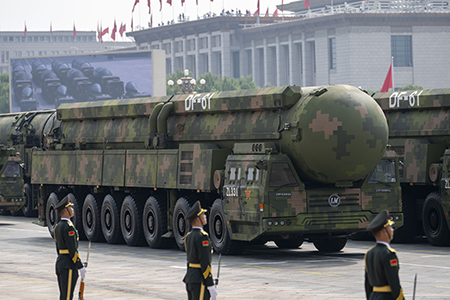
Debates on the draft final document have demonstrated just how much the salience of nuclear weapons has increased in recent years and how the growing geopolitical competition involving China, Russia, and the United States defines the current dynamics of the NPT review process. Against the backdrop of the modernization and growth of nuclear arsenals and the heightened risk of nuclear weapon use, nuclear-weapon states questioned the urgency of the need to implement Article VI of the NPT and resisted language expressing concern about the humanitarian consequences of any use of nuclear weapons. A clear reaffirmation of past commitments on nuclear disarmament was almost a bridge too far for these nuclear-armed states, especially Russia and the United States, let alone agreeing to new progressive measures.
On the other hand, the conference draft did recall the humanitarian and environmental dangers of nuclear testing and recognized the calls for assistance to those affected by nuclear weapons testing and use. The nuclear-weapon states were also prepared to agree to engage in efforts, including “constructive dialogue,” on measures to ease tensions and reduce strategic risks.
The commitment falls far short of the non-nuclear-weapon states’ expectations and calls for nuclear risk reduction and arms control negotiations, but it is worth noting that the language appears to be a result of direct engagement among the nuclear-weapon states during the review conference. Perhaps the pressure of responsibility to achieve some progress, particularly on reducing the risk of nuclear use, could result in more constructive engagement now that the conference is finished.
One of the biggest losses from the lack of final document is the failure to advance enhanced reporting on Article VI implementation and to institutionalize interactive discussions of the nuclear-weapon states’ reports as part of the NPT review process. The issue defined much of this review cycle’s discussions, and even the weakened formulation in the last draft document would have added a new element to the review conferences and helped improve transparency. Going into the next review cycle, states-parties should continue pushing for progress in this area.
Gaukhar Mukhatzhanova is the director of International Organisations and Non-Proliferation at the Vienna Center for Disarmament and Non-Proliferation, and the center’s Japan Chair for a World without Nuclear Weapons program.
Conference Fails Due to Politics, Not NPT
By Adam Scheinman
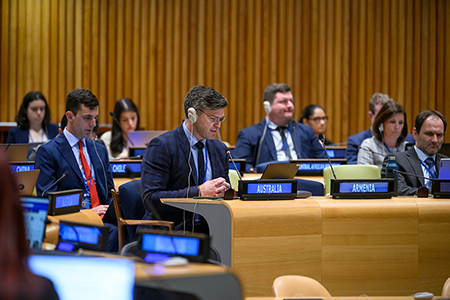
As predicted by many, the 2026 nuclear Nonproliferation Treaty (NPT) Review Conference closed with a thud, with the conference president opting to withdraw a final document that was unlikely to command consensus agreement of the states-parties. With this third consecutive failure to achieve a consensus outcome, some may ask whether the NPT remains relevant or worth preserving. It is.
There is no doubt that the treaty, a product of Cold War diplomacy, is straining under the weight of deteriorating international conditions, not least of which are the ongoing military conflicts in Europe and the Middle East and U.S. President Donald Trump’s monumentally shortsighted forfeiture of global leadership. In the current circumstances, the dangers of nuclear proliferation or even nuclear war are rising. What makes the NPT unique, and strategically necessary in today’s environment, is its establishment of a global principle of nuclear restraint: that states without nuclear weapons will not pursue them and the five nuclear- weapon states bound by the treaty will work to reduce them.
Although that bargain is obviously under significant stress, the treaty is not in danger of collapsing, notwithstanding the failure to reach consensus at this review conference. That outcome is a failure of the treaty’s political process, not of the treaty itself. As long as the NPT endures, nuclear restraint as an organizing principle will continue to carry political and legal weight and to shape future review conference conclusions.
Perhaps by the time of the NPT’s next quinquennial review, conditions will be more favorable for endorsement of actions to lessen risks of a nuclear conflict, address violations, and prepare for the significant expansion of nuclear power. One can hope that the treaty’s political leaders, not least the United States, will be up to the task.
Adam Scheinman, a retired U.S. government nuclear expert, served as the special representative for nuclear nonproliferation in the Obama and Biden administrations.