


"Though we have achieved progress, our work is not over. That is why I support the mission of the Arms Control Association. It is, quite simply, the most effective and important organization working in the field today."
Two Nuclear Wrongs Don’t Make a Right
May 2026
By Daryl G. Kimball
For decades, a global ban on nuclear test explosions has been a central goal, and is now a central element, of the nuclear nonproliferation and disarmament regime because an effective, comprehensive, verifiable test ban directly constrains the ability of all parties to develop new or more-advanced nuclear weapons.
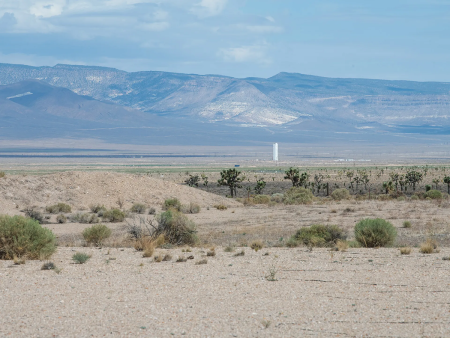
The push to end all nuclear test explosions has also been driven by the widespread human suffering and environmental contamination produced by more than 2,000 atmospheric and underground nuclear test explosions since 1945, the effects of which continue to affect downwind populations today.
Three decades after the conclusion of the 1996 Comprehensive Test Ban Treaty (CTBT), it has 187 signatures and near-universal support, but the treaty and the de facto global nuclear test moratorium are facing unprecedented new challenges. Not only have nine key states failed to ratify it, but there are new U.S. accusations of noncompliance against China and Russia, and President Donald Trump has threatened to resume U.S. nuclear testing for the first time since 1992.
The situation requires that all states parties urgently reaffirm the value of the CTBT and call for new measures to ensure compliance at this month’s nuclear Nonproliferation Treaty Review Conference and beyond.
Although the CTBT Organization’s International Monitoring System is more effective than originally envisioned, very low-yield nuclear test explosions can still be difficult to detect without short-notice, on-site inspections, which will only be available once the treaty enters into force.
This is why, some 20 years ago, civil society experts recommended that the “nuclear weapon states should implement confidence-building … measures at their sites” to ensure they are not currently engaged in prohibited activities. It is also why in 2023, the head of the U.S. National Nuclear Security Administration (NNSA), Jill Hruby, suggested that the United States, Russia, and China, could work together “to develop a regime that would allow reciprocal observation with radiation detection equipment at each other’s subcritical experiments to allow confirmation that the experiment was consistent with the CTBT.”
In the absence of the CTBT’s entry into force or new voluntary confidence-building measures, there remains risk that certain activities at these former nuclear testing sites that are prohibited—nuclear experiments that produce a self-sustaining nuclear chain reaction—might go undetected or might be misinterpreted as a nuclear explosive test.
This is the dangerous situation we are now facing.
Although U.S. nuclear weapons labs have confirmed year after year that there is no technical or military reason for renewed U.S. nuclear test explosions, on Oct. 30, 2025, Trump, threatened to resume nuclear testing “on an equal basis.” Since then, the White House and the NNSA have not been able or willing to clarify what kind of nuclear weapons tests Trump is talking about. In fact, the NNSA and U.S. Strategic Command have reaffirmed that there is no technical or military basis to restart nuclear explosive testing.
Nevertheless, an internal NNSA planning document from February indicates that the agency plans to “Execute the President’s directive with respect to the testing of the U.S. nuclear deterrent” before the end of 2028.
Trump’s impulsive directive to resume testing appears to be all about political retribution and his belief that some other nuclear-armed state has conducted a nuclear test in violation of a treaty that his administration does not support.
On February 6, a senior U.S. official alleged that China conducted a nuclear test explosion on June 22, 2020. U.S. officials also claim that data from a CTBTO primary seismic station in Kazakhstan shows that China conducted a 10-ton (TNT equivalent) nuclear test explosion. In 2019, Trump officials also claimed “Russia probably is not adhering to its nuclear testing moratorium in a manner consistent with the CTBT.”
However, the data available from the International Monitoring System and other seismic monitoring stations in the region do not indicate conclusively that the seismic events in China on June 22, 2020 were produced by a nuclear explosion, according to published statements from the CTBTO and respected nongovernmental scientific institutions. China and Russia have denied the U.S. allegations of nuclear testing.
Even if China conducted a clandestine nuclear test explosion in June 2020, or that Russia may have conducted such a test sometime after 1996, two nuclear wrongs don’t make a right.
Not only would further nuclear explosive testing by the United States (or others) violate the CTBT, but it would also undermine global security. Renewed U.S. explosive testing, at any yield, would set off a chain reaction of nuclear testing worldwide that would improve the nuclear capabilities of U.S. adversaries and blow apart the global nonproliferation system.
U.S. Assistant Secretary of State Christopher Yeaw stated Feb. 23 that he hoped the U.S. allegations would “spur a discussion on how we all approach responsible nuclear testing behavior going forward.” The only responsible nuclear testing behavior is not to do it and to take the steps necessary to detect and deter anyone else from doing so ever again.
This essay is based on a longer statement that is to be delivered to the 2026 NPT Review Conference on May 1.