


Inside ACA
June 2026
After weeks of tough negotiations and debate, diplomats at the pivotal 11th nuclear Nonproliferation Treaty (NPT) Review Conference failed to reach consensus on a modest outcome document that reaffirmed consensus-based commitments on nonproliferation and disarmament made at the 1995, 2000, and 2010 Review Conferences.
The five nuclear-armed states thwarted the demands of the majority of non-nuclear weapon states and civil society organizations, including ACA, for meaningful language calling for concrete steps to advance negotiations on nuclear disarmament, as Article VI of the NPT requires.
Instead, the nuclear five would only agree to pursue “constructive dialogue … to enhance confidence and reduce strategic risks” noting “that such engagement could facilitate future arms control discussions, and help progress towards nuclear disarmament ….
Meanwhile, during the month-long NPT conference, President Trump met with President Xi in Beijing but neither side discussed nuclear risk reduction or arms control matters.
None of this was all that surprising, but it was certainly disappointing.
In the wake of the NPT Review Conference, the State Department is depicting the NPT discussions about having dialogue that could, maybe, lead to disarmament talks as a success.
We are not assuaged.
Talk about talks may be necessary but concrete action is overdue and required.
To improve the chances of success in future arms reduction talks and to prevent unconstrained nuclear competition, all five NPT-recognized nuclear-armed states should agree to a mutual and verifiable freeze of their strategic launchers at their current numbers. The United States also needs to begin sustained bilateral nuclear arms control talks with Russia and separately with China.
You can count on ACA to continue working with concerned leaders in Congress and with non-nuclear weapons states to press the Trump administration and the other NPT nuclear five leaders to translate vague talk into meaningful action on disarmament diplomacy.
You can help: Please contact your members of Congress to urge them to speak up and be part of the solution through this action alert.

Daryl Kimball and Ray Acheson with Reaching Critical Will speak to reporters at the UN on the last day of the NPT Review Conference on May 21.
One bright spot from NPT Review Conference was that the vast majority of NPT states-parties insisted, despite strong U.S. opposition, on retaining meaningful language in the final draft outcome document, strongly opposing the resumption of nuclear testing, and supporting the CTBT and commending its international monitoring and verification system.
Also, at France’s urging, the U.S., UK, and French delegations issued a statement endorsing a concept that ACA has championed for many years and briefed delegations about before the conference: confidence-building measures regarding nuclear explosive test monitoring, including increasing the ability to detect tests of any yield to ensure that all states comply with the CTBT’s “zero-yield” standard before the treaty enters into force.
We’ll be working to take this idea to the next step as we continue to defend against any effort to resume nuclear testing by any state for any reason.
Thanks for your engagement and support.
Onward,

Daryl G. Kimball, Executive Director
Highlights from Our June 2 Annual Meeting
On June 2, more than 125 members and friends of the Arms Control Association gathered at the National Press Club for the 2026 Annual Meeting: “Forging a Safer Path in the New Nuclear Era.”
Some 600 people from all over the world tuned in to the livestream. We heard inspirational messages and discussed difficult nuclear weapons-related challenges.
Recordings of our keynote speakers — NPT Review Conference President Amb. Do Hung Viet, CTBTO Executive Secretary Robert Floyd, and Archbishop John C. Wester — and each of our expert panel sessions are now online at ArmsControl.org/2026AnnualMeeting.
Also check out the uplifting special message from the winners of the 2025 Arms Control Persons of the Year Award, the Hiroshima and Nagasaki Peace Messengers.

ACA greatly appreciates the support from our members and meeting attendees and we especially want to thank our meeting sponsors whose contributions made this event possible.
If you found the Annual Meeting and our work useful, and you are not yet a supporter, we invite you to become a sustaining member of the Arms Control Association, which includes a monthly subscription to Arms Control Today.
Iran-U.S. Nuclear Talks: the Next 60 Days
After abandoning the successful 2015 Iran nuclear deal in his first term and then failing to negotiate a “better” agreement, President Trump joined nuclear-armed Israel in illegal strikes on Iran during his second term. To date, his approach has been a nonproliferation disaster and the 2026 war has proven to be a massive strategic blunder.
Earlier this week, a long-awaited Memorandum of Understanding to end the war and reopen the Strait of Hormuz was concluded and signed. This MoU opens the way for the resumption of talks on Iran’s nuclear program which were underway until the U.S.-Israel war was launched on Feb. 28. According to the MoU, specifics on nuclear matters will need to be negotiated during a future 60-day negotiating period.
See the June 15 statement by ACA’s director for nonproliferation policy Kelsey Davenport describing what the negotiators should aim to do regarding Iran’s uranium stockpiles, realistic restrictions on uranium enrichment, and the return of IAEA inspectors to establish a new baseline and to verify compliance with the terms of any new deal.
In the coming weeks, ACA will continue to help inform the debate and report on developments. Stay tuned for further news and analysis via armscontrol.org.
Remembering Stephen Warnke and Tom Scoville
The ACA family mourns the loss of two close friends.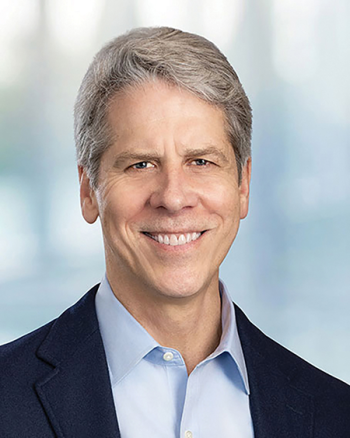
Stephen Warnke, 65, a member of the Arms Control Association Board of Directors, died unexpectedly May 13 while traveling in England with his wife, Susan Sommer. He was recently retired from a quarter-century career with the New York law firm Ropes & Gray and looking forward to enjoying life and helping make the world better.
As Stephen’s son, Paul, wrote in a message to us, Stephen “was passionate about ACA and its mission and was excited to serve on ACA’s board with the vigor and dedication he approached so many endeavors in his life. Supporting ACA was his way of carrying forward his father’s legacy—their shared dedication to a principled U.S. foreign policy and making the world a safer place.”
Stephen’s late father, Paul C. Warnke, was a major figure in the field of nuclear arms control and disarmament, a mentor to many younger experts and professionals in the field, and also a member of ACA’s Board of Directors until his death in 2001.
Stephen’s death is a devastating loss. Our hearts go out to the Warnke family, Stephen’s innumerable friends, and longtime colleagues at Ropes & Gray, where Stephen was a well-respected and in-demand healthcare attorney.
Tom Scoville passed away peacefully at the age of 83 at his home in Taconic, Connecticut. He was the second child of Ann and Herbert “Pete” Scoville, the latter served as ACA’s president until 1985.
Tom’s career reflected a lifelong commitment to public policy and international affairs. He contributed to several presidential campaigns, including those of Sargent Shriver, Morris Udall, Jerry Brown, and Jimmy Carter. He later served at the U.S. Arms Control and Disarmament Agency, working with figures such as Paul Warnke, George Seignious and McGeorge Bundy, contributing to national discussions on arms control and defense policy.
In 1987, Tom and his family established a peace fellowship to help provide an entry point for aspiring nuclear arms control and disarmament scholars and activists in the field. The Scoville Peace Fellowship program has launched the careers of many, including current ACA leaders Daryl Kimball, Kesley Davenport, and many more.
ACA Welcomes New Policy Intern: Mia Clarke
ACA’s summer intern, Mia Clarke started on May 29 - just in time to help with our Annual Meeting - and will be interning full-time at ACA through August 7.
Mia is an undergraduate student at Notre Dame University, where she has an exemplary academic record, and has shown a proactive interest in nuclear weapons policy issues.
At Notre Dame's Kroc Institute, she was responsible for organizing a disarmament webinar series.
Mia is interested in ethical questions related to nuclear weapons as well as putting her communications background to use.
She is also interested in issues at the intersection of artificial intelligence and nuclear weapons.
Matthew Sharp Joins ACA As Senior Visiting Fellow
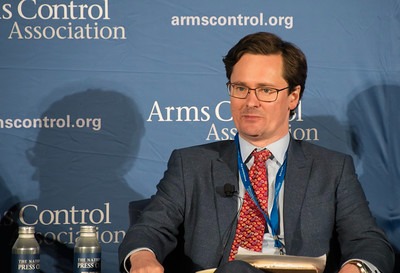
ACA is pleased to announce that Matthew Sharp has joined us as a senior visiting fellow to advise us on our work on multilateral nuclear arms control and new military technologies.
He will contribute occasionally to Arms Control Today and other projects and events.
Matthew is currently a senior nuclear fellow at the Center for Nuclear Security Policy within MIT’s Security Studies Program, having served from 2009 to 2025 at the U.S. Department of State, most recently as acting deputy assistant secretary for nuclear affairs in the Bureau of Arms Control, Deterrence, and Stability.
He also served as Director for Iran Nuclear Issues on President Biden’s National Security Council staff from 2021 to 2022.
Go Deeper: ACA Research, Analysis, and Program Updates
“ACA Calls on Congress to Slash Trump's Bloated $1.5 Trillion Military Budget,” May 18, 2026. Instead of further wasteful and excessive spending on the U.S. nuclear weapons enterprise, ACA calls on Congress to question the military effectiveness and strategic wisdom of the expensive nuclear build-up underway.
“A New Strategic Reality: New START, China, and the Future of Arms Control: Interview with Daryl Kimball by Alexandra Zubenko” via the PIR Center (Moscow), March 31, 2026.
ACA In the News
ACA’s team of experts are regularly cited, especially when there are significant WMD-related developments. The following is just a small sample of some of the news reporting we helped to shape.
“Trump aims to end Iran war but nuclear issue remains unresolved,” ACA nonproliferation policy director, Kelsey Davenport, is cited by BBC, June 13, 2026.
“U.S. and Iran close to signing ceasefire deal, officials say,” Davenport is quoted in The Washington Post, June 13, 2026.
“North Korea quietly ramps up its nuclear program,” Davenport is cited by Deutsche Welle, June 5, 2026.
“Enriched uranium removal from Iran to Russia should be seen as good solution — US expert,” ACA Board Chair Tom Countryman was interviewed by TASS, June 3, 2026.
“How does Trump solve key 'nuclear dust' hang-up in negotiations to end Iran War?,” Davenport is quoted by Fox News, May 29, 2026.
“Conference at UN to review nuclear nonproliferation treaty fails to reach agreement,” by the Associated Press, May 22, 2026 quotes ACA executive director, Daryl Kimball’s analysis.
“Inside the Unraveling of US Diplomacy Under Trump,” a Reuters investigation cites ACA’s account of the role of Witkoff and Kuschner in nuclear negotiations with Iran, May 21, 2026.
“It’s time to officially acknowledge Israel’s nuclear arsenal,” Davenport is quoted by MS Now May 8, 2026.
Where things stand on Iran nuclear negotiations, Davenport is interviewed on NPR, May 5. 2026.
“Some Democrats press Trump to break silence on Israel’s nuclear arsenal. A letter by 30 House lawmakers calls on the United States to expose Israel’s secret nuclear weapons arsenal,” in The Washington Post, May 5, 2026, quotes ACA executive director, Daryl Kimball.
“White House offers shifting rationales for war with Iran,” Kimball is quoted in The Washington Post, May 3, 2026.