


“What's really strikes me about ACA is the potential to shape the next generation of leaders on arms control and nuclear policy. This is something I witnessed firsthand as someone who was introduced to the field through ACA.”
The Puzzle of Multilateral Arms Control
June 2026
By Alexey Arbatov
The experience of six decades of nuclear arms control since the 1963 Limited Test Ban Treaty has been mostly successful, except for one aspect: the inability of Washington and Moscow to transition from their bilateral negotiating format to a multilateral format in order to physically limit and reduce nuclear arsenals beyond their two states. Over time, this has become the principal obstacle to further nuclear disarmament, at least as presented in the official positions of the two nuclear superpowers.
In 2023, President Vladimir Putin suspended Russia’s participation in the last remaining major nuclear agreement, the New Strategic Arms Reduction Treaty (New START), except for continuing to observe its numerical ceilings. Among the official reasons Moscow cited were UK and French nuclear forces, which remain outside of strategic arms control. On the U.S. side, President Donald Trump in 2026 made China’s nuclear buildup the reason for ignoring Putin’s September 2025 proposal to abide by the numerical ceilings of New START for at least one year more.1 This decision did away with that treaty and ended half a century of unprecedented success with bilateral strategic arms limitation and reduction.
The termination of New START is not in itself the beginning of the disintegration of nuclear arms control, but it may trigger its final demise. In future years, during the probable impasse of strategic dialogue and continuing strategic forces modernization, there may be growing pressure within Russia and the United States to abandon the Comprehensive Test Ban Treaty (CTBT) and resume explosive nuclear tests. Such a development might finally undercut the nuclear Nonproliferation Treaty (NPT) after its predictably unsuccessful May 2026 review conference. New weapon systems being pursued by Russia, the United States, China, and other nuclear-armed states may endanger other treaties, including those banning deployment of nuclear arms in outer space (1967) and on the seabed (1971). The scariest consequence of this trend would be a chain reaction of nuclear arms proliferation around the world with the crumbling of the seven nuclear-weapon-free zones, involving 177 states, and the ensuing access to nuclear weapons by unstable states and terrorist organizations. The new nuclear world may degenerate to nuclear chaos.
Unfortunate Experience
If the process of nuclear arms control is restarted sometime in the future, one primary challenge will be engaging the three other NPT-designated nuclear-weapon states—China, France, and the United Kingdom—in the limitation of nuclear weapons. Trump has made clear that he wants China involved in any future strategic nuclear negotiations and Putin will certainly address the question of French and UK nuclear arsenals. Thus, the multilateral approach will be at the foreground of discussions, whatever other concerns the two superpowers have about space missile defense systems, tactical nuclear weapons, conventional precision guided systems, and nuclear-armed airborne and underwater autonomous vehicles.
In fact, this is not a new subject. Initially, the idea of five-party nuclear arms control talks was launched in February 2008 at the Conference on Disarmament in Geneva. After that, a number of official five-party meetings (called P5 because the five states involved are the permanent members of the UN Security Council) adopted many general declarations in support of strategic stability, ratification of the CTBT, negotiations on a fissile material cutoff treaty, indefinite extension of the NPT, and denuclearization of the Korean peninsula. As positive as those appeals were, the main goal has remained unattainable: The states did not move an inch toward practical limitation of their nuclear arms in the P5 format.2
The fundamental error of the P5 initiative was a formal interpretation of the central NPT Article VI, which obliges nuclear-armed states “to pursue negotiations in good faith on effective measures relating to cessation of the nuclear arms race at an early date and to nuclear disarmament.” This provision has not necessarily implied five-party arms reduction talks; it just committed all NPT nuclear-weapon states to engage in arms limitation and reduction. In fact, besides the two nuclear superpowers, France and the UK took unilateral steps to restructure and reduce their nuclear forces in 1990s and 2000s to save on defense expenditures.3 However, there were no formal agreements to ensure the strategic transparency and predictability of those steps, a point to which Putin referred while suspending New START in 2023.4
The national security policies of states define the goals of their nuclear weapon programs and disarmament stances. Of the nine nuclear nations, all except Israel (and South Africa, which abandoned its clandestine nuclear program in 1989),5 associate international prestige and status with their nuclear deterrence posture. In a more tangible way, all of them assign their nuclear forces the task of nuclear retaliation for the purpose of deterring an enemy’s aggression with nuclear and other kinds of weapons of mass destruction. The same kind of response is envisioned by France, Russia, the UK, and the United States: to deter nuclear or conventional attacks on themselves or their allies and partners.
However, the targets of nuclear deterrence are different for five of the nuclear-weapon states. For Russia, the targets are primarily the United States and U.S. allies in Europe and the Pacific. For the United States, they are Russia, China, and North Korea. For France and the UK, they are Russia. For China, the United States and India, plus Japan and South Korea, which do not possess nuclear weapons but have the capability to initiate such programs if they choose.
None of the P5 states would agree to limit its nuclear forces just for the sake of NPT Article VI if that decision does not buttress its national security. Instead, a state would have to receive in exchange an adequate limitation of military capabilities by potential opponents, foremost their nuclear forces engaged in mutual deterrence relationship. Disregarding this reality is the actual reason for the failure of the P5 dialogue.
Conditions of Arms Control Engagement
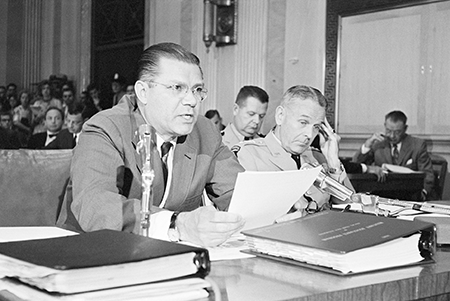
The first condition for the success of the last half century of arms control endeavors was a state of mutual nuclear deterrence. This concept was publicly recognized in the mid-1960s by the United States due to the efforts of Secretary of Defense Robert McNamara6 and adopted by the Soviet leadership under Mikhail Gorbachev in the mid-1980s.7 The second condition was the emergence of the approximate equality (parity) of strategic forces of the two superpowers in the early 1970s.
The first condition created the material foundation of interest of the parties in limiting nuclear forces of the opponent, which created the feasibility for tradeoffs. The second provided for equal starting and ending points in negotiations because no party would be willing to legalize its inferiority or sacrifice its superiority for the sake of reaching an agreement.8
This analysis may explain the reasons of the past failures to organize multilateral nuclear arms limitation in the P5 forum. The United States, France, and UK are allies and not interested in limiting each other’s weapons. The same is true about Russia and China, which have not expressed concerns (at least officially) about each other’s nuclear forces since the late 1980s. Presently, Moscow and Beijing have nothing to gain from mutual arms reduction.
Russia’s strategic relations with France and the UK are those of mutual nuclear deterrence, but their nuclear forces are highly asymmetric providing Russia with unquestioned superiority. The two European states would not agree to legalize Russian superiority in an arms control treaty with Moscow, or to put themselves under a common ceiling with U.S. forces. This option would be unacceptable for the United States as well because it would legalize a Russian advantage of 15 percent in delivery vehicles and 30 percent in warheads, which would be seen as still more detrimental in view of the ongoing Chinese strategic forces buildup.
In U.S.-Chinese strategic relations, mutual nuclear deterrence is present, but strategic parity is absent with a huge U.S. superiority expected to persist at least for the next 10 years.9
Both China and Russia would reject putting Chinese nuclear forces under a common ceiling with the Russians. Against the background of China’s projected strategic buildup, this would imply drastic reduction of Russian forces or the stringent unilateral limitation of Chinese forces.
Reviving Arms Control
In the political domain, the most vital imperative is to prevent nuclear escalation of the Ukrainian war and facilitate the ceasefire and peaceful settlement of that conflict. Relatively less explosive, but highly desirable politically is ending the conflict in the Middle East. In the meantime, the crucial arms control priority is to sustain the CTBT and the NPT.
The end of hostilities in Ukraine would open the way to resuming at least bilateral strategic arms negotiations if leaders in Washington and Moscow genuinely recognize the value of nuclear arms control for their national security as much as their predecessors did.
Dealing with a third nuclear state through the P5 arms control process is hopeless, however nice it sounds theoretically. Instead, the United States should try harder to engage China in substantive bilateral arms control discussions. Rather than proposing agreements on “transparency” and “predictability,” Washington should make suggestions that would not legalize Chinese inferiority in the types of weapons to be subject to the accord. In addition, the United States should aim to ensure that China’s eventual strategic position is better than it would be otherwise. Due to the lack of overall parity between the two countries, an initial agreement might equally limit parts of their nuclear forces that are each other’s primary concern.
Relying on the model of the 1972 Strategic Arms Limitation Talks (SALT I) interim agreement, which put limits on selected legs of strategic triads, the nuclear forces of Russia, France, and the UK may be limited by equal ceilings. They would not legalize the superiority of any party but may alleviate security concerns of both. A joint Anglo-French position on this issue would be a useful prerequisite and might fit a concept of European nuclear deterrent.
It seems inappropriate at this moment to get deeper into technical details of possible agreements among the nuclear-armed nations. The attitude of the main nuclear states toward strategic arms control is ambiguous, and the general political environment is highly unfavorable. Suffice it is to underline that a resumption of a U.S.-Russian strategic dialogue would make it easier to achieve the participation of other nations in nuclear arms control discussions.
Even if such talks took place, difficulties implementing the outcome of any agreement would be exacerbated by the emerging “revisionist” schools in Russia and abroad, which treat six decades of nuclear arms control as the outdated vestige of the past. Today, nuclear weapons are once again being portrayed as an effective instrument of foreign policy and even practical warfighting.10 These views may tangibly affect the moods of current political elites for whom the horrors of Hiroshima and the panic of the Cuban missile crisis are no more than just ancient legends.
ENDNOTES
1. It started with the U.S. withdrawal from the Anti-Ballistic Missile Treaty in 2002 and was followed by its abandonment of the Joint Comprehensive Plan of Action with Iran in 2018, and abrogation of the Intermediate-Range Nuclear Forces Treaty (2019) and Open Skies Treaty (2020). For its part, Russia suspended participation in New START and withdrew from the Conventional Forces in Europe Treaty in 2023, retrieved its ratification of the CTBT, and refused to renew strategic arms talks in 2024.
2. That is not counting the elaboration of U.S.-Chinese strategic terms dictionary.
3. Noteworthy in the environment of unique détente during the two decades that France and the UK summarily reduced their nuclear forces from about 800 down to 510 deployed warheads. See SIPRI Yearbook 1989: Armaments, Disarmament and International Security, Oxford University Press, 1989, pp. 17-29; SIPRI Yearbook 2022: Armaments, Disarmament and International Security, Oxford University Press, 2019, pp. 369-379.
4. Vladimir Putin, “Presidential Address to Federal Assembly,” February 21, 2023.
5. Israel, like South Africa until 1989, keeps its nuclear potential in secret, although its nuclear status de-facto is well known and serves its regional influence and prestige, being at the same time a problem for nonproliferation.
6. Robert McNamara, The Essence of Security: Reflections in Office, Harper and Row (New York), pp. 51-67.
7. “Joint Soviet-United States Statement on the Summit Meeting in Geneva,” Ronald Reagan Presidential Library & Museum, November 21, 1985.
8. There were, of course, exceptions to this rule. In the SALT I interim agreement, the United States accepted Soviet advantage in the number of ballistic missiles, retaining superiority in the number of heavy bombers and MIRVed (multiple independently targetable reentry vehicle) missiles beyond the negotiated limits. In the 1987 Intermediate-Range Nuclear Forces Treaty, the Soviet Union agreed to eliminate more than twice as many missiles and three times as many warheads as the United States because the U.S. medium-range missiles posed a strategic threat to the USSR reaching deep into its territory, while the Soviet medium-range missiles were out of reach of the U.S. territory and posed only a theater threat to U.S. NATO and Pacific allies, as well as to China.
9. Compared to the U.S. total active nuclear arsenal of 3,700 warheads, China has about 600, while the ratio in strategic warheads inventory is correspondingly 3,500 to 350. See SIPRI Yearbook 2022: Armaments, Disarmament and International Security, Oxford University Press, 2025, pp. 203-209.
10. John R. Bolton, “Putin did the world a favor by suspending Russia’s participation in New START,” The Washington Post, May 4, 2023; Sergey A. Karaganov, “An Age of Wars? Article Two. What Is to Be Done,” Russia in Global Affairs, Vol. 22, No. 2, April/June 2024, pp. 5-8.