Fifty-seven years ago, through the Outer Space Treaty, the United States and the Soviet Union agreed to codify a fundamental nuclear taboo: nuclear weapons shall not be stationed in orbit or elsewhere in outer space.


March 2024
By Daryl G. Kimball

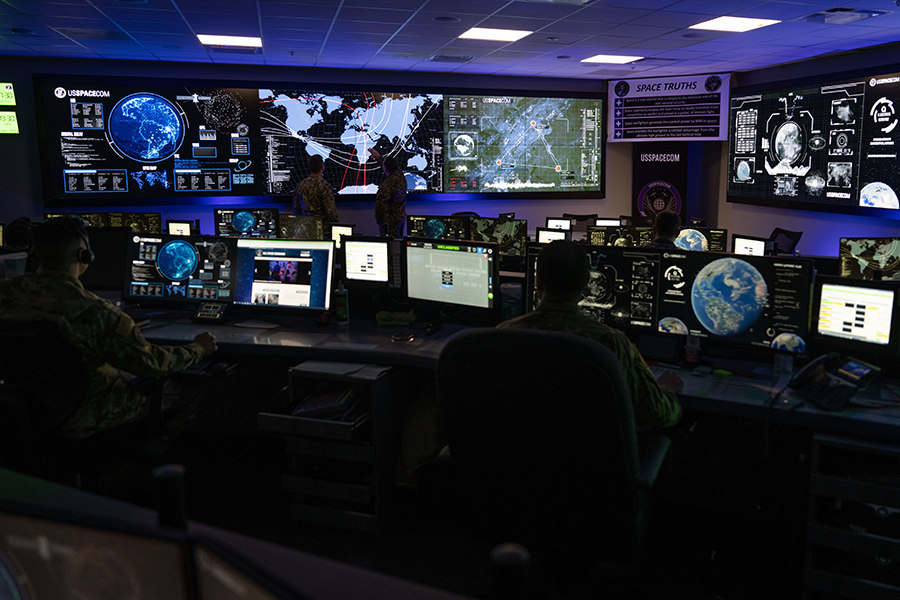
Fifty-seven years ago, through the Outer Space Treaty, the United States and the Soviet Union agreed to codify a fundamental nuclear taboo: nuclear weapons shall not be stationed in orbit or elsewhere in outer space. But there is growing concern that Russia is working on an orbiting anti-satellite (ASAT) weapons system involving a nuclear explosive device that would, if deployed, violate the treaty, undermine space security, and worsen the technological and nuclear arms race.

The flash created by the Starfish Prime high-altitude nuclear test on July 9,1962 as seen from Honolulu, 900 miles away. (Wikimedia Commons) The White House confirmed on Feb. 15 that U.S. intelligence uncovered evidence that Russia is developing an ASAT weapon that “would be a violation of the Outer Space Treaty, to which more than 130 countries have signed up to, including Russia.” Russian President Vladimir Putin issued a nondenial denial, claiming on Feb. 20 that Russia remains “categorically against…the placement of nuclear weapons in space.”

An ASAT system involving a nuclear explosive device could produce a massive surge of radiation and a powerful electromagnetic pulse that, depending on the altitude of the explosion and the size of the warhead, could indiscriminately destroy, blind, or disable many of the 9,500 commercial and military space satellites now in orbit.

Russia’s reported pursuit of a nuclear-armed ASAT system is another troubling attempt by the Kremlin to challenge the fundamental norms against nuclear weapons and to use nuclear weapons to intimidate and coerce. But it would not be a “Sputnik moment” requiring parallel ASAT weapons system development or radical new countermeasures by the United States.

As with the exotic nuclear delivery systems that Putin first announced in 2018, including a long-range, underwater torpedo and a nuclear-powered cruise missile, a nuclear-capable ASAT weapons system would add a dangerous capability. But it would not alter the existing military balance of terror.

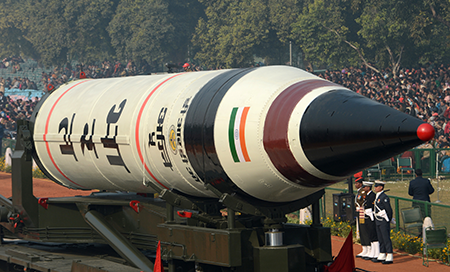
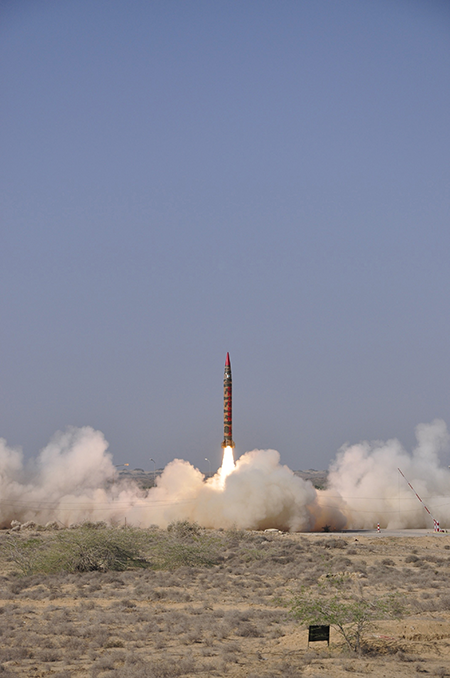
Russia already fields a range of ASAT system capabilities, including co-orbital systems that can launch cyberattacks and engage in electronic jamming of specific adversary satellites. As with China, India, and the United States, Russia has already demonstrated a capability to use a ground-based missile to hit and destroy an orbiting satellite. All nations with nuclear-armed ballistic missiles also have the latent ability to detonate a nuclear explosive device in space. From 1958 to 1962, the United States and the Soviet Union conducted nuclear explosive tests in the outer atmosphere.

The United States, which has the largest number of satellites in orbit, is already working to improve the resilience of its military communications, early-warning, and surveillance assets. A new Pentagon program soon will put constellations of smaller, cheaper satellites into orbit to counter space-based threats. Any corresponding U.S. nuclear-armed ASAT system effort would put U.S. and other satellites at even greater risk and do nothing to protect U.S. capabilities in space.

Off-and-on talks designed to maintain the peaceful use of space, including restrictions on ASAT weapons systems, have been stymied for years. A long-standing Chinese-Russian treaty proposal would ban objects placed into orbit with the intent of harming other space objects. It also would ban the “threat or use of force against outer space objects,” which would still allow suborbital and ground-based ASAT weapons capabilities.

Until recently, the United States has been wary of any legally binding restrictions on ASAT weapons systems in part because they might restrict U.S. ground-based missile defense capabilities or a possible space-based, kinetic anti-missile system that could involve a number of orbiting interceptors that provide a thin defense against ground-based missiles. More recently, the Biden administration proposed and rallied support for a ban on direct-ascent ASAT missile tests, which create debris fields that pose a major hazard to orbiting objects.

In the coming weeks, Washington, Beijing, and other capitals need to pressure Putin to abandon any ideas about putting nuclear weapons in orbit. As President Joe Biden noted on Feb. 16, that deployment “hasn’t happened yet, and my hope is it will not.”

The possibility of a Russian nuclear-armed ASAT system should also spur Washington, Moscow, Beijing, and other space-faring nations to get serious finally about additional measures to protect space security. They need to implement effective limits on ASAT weapons systems, including direct-ascent ASAT weapons and space-based systems that can destroy satellites and other objects traveling through space.

Russian ASAT weapons systems are not the only destabilizing factor in the dangerous nuclear and deterrence equation. In the absence of new, agreed constraints on Russian and U.S. strategic nuclear arsenals and measures to halt the growth of China’s arsenal, a costly three-way nuclear arms race could accelerate after the New Strategic Arms Reduction Treaty expires in 2026. In response, Biden needs to rally international pressure on Russia to support his proposals for talks on a new nuclear arms control framework and separate, regular dialogues with Moscow and Beijing on reducing nuclear dangers. Space and global security depend on it.

The Case for Senate Action on the Protocol to the Central Asian Nuclear-Weapon-Free Zone

Description

The CANWFZ is designed to reinforce the global nuclear nonproliferation system and safeguard the security of five key central Asian states that were once part of the Soviet Union and that now lie in the shadows of nuclear-armed Russia and China.

Body

Volume 16, Issue 2
Feb. 9, 2024

This year marks the 10th anniversary of the U.S. signature on the protocol to the Treaty on a Nuclear-Weapon-Free Zone in Central Asia (CANWFZ), also known as the Semipalatinsk Treaty. The CANWFZ treaty commits its five states-parties in Central Asia—Kazakhstan, Kyrgyzstan, Tajikistan, Turkmenistan, and Uzbekistan—from manufacturing, stockpiling, testing, developing, and possessing nuclear weapons. The CANWFZ is designed to reinforce the global nuclear nonproliferation system and safeguard the security of five key central Asian states that were once part of the Soviet Union and that now lie in the shadows of nuclear-armed Russia and China.

On May 6, 2014, the five nuclear-armed members of the UN Security Council signed protocols to the CANWFZ treaty. However, the United States remains the only one of the five nuclear weapon states that has not yet ratified the protocol to the CANWFZ treaty, which commits them to provide legally binding assurances that will not be used against the states in the zone.

Given the severe challenges facing the global nonproliferation and disarmament “architecture,” the United States can and should move expeditiously to ratify the protocol to the CANWFZ treaty to solidify legally binding negative security assurances against nuclear threats or attacks for key partners in Central Asia and to strengthen the global nuclear nonproliferation system.

As Yerzhan Ashikbayev, Kazakhstan's Ambassador to the United States said in a statement provided to the Arms Control Association, U.S. ratification of the protocol to the CANWFZ treaty "will become a clear demonstration of the United States' willingness to engage Central Asian States in the common objective to maintain peace, stability, and security in our part of the world." He noted that U.S. ratification of the protocol "will finalize the institutionalization of the Treaty" and "formalize the structure and legal status of the Zone" in which nuclear weapons are prohibited.

U.S. ratification of the protocol to the CANWFZ treaty would solidify its partnership with these states, which are home to some 78 million people, are located in a strategic region, and are leaders on nuclear nonproliferation. Kazakhstan, in particular, after securing independence in 1991, inherited the world's fourth largest nuclear arsenal but worked with the United States in the 1990s to dismantle it and protect nuclear material left on its soil from the Soviet era from terrorists.

To this day, and especially in the wake of Russia's invasion of Ukraine and President Vladimir Putin's threats of nuclear use, Kazakhstan, along with the other central Asian states, values strong ties with the United States. In 2023, President Kassym-Jomart Tokayev said Kazakhstan appreciates the “continuous and firm support of the United States for [its] independence, territorial integrity, and sovereignty.”

The growing tensions between nuclear-armed states, the breakdown of key nonproliferation and arms control agreements, including Russia’s 2023 de-ratification of the 1996 Comprehensive Nuclear-Test-Ban Treaty (CTBT), and the absence of meaningful nuclear risk reduction dialogue between the major nuclear-armed states have put increasing stress on the nuclear Nonproliferation Treaty (NPT). Article VI of the NPT obligates them to "pursue negotiations in good faith on effective measures relating to cessation of the nuclear arms race at an early date and to nuclear disarmament, and on a treaty on general and complete disarmament under strict and effective international control." Article VII of the NPT acknowledges the value of establishing regional nuclear-weapon-free zones.

In these challenging times, the U.S. Senate should pursue all feasible and effective measures to reinforce the NPT and bolster the legal and political norms against the spread of nuclear weapons, nuclear testing, and threats of nuclear weapons use.

One such way is to begin the overdue process of reviewing and providing advice and to consent for the protocol to the CANWFZ treaty. This is not only achievable but also carries a significant benefit to both the U.S. national interests and international peace and security agenda by strengthening a norm that nuclear-weapon states should never use or threaten to use nuclear weapons against non-nuclear weapon states.

The Central Asian Nuclear-Weapon-Free Zone Treaty

Among the five existing nuclear-weapon-free zones in the world—the Latin American Nuclear-Weapon-Free Zone, the South Pacific Nuclear-Weapon-Free- Zone, the Southeast Asia Nuclear-Weapon-Free Zone, the African Nuclear-Weapon-Free Zone, and the Central Asian Nuclear-Weapon-Free Zone—the CANWFZ is the newest. The CANWFZ treaty opened for signature Sept. 8, 2006, and entered into force March 21, 2009. The impetus for this nuclear-weapon-free zone, however, goes back even further to an international conference in 1997 “Central Asia- a Zone Free of Nuclear Weapons,” which took place in Tashkent, Uzbekistan in the aftermath of the extension of the NPT in 1995.

In order to keep the designated region under the treaty free from nuclear weapons, such nuclear-weapon-free zone treaties include protocols involving commitments by the five nuclear weapon states recognized in the NPT. The protocols to nuclear-weapon-free zone treaties are crucial to their success because they establish legally binding negative security assurances that five nuclear-weapons states under the NPT will respect the status of the treaty and will not use or threaten to use nuclear weapons or other nuclear explosive devices against the treaty parties.

Shortly after five nuclear-weapon states signed the protocol May 6, 2014, four of the five had completed their ratification processes by the end of 2015. The United States remains the only of the five nuclear weapon states that has not ratified the protocol to the CANWFZ treaty.

Apr. 27, 2015, then-President Barack Obama transmitted the protocol to the CANWFZ treaty to the U.S. Senate for advice and consent to ratification along with the U.S. State Department’s article-by-article detailed analysis of the protocol to the treaty.

For nearly a decade, the Senate Foreign Relations Committee has failed to act, and neither the Obama, the Trump, nor the Biden administration have made its ratification a priority. Now is the right time to do so.


Ratification Would Strengthen Partners in Central Asia

There are several reasons why this issue requires urgent attention. U.S. partners in Central Asia, located in a strategic region sharing borders with Russia and China, are in need of legally binding negative security assurance as soon as possible. Given President Putin's attempts to use nuclear coercive rhetoric in the context of Russia's war on Ukraine, the importance of the CANWFZ treaty and its protocol is more important than ever. When and if it does, the five major nuclear-weapon states, including Russia, will be legally prohibited from using or threatening to use nuclear weapons against the five non-nuclear-weapon states in the CANWFZ. The United States can thereby help to push back against Putin’s territorial ambitions and unacceptable nuclear threats.

States-parties to the CANWFZ treaty are important U.S. partners, and these partners place high value on this treaty and the protocol. Since the early days of the establishment of the CANWFZ treaty, they have repeatedly endorsed the treaty through multilateral nonproliferation negotiations, such as resolutions at the UN General Assembly First Committee meetings. They called for international support in the initial phase, then later for the ratification of the protocol. At the 2022 NPT Review Conference, their joint statement emphasized “the hope to secure the earliest ratification of the Protocol by the United States so as to finalize the institutionalization of the nuclear-weapon-free zone in Central Asia.” The United States should heed this call to further strengthen partnerships with states-parties.

Particularly with Kazakhstan, “U.S.-Kazakh cooperation in security and nuclear-nonproliferation is a cornerstone of the relationship,” according to the State Department. That cooperation includes participation in the Nuclear Security Summit, bilateral cooperation for the removal of the former Soviet nuclear program, and the Highly Enriched Uranium minimization initiative.

Coincidentally, this year, Kazakhstan will play a crucial role in multilateral nuclear disarmament and nonproliferation negotiations. In 2024, Kazakhstan will preside over the second preparatory committee for the 2026 NPT review cycle and will convene a joint meeting of representatives from states-parties to all of the world's nuclear-weapon-free zones.

In 2025, Kazakhstan will also serve as a president for the third meeting of the Treaty on the Prohibition of Nuclear Weapons (TPNW). The United States' ratification of the protocol to the CANWFZ treaty would help Kazakhstan build momentum for the nuclear-weapon-free zones, strengthen the NPT, and more broadly, solidify legally binding negative security assurances against nuclear attack or threats of attack against non-nuclear weapon states.

“The establishment of CANWFZ will provide legally-binding security assurances…thus strengthening the global nonproliferation and disarmament regime, especially in the current turbulent geopolitical environment. It will also result in positive externalities by fostering the intra-regional engagement among Central Asian states,” Kazakhstan’s ambassador Yerzhan Ashikbayev said in a Feb. 8 statement.

U.S. Ratification Would Guard Against Russian Attempts to Undermine the Treaty

Not only has Russia threatened the potential use of nuclear weapons in the context of its war on Ukraine, but it has walked back its commitments to important nonproliferation agreements, including the 1996 Comprehensive Test Ban Treaty (CTBT). In November 2023, Putin decided to rescind Russia's ratification of the (CTBT), in part, to highlight the fact that the United States has not yet ratified the CTBT.

Although Russia says it will not resume nuclear explosive testing as long as the United States does not resume nuclear testing and, as a signatory to the CTBT Russia remains legally obligated not to test and to support the treaty's International Monitoring System, Russia's de-ratification of the CTBT is nonetheless a clear setback to long-running efforts to achieve entry into force of the treaty.

In light of Russia's cynical tactics on the CTBT, it is important that the United States denies Russia the same option with respect to the CANWFZ by ratifying the protocol to the treaty. It is conceivable that Russia might, in the near term, withdraw its ratification from the CANWFZ, which would weaken its commitments under the treaty not to threaten neighboring Central Asian states with nuclear weapons. As it took only a month for Russia to de-ratify the CTBT, it is imperative for the United States to ratify the CANWFZ protocol as soon as possible.

The Ratification Enhances Security for All at No Cost

The ratification of the protocol to the CANWFZ treaty is “in the best interests of the United States,” President Obama wrote to the Senate Apr. 27, 2015. “[E]ntry into force of the Protocol for the United States would require no changes in U.S. law, policy, or practice,” he wrote in his transmittal letter on CANWFZ protocol to the Senate.

On the day that the United States signed the protocol, May 6, 2014, the State Department released a media note that “the Administration is satisfied that the CANWFZ Treaty is consistent with U.S. and international criteria for such zones. The United States believes that such zones, when fully and rigorously implemented, contribute to our nonproliferation goals and to international peace and security. The United States has concluded that the CANWFZ Treaty and its Protocol will not disturb existing U.S. security arrangements or military operations, installations, or activities.”

The ratification of the protocol to the CANWFZ treaty is consistent with the U.S. security policy causing no negative impact. Rather, it will “promote regional cooperation, security, and stability and provide a vehicle for the extension of legally binding negative security assurances, consistent with the strengthened negative security assurance announced in the 2010 Nuclear Posture Review,” the State Department assessed. Subsequent NPR updates have also reaffirmed these negative security assurances.

At the time of heightened nuclear danger --the Bulletin of the Atomic Scientists' Doomsday Clock stands at only 90 seconds to midnight--it is more important than ever that the United States does what it can to strengthen the barriers against nuclear proliferation, nuclear use, and nuclear coercion. Senators across the political spectrum should be able to agree that U.S. ratification of the protocol to the CANWFZ treaty is not only possible, but also beneficial, and it is overdue.—SHIZUKA KURAMITSU, research assistant

Sections

Congress authorized $260 million for a new nuclear-armed sea-launched cruise missile for fiscal year 2024, despite the Biden administration’s clear desire not to pursue the weapon’s development.


January/February 2024
By Shannon Bugos

Congress authorized $260 million for a new nuclear-armed sea-launched cruise missile (SLCM) for fiscal year 2024, despite the Biden administration’s clear desire not to pursue the weapon’s development.

U.S. representatives, from left, Mikie Sherrill (D-N.J.), Veronica Escobar (D-Texas), Harriet Hageman (R-Wyo.), Laurel Lee (R-Fla.), and Mike Collins (R-Ga.), attend the House and Senate conference committee markup of the National Defense Authorization Act for Fiscal Year 2024 on Capitol Hill on Nov. 29. (Photo by Tom Williams/CQ-Roll Call, Inc via Getty Images)The administration did not request any funding for the nuclear SLCM in 2023 or 2024 because it assessed that the weapon has only “marginal utility” and would “impede investment in other priorities.” (See ACT, May and November 2023.) But for the second consecutive year, Congress overrode the Pentagon’s decision due to a majority of lawmakers viewing the SLCM as critical in the current nuclear environment.

The fiscal year 2024 National Defense Authorization Act (NDAA) authorizes $190 million for the missile and $70 million for its associated warhead.

The topline NDAA came in at $874 billion, a 3 percent increase from the 2023 NDAA. The grand total for national defense, which includes additional national discretionary defense spending that falls outside of the NDAA, is $886 billion.

The Senate passed the NDAA in an 87-13 vote on Dec. 13, followed by the House in a 310-118 vote on Dec. 14. President Joe Biden signed the NDAA into law on Dec. 23.

On Dec. 8, Congress unveiled the final version of the NDAA, which resolved differences between the respective House and Senate versions of the legislation passed in June.

Sen. Josh Hawley (R-Mo.) lambasted the final version of the NDAA because it no longer included an amendment that would have expanded the law compensating people who were exposed to radiation due to U.S. nuclear testing and production, known as downwinders, to additional states, extended the law for 19 years, and added coverage to uranium workers and Missouri communities harmed by discarded Manhattan Project nuclear waste.

Hawley was one of six Republican senators who voted against the NDAA’s final passage. The amendment’s exclusion is “a betrayal of the tens of thousands of Americans made sick by their government’s nuclear waste who have relied on this program for life-saving help,” Hawley said on Dec. 8, referring to the Radiation Exposure Compensation Act (RECA). With this amendment, Hawley’s state of Missouri, along with Colorado, Idaho, Montana, New Mexico, and Guam, would have been added to RECA, which currently covers people who resided in Arizona, Nevada, and Utah during the years when nuclear testing took place.

Sen. Ben Ray Luján (D-N.M.), a co-sponsor of the amendment, told The Hill on Dec. 8, “We cannot turn a blind eye to those who sacrificed for our national security.”

Overall, Congress fulfilled the Biden administration’s 2024 budget requests for nuclear weapons-related programs and activities, with some adjustments.

Lawmakers authorized $4.3 billion for continued research and development and initial procurement of the new Sentinel intercontinental ballistic missile (ICBM) system, which reflects a slight decrease of 0.2 percent from the request. The Air Force aims to purchase a total of about 650 Sentinel ICBMs and deploy 400 of them to replace Minuteman III ICBMs.

Bloomberg reported on Dec. 14 that the Air Force may have to assess whether the Sentinel project should be canceled as a result of major unexpected cost increases. One estimate suggests that the project may cost as much as 50 percent more than its projected $96 billion.

The Pentagon on Oct. 30 awarded Lockheed Martin a nearly $1 billion sole-source contract to provide a new reentry vehicle to carry the W87-1 warhead for the Sentinel system by 2039.

The Air Force conducted a routine test of an unarmed Minuteman III on Nov. 1, but the test culminated in intentional destruction of the test ICBM over the Pacific Ocean due to an unspecified “anomaly” during the launch.

For the Air Force, Congress also authorized $5.3 billion for R&D and construction of the B-21 Raider dual-capable strategic bomber and $958 million, a $20 million decrease from the request, for the new nuclear-capable air-launched cruise missile, known as the Long-Range Standoff Weapons (LRSO) system. Over the coming years, the Air Force plans to buy a total of about 100 bombers and 1,000 missiles.

The B-21 bomber, unveiled a year ago, had its highly anticipated first flight test on Nov. 10 in California.

For the Navy, Congress authorized $6.1 billion for R&D and procurement of what ultimately will be a fleet of 12 Columbia-class ballistic missile submarines, a $10 million increase from the request. As planned, this will allow for the purchase of one submarine in 2024, the second submarine of the fleet.

The Army does not have a nuclear weapons program, but has been developing a conventional, ground-launched midrange missile, a capability previously prohibited under the 1987 Intermediate-Range Nuclear Forces Treaty, which ended in 2019 after the United States withdrew from the agreement. This capability, known as the Typhon system, features modified Standard Missile-6 and Tomahawk cruise missiles.

Congress authorized the requested $170 million for the purchase of 58 new Block V Tomahawk missiles, as well as $32 million for continued R&D.

Although the Pentagon handles nuclear weapons delivery systems, the National Nuclear Security Administration (NNSA) maintains and develops the nuclear warheads.

The NNSA asked in October to amend its 2024 budget request to account for its unanticipated decision to develop an additional variant of the B61 nuclear gravity bomb. (See ACT, December 2023.) Congress granted the request for $52 million for developmental engineering activities for the new variant, the B61-13.

The Pentagon hopes that the B61-13 variant will help catalyze the retirement process of the B83 megaton gravity bomb, which some lawmakers have resisted, believing the B83 to be necessary to target hard and deeply buried targets.

Congress authorized the NNSA requests for the B61-12 gravity bomb, the W87-1 ICBM warhead, the W80 LRSO warhead, and the new controversial W93 submarine-launched ballistic missile programs at $450 million, $1.1 billion, $1 billion, and $390 million, respectively. Lawmakers authorized the requested $1.8 billion for plutonium-pit production at the Los Alamos National Laboratory in New Mexico and a $142 million increase to a total of $1.1 billion for plutonium-pit production at the Savannah River Site in South Carolina.

In addition, Congress authorized the Biden administration’s request for $351 million for the Cooperative Threat Reduction program, which endeavors to counter threats from weapons of mass destruction and related challenges, including the spread of dangerous pathogens such as the coronavirus.

Although the NDAA provides the approval for federal defense spending, no money actually can be spent until Congress also passes and the president signs the relevant defense and energy and water appropriations legislation. So far, no appropriations legislation has reached the president’s desk.

The move to discontinue the Air-Launched Rapid Response Weapon was expected after a string of testing failures. 


January/February 2024
By Shannon Bugos

As anticipated, Congress discontinued funding for the U.S. Air Force flagship hypersonic weapons program, the Air-Launched Rapid Response Weapon (ARRW).

After a string of testing failures since 2021 and the cancellation of ARRW system procurement earlier this year, Congress zeroed out the Biden administration’s request for $150 million for the hypersonic boost-glide system in the fiscal year 2024 National Defense Authorization Act. (See ACT, May and November 2023.)

The Air Force intends to shift its focus instead to its Hypersonic Attack Cruise Missile program, for which Congress authorized the requested $382 million.

Congress also reduced the procurement budget for the Navy’s hypersonic boost-glide system, Conventional Prompt Strike, by 33 percent as the full requested amount of $341 million was “early to need,” according to budget documents. Lawmakers ultimately authorized $256 million for procurement and $901 million for continued research and development.

The other Navy hypersonic weapons program, the Hypersonic Air-Launched Offensive Anti-Surface Warfare Increment II, was authorized at $92 million, a relatively slight decrease of 4 percent from the request.

Meanwhile, Congress authorized the requested $944 million for continued R&D and $157 million for procurement of the Army Long-Range Hypersonic Weapon (LRHW) system, known as Dark Eagle, despite recent testing setbacks. Less than 10 days after a canceled LRHW test, the Army acknowledged that it would not meet the 2023 deployment goal.


Russia Completes Last IMS Station


January/February 2024

Russia has completed construction of its 32nd and final seismic station designed to detect nuclear tests banned under the Comprehensive Test Ban Treaty (CTBT), and the facility is now in operation.

The station, located at Yuzhno-Sakhalinsk, more than 6,000 kilometers east of Moscow in the Oblast Republic, is part of a unique global monitoring network operated by the Preparatory Commission for the Comprehensive Nuclear-Test-Ban Treaty Organization (CTBTO) called the International Monitoring System (IMS). The system was established to verify compliance with the CTBT.

“The 32 stations in the Russian Federation’s now complete IMS segment are crucial components of the global network that helps maintain peace and security by making sure that no nuclear test goes undetected,” CTBTO Executive Secretary Robert Floyd said in a Dec. 14 statement on the organization’s website.

When completed, the IMS will consist of 321 monitoring stations and 16 laboratories hosted by 89 countries around the globe, according to the CTBTO website. About 90 percent of these 337 facilities are already operational, providing a steady flow of real-time data.

Construction of the station at Yuzhno-Sakhalinsk commenced in May 2021, but experienced several delays due to harsh winter conditions, deforestation, and unexpected discoveries of endangered plants. The station was finished in August 2023 and now transmits seismic data to the data center at the CTBTO headquarters in Vienna.

In November 2023, Russia rescinded its ratification of the CTBT. Nevertheless, it remained a signatory to the treaty and expressed its intention to continue adhering to the nuclear testing moratorium and operating IMS stations on its territory. (See ACT, November 2023.)—SHIZUKA KURAMITSU

Global Partnership Reaffirms Support for Ukraine


January/February 2024

A multilateral group of countries pledged to continue efforts to prevent the proliferation of weapons of mass destruction and support efforts in Ukraine to mitigate the threat posed by those weapons.

Participants from 15 of the 30 member states of the Global Partnership Against the Spread of Weapons and Materials of Mass Destruction attended the Nov. 9-10 meeting in Nagasaki. The Global Partnership, an initiative of the Group of Seven industrialized countries (Canada, France, Germany, Italy, Japan, the United Kingdom, and the United States), was founded in 2002 to prevent the proliferation of chemical, biological, radiological, and nuclear weapons and related materials.

In a statement opening the meeting, Takei Shunsuke, Japan’s state minister for foreign affairs, said the work of the Global Partnership “has become increasingly important” in light of the recent COVID-19 pandemic and “Russia’s aggression in Ukraine,” which “caused concerns over nuclear safety and security” at power plants.

When Japan took over as chair of the Global Partnership for 2023, it identified support for counterproliferation efforts in Ukraine as a key priority.

According to a Nov. 10 press release, the countries “made statements on [their] own initiatives under the Global Partnership and…exchanged their opinions on [counterproliferation] support to Ukraine in light of Russia's aggression.”

Participants also discussed funding for projects under the initiative’s match-making process. The process provides a forum for states with funds and expertise to connect with recipients looking to implement projects that align with the initiative’s mission.

The meeting included technical discussions among members of the four working groups: biosecurity, chemical security, nuclear and radiological security, and counterproliferation.

Italy will chair the Global Partnership in 2024.—KELSEY DAVENPORT

Russian Weapons Transfer Said Complete


January/February 2024

Russia completed the transfer of some of its tactical nuclear weapons to Belarus in October, Belarusian President Alexander Lukashenko disclosed on Dec. 25.

The tactical nuclear warheads were delivered “a long time ago,” Lukashenko said while attending an economic meeting in St. Petersburg, according to Tass, the Russian news agency. “At the beginning of October. Everything is in its place and in good condition.” Russia and Belarus first struck the deal to transfer Russian tactical nuclear weapons in June 2022 and formalized it in May 2023. Belarus said that it finished retrofitting about 10 Russian-made Su-25 fighter jets in service with its air force for the warheads in August 2022 and completed training Belarusian crews for the nuclear mission in April 2023. (See ACT, May 2023.)

The transfer of Russian tactical nuclear weapons began in the June-July time frame, according to the two countries. Lukashenko gave no details about how many weapons were transferred or where exactly they were deployed, The Associated Press reported.

Although Belarus will host the weapons, Russia has said that Russian President Vladimir Putin will retain control over their potential use.—SHANNON BUGOS

As the new year begins, the existential risks posed by nuclear weapons continue to grow.


January/February 2024  
By Daryl G. Kimball

As the new year begins, the existential risks posed by nuclear weapons continue to grow. A crucial factor in whether one or more of today’s nuclear challenges erupt into full-scale crisis, unravel the nonproliferation system, or worse will be the outcome of the U.S. presidential election.

(Photo by Stefani Reynolds / AFP via Getty Images)How the winner of the 2024 race will handle the evolving array of nuclear weapons-related challenges is difficult to forecast, but the records and policies of the leading contenders, President Joe Biden and former President Donald Trump, offer clues.

A major responsibility for any commander in chief is to avoid events that can lead to a nuclear war with Russia over its war on Ukraine and with China over its claims to Taiwan. One indicator of Trump’s more confrontational approach came in 2019 when, at a meeting of senior officials from the five nuclear-armed states recognized under the nuclear Nonproliferation Treaty (NPT), China proposed a joint statement reiterating that “a nuclear war cannot be won and must never be fought.” Two years later, Biden administration officials successfully pressed the group to reaffirm this Reagan-Gorbachev maxim, first enunciated in 1985.

Since then, Russian President Vladimir Putin’s full-scale attack on Ukraine and threats of nuclear use have raised the specter of nuclear conflict. To his credit, Biden has not issued nuclear counterthreats and has backed Ukraine in its struggle to repel Russia’s invasion. In 2022, Biden also joined leaders of the Group of 20 states in declaring that the use of nuclear weapons and threats of their use are “inadmissible.”

Well before Putin’s nuclear rhetoric turned ominous, Trump engaged in an alarming exchange of taunts with North Korean leader Kim Jong Un in 2017. His threats of unleashing “fire and fury” against Pyongyang fueled tensions on the Korean peninsula and provide another clue how he might behave in a crisis with China, North Korea, or Russia in a second term.

Effective U.S. leadership on arms control will be critical to avoid a destabilizing, three-way arms race after the New Strategic Arms Reduction Treaty expires in 2026. As the treaty’s first expiration deadline of February 5, 2021, was approaching, Trump refused to agree to simple extension of the pact, focusing instead on a failed effort to cajole China into joining Russian-U.S. arms talks. This left the incoming Biden administration only days to reach a deal with the Kremlin to extend the pact by five years, and it did.

In June 2023, the Biden administration proposed talks with Russia “without preconditions” on a new, post-2026 “nuclear arms control framework.” As long as there is war in Ukraine, the best outcome likely is a simple deal committing both sides to stay below the current limit of 1,550 deployed strategic warheads until a longer-term framework is concluded. Biden also has pursued nuclear risk reduction talks with China, which continues its nuclear buildup begun during the Trump era. In November, senior Chinese and U.S. officials held the first such talks in years.

Meanwhile, Iranian leaders continue increasing their capabilities to produce weapons-grade uranium in response to Trump's 2018 decision to withdraw unilaterally from the 2015 Joint Comprehensive Plan of Action and impose tougher U.S. sanctions to pressure Tehran into negotiating a new deal. They now are threatening to pull out of the NPT if the United States or other UN Security Council members snap back international sanctions against Iran.

Biden’s efforts to restore mutual compliance with the 2015 deal have been stymied by Iranian demands on matters outside the nuclear file and tensions over the war in Gaza. Avoiding a more severe crisis over Iran’s nuclear program will require more sophisticated U.S. diplomacy.

Kim has ramped up North Korean nuclear and missile development and stiff-armed overtures for talks with Washington ever since the disastrous 2019 Hanoi summit, when Trump flatly rejected Kim’s offer to dismantle the Yongbyon nuclear complex in return for limited sanctions relief, then walked out of the meeting. Renewed talks on curbing North Korea’s weapons program will require a recalibration of the U.S. approach.

Concerns about a possible nuclear testing revival also are rising. The Trump administration did not help when it declared in 2018 that the United States did not intend to ratify the Comprehensive Test Ban Treaty and in 2020 when senior Trump officials discussed resuming explosive testing to intimidate China and Russia. Biden, on the other hand, has reaffirmed U.S. support for the treaty; and his team proposed technical talks on confidence-building arrangements at the former Chinese, Russian, and U.S. test sites.

Most Americans do not vote based on candidates’ positions on nuclear weapons, but they are aware and deeply concerned about nuclear dangers. A 2023 national opinion survey found that large majorities believe that nuclear weapons are the most likely existential threat to the human race.

In 2024, the candidates’ approaches to these dangers deserve more scrutiny than usual. Presidential leadership may be the most important factor that determines whether the risk of nuclear arms racing, proliferation, and war will rise or fall in the years ahead.

2023 Arms Control Person(s) of the Year Nominees

Body

Since 2007, the independent, nongovernmental Arms Control Association has nominated individuals and institutions that have, in the previous 12 months, advanced effective arms control, nonproliferation, and disarmament solutions and raised awareness of the threats posed by mass casualty weapons.

In a field that is often focused on grave threats and negative developments, the Arms Control Person(s) of the Year contest aims to highlight several positive initiatives—some at the grassroots level, some on the international scale—designed to advance disarmament, nuclear security, and international peace, security, and justice.

The 2023 nominees were:

  • Prime Minister Fumio Kishida of Japan for his government's decision to host the May 2023 Summit of the G-7 Leaders in Hiroshima, which focused international attention on the growing risks of nuclear weapons and the special responsibilities of the leaders of nuclear-armed states and their allies to reduce nuclear risk and advance nuclear disarmament, and for Japan's $20 million contribution to a fund establishing Japan Chairs at overseas research institutions and think tanks focused on achieving a world without nuclear weapons.

     
  • Amb. Leonardo Bencini, Ambassador, Permanent Representative of Italy to the Conference on Disarmament and President of the ninth Biological Weapons Convention (BWC) Review Conference for succeeding in establishing its first working group to “identify, examine and develop specific and effective measures, including possible legally-binding measures, and making recommendations to strengthen and institutionalize the Convention.”

     
  • Christopher Nolan, director and writer of the film biopic Oppenheimer, which introduced an entirely new generation to the complex history and unique horrors of nuclear weapons and reminded earlier generations that nuclear weapons and nuclear war still pose an existential threat to us all.

     
  • The leaders of several grassroots organizations—including Just Moms STL, the Navajo Uranium Radiation Victims Committee, and the Tularosa Basin Downwinders Consortium, among others—for successfully winning bipartisan support in the Senate to extend the Radiation Exposure Compensation Act (RECA) and recognize the health claims of the downwinders of the first U.S. nuclear test in New Mexico and other affected communities in Arizona, Colorado, Guam, Idaho, Montana, Nevada, New Mexico, and Utah, and residents living near formerly utilized Cold War-era nuclear weapons production sites in Missouri.

     
  • IAEA Support and Assistance Mission to Zaporizhzhya (ISAMZ) for monitoring the safety and security of the Zaporizhzhia nuclear power plant during wartime and reporting on the IAEA Director General's five principles for preventing a nuclear accident and ensuring the integrity of the power plant. Over the past year, nearly a dozen teams of IAEA experts have rotated into the war zone surrounding Zaporizhzhia Nuclear Power Plant to keep the facility operating safely under the most difficult circumstances.

     
  • Sviatlana Tsikhanouskaya, head of the United Transitional Cabinet and leader of democratic forces of Belarus, for steadfast opposition to Russian President Vladimir Putin's plan to deploy nuclear weapons in Belarus as a dangerous escalation of nuclear brinkmanship and a violation of the country’s nuclear-free status, which was established by the Declaration of State Sovereignty of Belarus of 1990, as well as the in the country’s 1994 constitution.

     
  • Workers and technicians at the U.S. Army’s Pueblo Chemical Depot in Colorado and Blue Grass Army Depot in Kentucky for successfully and safely completing the dangerous job of eliminating the last vestiges of the United States' once-enormous declared stockpile of lethal chemical munitions as required by the 1997 Chemical Weapons Convention. Under the supervision of U.S. Army's office of Assembled Chemical Weapons Alternatives, the last mustard gas munition was destroyed in June at Pueblo; Blue Grass destroyed the last missile loaded with Sarin nerve agent in July. The elimination program cost an estimated $13.5 billion.

     
  • The governments of Bulgaria, Slovakia, South Africa, and Peru which will have by the end of 2023 all completed their yearslong processes to destroy their stockpiled cluster munitions as mandated by the 2008 Convention on Cluster Munitions, to which 112 countries are party.

     
  • The governments of Austria and 27 co-sponsoring states for introducing and securing approval of resolution L.56 at the UN First Committee. It is the first-ever resolution on lethal autonomous weapons systems (LAWS) and it indicates growing support for progress toward a binding international legal instrument regulating LAWS. The resolution, which was approved by a vote of 164-5-8, calls for UN secretary-general António Guterres to seek the views of member states on “ways to address the related challenges and concerns they raise from humanitarian, legal, security, technological and ethical perspectives and on the role of humans in the use of force.” Guterres and ICRC president Mirjana Spoljaric issued a joint call urging world leaders to launch negotiations on a new legally binding instrument to set clear prohibitions and restrictions for LAWS and to conclude these negotiations by 2026.

Voting took place between Dec. 8, 2023, and Jan. 11, 2024. The results were announced on Jan. 12, 2024. Follow the discussion on social media using the hashtag #ACPOY2023.

A full list of previous winners is available at ArmsControl.org/ACPOY/previous.

If you support the Arms Control Association's promotion of these principled individuals and efforts, please make a contribution that allows us to support their work throughout the year. Such efforts depend on the support of individuals like you.