


“For 50 years, the Arms Control Association has educated citizens around the world to help create broad support for U.S.-led arms control and nonproliferation achievements.”
U.S., China Expand Uranium Enrichment
November 2026
By Jocelyn Bridges
The United States and China are seeking to increase uranium enrichment capacity amid plans to expand nuclear energy generation, a move that highlights tensions between a growing need for nuclear reactor fuel and concerns about proliferation risks.
For decades, nuclear power plant accidents—such as in Pennsylvania in 1979 and in Ukraine in 1986—stoked fears about the technology, but those have abated and the expansion of data centers and climate change concerns has created demands for new energy sources.
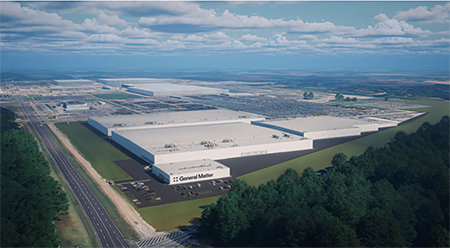
In September 2026, California-based General Matter, Inc. submitted its first license application to the U.S. Nuclear Regulatory Commission (NRC) to build and operate a proposed $1.5 billion commercial uranium enrichment facility in Paducah, Kentucky.
The proposal is part of a broader, federally backed effort to rebuild domestic enrichment capacity. In January, the U.S. Department of Energy announced that it awarded $2.7 billion in contracts to three companies to expand or create enrichment capacity over the next decade. General Matter and American Centrifuge Operating, LLC each received $900 million to develop domestic production of high-assay, low-enriched uranium (HALEU), and Orano Federal Services, LLC received $900 million to expand its low-enriched uranium (LEU) production capacity.
HALEU is uranium that has been enriched to between 5 and 20 percent uranium-235, while power-reactor grade LEU is uranium enriched between 3 and 5 percent U-235.
The United States continues to rely heavily on foreign sources for nuclear fuel, importing “nearly all the uranium concentrate” for its nuclear generators use, according to a 2025 U.S. Energy Information Administration report. A 2024 U.S. ban on Russian uranium imports has increased pressure to secure alternative supplies. Energy Department waivers continue to allow uranium imports from Russia, but they are only valid until January 2028.
U.S. President Donald Trump’s “American nuclear renaissance” program, spearheaded by several executive orders since May 2025, has encouraged the demand for and investment in domestically enriched uranium fuel.
During an NRC meeting in May 2026 on nuclear fuel facilities and storage, Chairman Ho Nieh emphasized the importance of expanding domestic production, saying that “the United States depends too heavily on foreign uranium and enrichment, and that has to change.”
General Matter plans to submit an amended NRC application in 2027 to produce HALEU. The company has begun site preparations for HALEU production despite having not yet obtained authorization, the company announced Sept. 28.
Interest in HALEU is driven partly by the development of advanced reactors that require fuel enriched beyond the LEU levels used in most conventional commercial reactors. Fuel with higher enrichment levels can enable smaller reactor cores and longer operating cycles, depending on the reactor design. The scale of future demand remains uncertain, however, as many of these reactors are in the planning and application phase.
The United States is expanding its uranium enrichment capacity for civil purposes, but there are also implications for nonproliferation. According to a 2024 Energy Department blog post, HALEU raises nuclear security and nonproliferation considerations beyond those associated with reactor-grade LEU.
Uranium enriched past 5 percent requires less additional enrichment to reach weapons-grade level. Some experts argue that uranium enriched to just 12 percent can be used in a nuclear explosive weapon, although doing so would present substantially greater technical challenges and require considerably more material than a weapon using weapons-grade uranium. The necessary regulatory frameworks governing the commercial production, transportation, and use of HALEU in the United States are still being developed, according to a June 2026 report by Carnegie Endowment for International Peace.
International trade in HALEU would require arrangements for fuel fabrication, transportation, and regulatory authorization, with applicable export controls and nonproliferation safeguards governing transfers to foreign recipients.
Meanwhile, recent satellite imagery analysis indicates that China is completing three large centrifuge enrichment plants with implications for its growing civilian nuclear power sector and its nuclear weapons program. The three plants—Emeishan Project 4, Lanzhou Project 6, and Hanzhong Project 6—could begin initial operation by the end of 2026, Hui Zhang of the Harvard Kennedy School’s Belfer Center for Science and International Affairs observed in satellite analyses for the International Panel on Fissile Materials. Construction of the facilities began in late 2024.
China has offered to place the Lanzhou and Hanzhong plants under International Atomic Energy Agency (IAEA) safeguards, but not the Emeishan City plant, according to Zhang. As a nuclear-weapon state, China is not legally obligated to place its nuclear facilities under safeguards. However, under a voluntary-offer agreement signed in 1988, China agreed to make some civilian facilities eligible for safeguards as a part of its stated commitment to promoting the peaceful use of nuclear energy. As of April 21, 2026, China has submitted 30 of its nuclear facilities for IAEA safeguards, according to a Chinese Foreign Ministry statement.
Zhang’s analysis estimates that the Lanzhou and Hanzhong plants could produce enough enriched uranium to meet projected civilian requirements through 2035, with a notable oversupply. The Emeishan plant could generate a substantially larger surplus.
China has substantial civilian demand for nuclear fuel. According to a report by the U.S. Energy Information Administration in May 2026, China has 60 operational reactors and 36 more are under construction. The IAEA reported in January 2025 that Chinese-designed reactors also account for a significant portion of global reactor construction. This expansion is expected to increase the country’s need for enriched uranium, although the scale of that demand will depend on the pace of reactor construction and the fuel requirements of different designs.
Zhang identifies the potential surplus from Emeishan as a possible source of highly enriched uranium (HEU), which is uranium enriched above 20 percent, a level usable in nuclear weapons. The Federation of American Scientists estimated that China’s stockpile has grown from around 290 warheads in 2019 to about 620 in 2026. In a December 2025 report to Congress, the Defense Department estimated China’s stockpile “remained in the low 600s through 2024” and projected it would grow to more than 1,000 warheads by 2030.
Although some assessments of China’s nuclear expansion have focused largely on plutonium production, Zhang argues that the uranium surplus from the Emeishan plant is the most likely source of any new HEU for weapons. He estimates that producing enough HEU to achieve 1,000 warheads by 2030 would require about 6 metric tons of additional HEU.