


“For half a century, ACA has been providing the world … with advocacy, analysis, and awareness on some of the most critical topics of international peace and security, including on how to achieve our common, shared goal of a world free of nuclear weapons.”
Trump’s Nuclear Test Rhetoric and Reality
December 2025
By Daryl G. Kimball
Nuclear testing is a dangerous vestige of the past that fueled the arms race and the development and deployment of new and more deadly types of nuclear weapons. From 1945 to 2017, the world’s nine nuclear-armed states conducted more than 2,000 nuclear detonations, including more than 500 in the atmosphere, which spread deadly radioactive fallout downwind and across the globe.
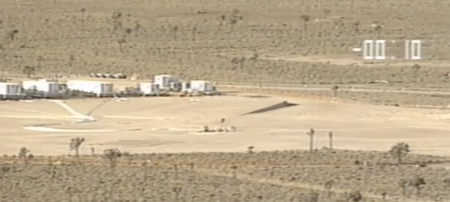
The United States has not conducted a nuclear explosive test since 1992, and today, along with 186 other countries, it is a signatory to the 1996 Comprehensive Test Ban Treaty (CTBT), which bans all nuclear test explosions. U.S. support for the CTBT was crucial to securing the indefinite extension of the nuclear Nonproliferation Treaty in 1995.
Nevertheless, on October 30, President Donald Trump suddenly announced on social media that “because of other countries nuclear testing programs,” he wants the “Department of War to start testing our nuclear weapons on an equal basis.”
Trump’s nuclear testing rhetoric is confusing, counterproductive, and dangerous. The United States has no technical, military, or political reason to resume nuclear explosive testing for the first time in 33 years. No other country is conducting nuclear explosive tests, which the nuclear-weapon states define as “nuclear explosions that produce a self-sustaining, supercritical chain reaction of any kind.”
U.S. nuclear explosive testing would violate the country’s legal obligation as a CTBT signatory and undermine the technical and political basis for the U.S. stockpile stewardship program. More significantly, a resumption of explosive nuclear testing would trigger a global chain reaction of nuclear testing that would raise tensions and blow apart the nuclear nonproliferation system at a time of growing nuclear danger.
Adding to concerns about Trump’s intentions, on October 31, the United States, for the first time ever, was the only “no” vote on an annual UN First Committee resolution in support of the global moratorium on nuclear testing and the CTBT.
In the United States, opposition to nuclear testing is strong and growing. In May 2025, the Nevada State Legislature unanimously approved a bipartisan resolution in support of maintaining the moratorium on U.S. nuclear testing. A 2024 national opinion survey by the University of Maryland found that 75 percent of Americans support the global nuclear test moratorium. Days after Trump’s threats, bills were introduced in Congress to block a resumption of U.S. nuclear testing.
The Department of Energy and the National Nuclear Security Administration have publicly stated, and privately briefed the White House, that nuclear explosive tests are not necessary to maintain the U.S. nuclear arsenal and would be counterproductive. Energy Secretary Christopher Wright tried to walk back Trump’s comments, telling Fox News Nov. 2 that Trump was referring to “non-critical tests” of nuclear weapons systems, a reference to subcritical nuclear experiments conducted underground at the Nevada National Security Site that do not produce a nuclear explosion. That interpretation, however, has not yet been confirmed by the White House.
China, Russia, and the United States continue to actively engage in weapons-related experiments at their former nuclear testing sites. They also maintain respective “test readiness” programs to enable them to resume full-scale nuclear explosive testing.
As a result, there remains a risk that some experimental activities at these former test sites might be misconstrued as nuclear test explosions or might be cited as a cynical excuse for another state to openly resume explosive testing. For example, in 2019, the United States alleged that Russia might be conducting extremely low-yield, supercritical nuclear tests, also known as “hydronuclear” tests, which are banned by the CTBT. Russia has denied the charge and raised its own concerns about U.S. activities.
When pressed at a May 29, 2019, event by Wall Street Journal reporter Michael Gordon whether he believes Russia is actually conducting hydronuclear tests, Gen. Robert Ashley, the Defense Intelligence Agency director at the time, replied: “I’d say we believe they have the capability to do it the way they are set up.”
Any CTBT violation by Russia or other treaty signatories would be a very serious matter. Yet very low-yield explosive tests by Russia or the United States would not provide significant technical or military value for advanced nuclear-armed states such as China, Russia, or the United States. Any perceived benefits of hydronuclear tests are far outweighed by the risks of giving other states the green light to resume full-scale multi-kiloton nuclear tests, which would help them improve warhead design capabilities.
If such accusations are the basis of a U.S. move to resume nuclear explosive tests, it would be far more effective to pursue, as Washington did in 2023, technical talks to develop specialized equipment and mutual confidence-building measures prior to CTBT entry into force in order to ensure that subcritical nuclear experiments comply with the treaty.
Nuclear weapons policy decisions should not be driven by one man’s emotional reactions or misinformation. The stakes are far too high. If Trump is allowed to follow through on his nuclear testing threat, it would severely damage global security and turn the United States into a nuclear rogue state.