


"[Arms Control Today] has become indispensable! I think it is the combination of the critical period we are in and the quality of the product. I found myself reading the May issue from cover to cover."
Military Microreactors and the Next Nuclear Governance Gap
September 2026
By Zohaib Altaf
In April 2026, the U.S. Air Force paired three nuclear energy reactor developers with Buckley Space Force Base in Colorado, Malmstrom Air Force Base in Montana, and Joint Base San Antonio in Texas. The projects remain subject to siting, environmental, licensing, and contracting decisions, but the service expects deployment by 2030 or earlier. A separate Air Force pilot project at Eielson Air Force Base in Alaska is also advancing under a commercial ownership model.1 Military microreactors have moved beyond studies and concept papers. They now have prospective sites, vendors, and target dates.
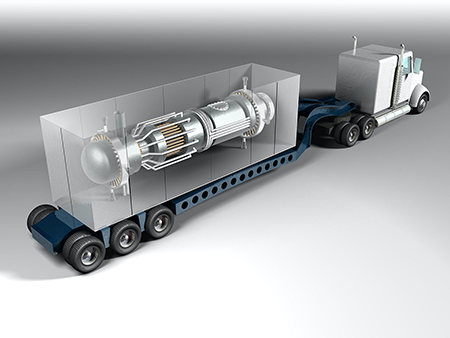
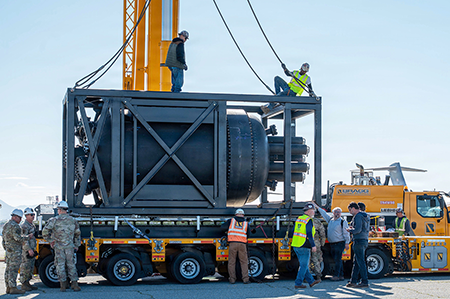
The broader policy is even more ambitious. A May 2025 executive order directed the Defense Department, acting through the Army, to establish a formal program for nuclear power both at permanent military installations and in support of forces and weapon platforms during military operations. Separately, it required the Army to begin operating an Army-regulated reactor at a domestic base by September 30, 2028. The Army’s Janus Program is intended to supply power to installations and mission-critical systems including communications networks, weapons systems, and command nodes. On August 26, the army announced the selection of five nuclear energy vendors and five initial installations under the Janus program, with up to $2.2 billion mile-stone based government funding over fiscal year 2027-2031. The prototypes will be contractor- owned and operated and the army expects more than 20 microreactors across military installations supported by the government and private investment.2 Project Pele, the Pentagon’s transportable microreactor prototype, is designed to generate at least 1.5-megawatts and received its full core of high-assay low-enriched uranium fuel in late 2025.3
None of these programs is a nuclear weapon project, and the reactors now being considered for U.S. bases are not forward-deployed battlefield systems. Their immediate purpose is energy resilience. Yet the distinction between an ordinary power plant and military capability begins to narrow when a reactor supplies mission-critical communications, sensors, command systems, or weapons infrastructure. If other states follow the U.S. lead, a familiar piece of military infrastructure may become a nuclear site as well.
The case for microreactors is credible. So is the need to govern them before deployment becomes routine. Existing safeguards, nuclear security rules, and the law of armed conflict address parts of the problem, but they were developed around civilian power, naval propulsion, and large nuclear facilities. They do not map neatly onto small, land-based reactors that may be commercially operated, use fuel enriched to higher levels than conventional power-reactor fuel, connect to military networks, and face attack in wartime. The answer is not a ban; it is a set of rules that preserves the operational value of these systems without allowing military status to become a blanket justification for secrecy.
From Energy Resilience to Military Dependence
The military demand is easy to understand. The Pentagon’s 2023 Operational Energy Strategy warns that the U.S. homeland can no longer be treated as a sanctuary and that logistics will be contested. Fuel depots, ports, pipelines, power grids, and convoys are vulnerable to long-range strikes, cyber operations, and supply disruptions.4 At the same time, radar, data processing, air defense, electronic warfare, and prospective directed-energy systems are increasing the demand for reliable electricity.
Microreactors offer steady power without daily fuel deliveries. Many designs are factory fabricated, can operate independently of a large grid, and are intended to run for years before refueling. Project Pele, for example, is designed to fit into four standard shipping containers and generate at least 1.5 megawatts of electricity for up to three years. Its demonstration at Idaho National Laboratory is meant to test whether a reactor can be assembled, operated, shut down, and moved safely.5 Fixed reactors under the Air Force’s installation program follow a different model: Commercial firms may build, own, operate, and decommission them while selling power to the military base.
These differences are not administrative detail. A commercially owned reactor, licensed by a civilian regulator and supplying a domestic military base through a microgrid, presents one governance problem. An Army-regulated reactor assigned to operational energy and integrated with military systems presents another. A transportable reactor sent abroad would mean additional complications, including host-state consent, nuclear transport, emergency response, and wartime protection. Public policy still tends to group all three of these reactors under the single label of “military microreactor.”
The Safeguards Question, Properly Framed
The safeguards issue needs precision. The five nuclear-weapon states recognized by the nuclear Nonproliferation Treaty (NPT), including the United States, have voluntary-offer agreements with the International Atomic Energy Agency (IAEA). Non-nuclear-weapon states-parties to the treaty generally have comprehensive agreements requiring IAEA safeguards on nuclear materials used in peaceful nuclear activities.6 Paragraph 14 of the IAEA’s model comprehensive safeguards agreement allows a non-nuclear weapon state to seek temporary non-application of safeguards to nuclear material used in a non-explosive military activity. Because the United States operates under a voluntary-offer agreement, its current reactor projects do not trigger this procedure. The potential verification gap would arise if a non-nuclear-weapon state developed or imported a military reactor and sought to remove its fuel from safeguards under paragraph 14.
Paragraph 14 of INFCIRC/153, the standard blueprint for an IAEA safeguards agreement, provides a procedure for such a case. A state is required to inform the IAEA of the activity, affirm that the material will not be used to produce a nuclear weapon or other nuclear explosive device, and conclude an arrangement defining the period or circumstances in which safeguards will not apply. The arrangement requires approval by the IAEA Board of Governors, and safeguards must resume when the material returns to peaceful use.7
Military use does not automatically require non-application of safeguards. A state may leave the material under safeguards. For a fixed land-based reactor with sealed fuel and a known location, continued safeguards may be far more practical than for a submarine whose movements, design, and operating schedule are classified. This should be the starting presumption. A state seeking a paragraph-14 arrangement for a land-based reactor should have to identify the specific operational information that ordinary safeguards would expose and why managed access or safeguards by design cannot protect it.
The IAEA’s negotiations with Australia over naval nuclear propulsion, under a deal in which the United Kingdom and the United States plan to supply Australia with nuclear-powered submarines, provide a useful, although incomplete, experience. As of November 2025, the agency and Australia were still discussing advance notification, reporting, verification before material entered a paragraph-14 arrangement, voluntary transparency during the excluded period, and the point at which safeguards would resume.8 Land-based reactors should not simply inherit a naval exception. Their fixed location and different operating models may permit stronger verification.
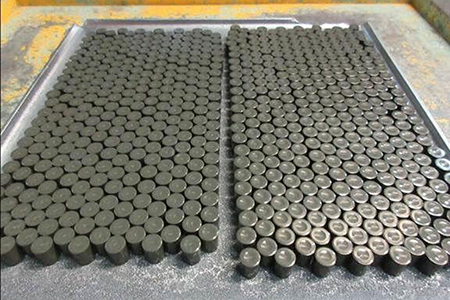
Fuel makes the question more consequential. High-assay low-enriched uranium (HALEU) contains more than 5 percent but less than 20 percent uranium-235. It is not highly enriched or weapons-grade uranium, but less additional enrichment work is required to reach weapons-grade levels than from the fuel used in most commercial reactors. Many advanced reactor designs use HALEU to obtain smaller cores and longer operating cycles; Project Pele’s environmental impact statement analyzed a core containing up to 400 kilograms of HALEU in tri-structural isotropic (TRISO) fuel.9 Wider use would create larger inventories moving through enrichment, fabrication, transport, military, and contractor-controlled facilities.
Safeguards are only part of the gap. The Convention on Nuclear Safety applies to land-based civil nuclear power plants. The amended Convention on the Physical Protection of Nuclear Material covers material and facilities used for peaceful purposes and expressly excludes nuclear material used or retained for military purposes and facilities containing such material.10 National regulation and IAEA guidance can still provide rigorous protection, but international assurance will depend heavily on how each state classifies the reactor. A system should not lose transparency, peer review, or security discipline merely because its electricity serves a defense mission.
A Nuclear Site in the Targeting Process
Wartime status is the second major problem. Article 56 of Additional Protocol I gives special protection to dams, dykes, and nuclear electrical generating stations when an attack may release dangerous forces and cause severe civilian losses. For a nuclear station, the protection may cease only if it supplies electricity in regular, significant, and direct support of military operations and an attack is the only feasible way to end that support. Even then, the protocol requires all practical precautions to avoid releasing dangerous forces.11
The provision leaves difficult questions for microreactors. Its text contains no generating-capacity threshold, for instance, but a small, sealed reactor may not resemble the large station the negotiators had in mind. A fixed reactor serving an entire base could fit the ordinary meaning more readily than a transportable unit attached to a radar or command post. Mixed civilian and military loads would further complicate the assessment.
Article 56 also is not the whole law. It binds states-parties to Additional Protocol I; the United States is not a state-party and does not accept the article’s special protection as customary international law. The U.S. position is that such installations may be attacked if they are military objectives, subject to distinction, proportionality, and precautions. The risk that an attack could release radiation or radioactive material and cause severe civilian harm would weigh heavily in those assessments.12 Any international policy must acknowledge this legal divergence rather than present Article 56 as a universal prohibition.
Reactor design can reduce the expected consequences of attack. The use of TRISO fuel, an actual passive shutdown or the capacity for a passive shutdown, underground cabling, and physical separation may all limit risk, but they do not settle target status. An attacker might strike the substation, control link, cooling equipment, or supported military system instead of the reactor vessel. Damage could still cause radioactive release, interrupt monitoring, force evacuation, or create uncertainty about the reactor’s condition. Even when civilian harm is limited, reports of a strike on “nuclear infrastructure” may generate political pressure and escalation before reliable technical information is available.
Rules Before Reactors Become Routine
Four measures would address the most immediate risks without blocking microreactor deployment. First, states should publish a basic classification for every military reactor program: fixed or transportable; domestic installation or operational use; civilian-licensed or military-regulated; government- or contractor-operated; fuel type and enrichment band; and whether the reactor is intended to supply civilian loads, general base power, or specified mission systems. Exact vulnerabilities need not be public, but the regulatory authority and emergency responsibilities should be.
Second, the IAEA Board of Governors should commission a technical study of land-based reactors used in non-explosive military activities. The study should establish a presumption of continued safeguards for fixed reactors in non-nuclear-weapon states. Where paragraph 14 is genuinely necessary, arrangements should be material-specific and define entry and exit points, duration, reporting, reapplication of safeguards, and verification measures that protect classified information while maintaining confidence against diversion. The same work should develop safeguards-by-design guidance for sealed cores, remote monitoring, and long-life fuel.
Third, supplier states should make HALEU transfers for military reactors conditional on cradle-to-grave material accountancy, appropriate physical protection, prior consent for retransfers or changes in use, and credible plans for spent fuel return or disposition. Confidential reporting to the IAEA can protect commercially sensitive data. “National security” is not an adequate accounting category.
Fourth, siting and system design should anticipate war, not only accidents. When feasible, reactors should be physically separated from high-value command and weapons systems, and microgrids should permit military loads to be isolated without attacking the reactor. Reactor control and safety systems should be segregated from operational command networks, with independent shutdown and authenticated radiological reporting. Additional Protocol I already requires its parties to avoid locating military objectives near protected works where feasible and to take precautions for civilians under their control.13
Crisis communication completes the package. States operating reactors near potential conflict zones should establish channels for reporting shutdowns, attacks, cyber incidents, and radiation readings to the IAEA, host authorities, and adversaries where appropriate. India and Pakistan’s 1988 agreement prohibiting attacks on each other’s nuclear installations shows that rivals can exchange protected site information through confidential channels. They carried out their annual exchange again January 1, 2026.14 The agreement cannot simply be copied for every region, and states will hesitate to disclose military locations. It nevertheless offers a precedent for bounded notification without public exposure.
An Early Choice
Military microreactors could improve resilience, reduce dependence on vulnerable fuel deliveries, and support remote operations. Their benefits should not be dismissed because nuclear technology is involved. Nor should their small size obscure the institutional change they introduce. A base reactor can sit simultaneously inside an energy system, a nuclear fuel cycle, a commercial contract, and a military target complex.
Governments still have time to decide how those roles will be separated and supervised. The United States can set the first useful precedent by explaining which of its programs will be civilian-licensed, which will be Army-regulated, how fuel will be accounted for, and how reactor sites will be protected during conflict. The IAEA can begin the harder work before a non-nuclear-weapon state requests a paragraph-14 arrangement for a land-based military reactor.
Regulation will become more difficult once reactors are installed, supply contracts are locked in, and militaries depend on them for critical missions. The responsible course is neither prohibition nor silence. It is to establish safeguards, disclosure requirements, design standards, and crisis-management protocols while the technology is still taking shape.
ENDNOTES
1. U.S. Department of the Air Force, “DAF announces next steps in Advanced Nuclear Power for Installations initiative,” April 22, 2026; U.S. Space Force, “Buckley SFB, Malmstrom AFB selected for Advanced Nuclear Power for Installations program,” April 8, 2026; Air Force Civil Engineer Center, “DAF ignites energy innovation with microreactor pilot at Eielson AFB,” September 11, 2025.
2. U.S. Army Communication and Outreach Office, “Army Selects Vendors, Sites for Nuclear Microreactors,” August 27, 2026.
3. U.S. President Donald Trump, Executive Order 14299: “Deploying Advanced Nuclear Reactor Technologies for National Security,” May 23, 2025, Sec. 3; U.S. Army, “The Janus Program: Fueling the Army’s future with resilient, on-demand nuclear energy,” October 14, 2025; Idaho National Laboratory, “INL advances Department of War’s Project Pele demonstration microreactor with first TRISO fuel delivery,” December 2, 2025.
4. U.S. Department of Defense, “Department of Defense Operational Energy Strategy,” May 2023, pp. 1-3.
5. U.S. Department of Defense, “DoD Breaks Ground on Project Pele: A Mobile Nuclear Reactor for Energy Resiliency,” September 24, 2024; BWX Technologies, “Project Pele Begins Taking Shape With Start of Core Manufacturing,” July 24, 2025.
6. International Atomic Energy Agency, “Safeguards agreements,” accessed August 22, 2026.
7. Laura Rockwood, “The Legal Framework for IAEA Safeguards,” IAEA, 2013, p. 12; IAEA, “IAEA Safeguards Glossary,” 2022, p. 22.
8. IAEA Board of Governors, “Naval nuclear propulsion: Australia,” report by the director-general, GOV/INF/2025/12, November 12, 2025, pp. 3-5.
9. U.S. Department of Energy, “What Is High-Assay Low-Enriched Uranium (HALEU)?” December 3, 2024; National Academies of Sciences, Engineering, and Medicine, “Merits and Viability of Different Nuclear Fuel Cycles and Technology Options and the Waste Aspects of Advanced Nuclear Reactors,” 2023, pp. 181-182; U.S. Department of Energy, “Final Environmental Impact Statement for Construction and Demonstration of a Prototype Mobile Microreactor: Environmental Impact Statement,” February 2022, pp. S-9 to S-10.
10. IAEA, “Convention on Nuclear Safety,” July 5, 1994, p. 2; IAEA, “Amendment to the Convention on the Physical Protection of Nuclear Material,” p. 3, July 8, 2005.
11. International Committee of the Red Cross, “Protocol Additional to the Geneva Conventions of August 12, 1949, and Relating to the Protection of Victims of International Armed Conflicts (Protocol I),” June 8, 1977.
12. U.S. Department of Defense, “Law of War Manual,” July 2023, pp. 278-279; Office of the General Counsel, U.S. Department of Defense, “Official Treaty Documents Related to the Law of War,” accessed August 22, 2026.
13. International Committee of the Red Cross, Additional Protocol I, articles 56-58; Vasiliki Tafili “New CRP: Enhancing Computer Security of Small Modular Reactors and Microreactors,” IAEA Department of Nuclear Safety and Security, March 4, 2024.
14. Indian Ministry of External Affairs, “Agreement on the Prohibition of Attack Against Nuclear Installations and Facilities Between the Republic of India and the Islamic Republic of Pakistan, December 31, 1988; Indian Ministry of External Affairs, “India and Pakistan exchange list of Nuclear Installations,” January 1, 2026.