


"I find hope in the work of long-established groups such as the Arms Control Association...[and] I find hope in younger anti-nuclear activists and the movement around the world to formally ban the bomb."
Is There a Way to Rebuild IAEA Safeguards in Iran?
November 2025
By Tariq Rauf
The June 22-23 Israeli and U.S. strikes on Iranian nuclear facilities have dealt a major blow to Iran’s nuclear program, as well as to the international transparency and verification regime. Satellite imagery reveals the destruction of Iranian facilities that process natural uranium into chemical and physical forms suitable for enrichment, production of uranium metal, and fuel elements. Images also show damage to Iran’s three main enrichment facilities, as well as its centrifuge manufacturing plant.
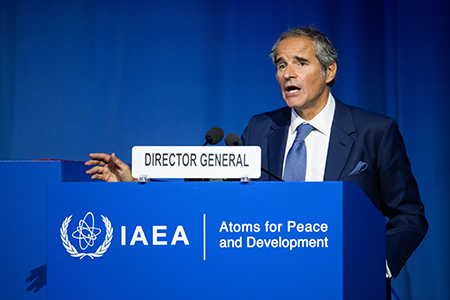
International Atomic Energy Agency Director-General Rafael Mariano Grossi reported to the agency’s Board of Governors Sept. 3 that prior to the attacks, the IAEA had verified 125 full-sized operational cascades installed in Iran’s three enrichment facilities, containing a total of more than 20,000 IR-1, IR-2m, IR-4 and IR-6 type centrifuges.1 He noted that the world was “…in the midst of a serious conflict, involving three IAEA member states, during which Iran’s nuclear sites are coming under attack,” and warned that “the weight of this conflict risks collapsing the global nuclear non-proliferation regime.”2
Safeguards and Transparency
For 23 years, since Iran first declared its uranium enrichment#endnote07 activities, the IAEA had routine access to structural and functional design information, centrifuge cascades, and nuclear material to verify Iran’s declarations. The IAEA carried out hundreds of inspections each year involving the equivalent of more than 1,000 person-days annually of physical and data assessment. It provided detailed reports on the status of Iran’s declared nuclear program and its enrichment activities to the Board of Governors and the UN Security Council.
The IAEA verification regime became even more stringent when the now-defunct 2015 Joint Comprehensive Plan of Action, between Iran and China, France, Germany, Russia, the United Kingdom, the United States, and the European Union, was in force.
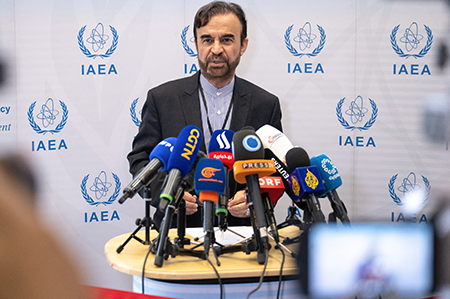
Following the June military strikes, the transparency into Iran’s nuclear program has closed. The Iranian parliament enacted, and President Masoud Pezeshkian implemented, a law allowing the country’s Supreme National Security Council to withhold inspections and cooperation with the IAEA until certain security conditions are met.3
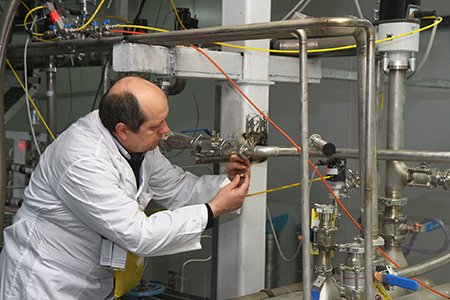
IAEA safeguards inspectors, who were in Iran when the strikes began and were moved to a UN compound in Tehran, were withdrawn after the strikes. Grossi informed the board that “the June attacks on nuclear installations in Iran led to an inevitable suspension of the inspection work in Iran.”4
Thus, since the start of the military attacks in mid-June, the IAEA has accessed the Bushehr Nuclear Power Plant in August and September. The purpose was to verify refueling operations pursuant to Iran’s safeguards agreement, as insisted by Russia to fulfill the requirements of its nuclear cooperation agreement with Iran.
Iran has asserted that its safeguards agreement under the nuclear Nonproliferation Treaty “lacks provisions on implementation of safeguards measures under war conditions. However, on a goodwill basis, Iran has entered into negotiation with the agency to find ways to continue its safeguards commitments under [the] current situation.”5 In this regard, Grossi has told the Iranians that “establishing the facts on the ground is a prerequisite for any agreement, and this can only be done through IAEA inspections.”6
Grossi has stated that “Iran’s NPT Comprehensive Safeguards Agreement … remains in force and is the sole legally binding treaty governing the rights and obligations of the agency and Iran with respect to safeguards implementation in Iran.… Notwithstanding, [he recognizes] the current circumstances and expressed the agency’s readiness to consider Iran’s concerns and suggestions insofar as these would be compatible” with the safeguards agreement.7
The Situation Before the Strikes
Shortly before the military strikes, the IAEA released a report on safeguards implementation in Iran, which confirmed that all of Iran’s enrichment activities remained under safeguards. It stated further that between 2019 and 2020, safeguards inspectors accessed three sites engaged in nuclear activities and took environmental samples. The samples indicated that nuclear material and contaminated equipment that once were involved in Iran’s historical nuclear activities with possible military dimensions, were present at the sites after those activities were abandoned in the early 2000s.8
The inspectors assessed that the nuclear material and equipment may have been moved to an unknown location, in late 2003 and early 2004. This included small but heavily contaminated, and possibly full, uranium hexafluoride cylinders. Small cylinders are typically used to store highly enriched uranium, due to the criticality risks that arise from accumulating too much fissile material in any one container.
The inspectors also determined that Iran’s responses to the IAEA regarding the provenance of undeclared nuclear material, and the current location of this material and equipment, were not technically credible.
Since February 2021, Iran has not fully implemented its safeguards agreement, which requires it to declare to the IAEA design information about any new construction or modifications to an existing nuclear facility as soon as the project is authorized. Under an older version of the design requirement, Iran declared the existence of a new enrichment facility 90 days before the introduction of nuclear material.9
In light of such unresolved safeguards concerns, the IAEA concluded that “Unless and until Iran assists the agency in resolving the outstanding issues, the agency will not be in a position to provide assurance that Iran’s nuclear programme is exclusively peaceful.”10
Although the IAEA did not find credible indications of an ongoing, undeclared structured nuclear weapons program in Iran, it noted with concern that former high-level Iranian officials have repeatedly stated that Iran has all the capabilities needed to produce nuclear weapons if it decided to pursue them.

Following consideration of the report, the IAEA Board adopted a censure resolution 19-3-11, finding that “Iran’s many failures to uphold its obligations since 2019 to provide the agency with full and timely cooperation regarding undeclared nuclear material and activities at multiple undeclared locations in Iran … constitutes non-compliance with its obligations under its safeguards agreement.”11
In November 2024, Iran retaliated against the Western sponsors of an earlier noncompliance resolution earlier that month by announcing a quadrupling of its declared monthly production of 60 percent U-235 highly enriched uranium.12
The Challenges to Reestablishing Safeguards
As the military strikes began, Iran informed the IAEA that it had “already adopted special measures to protect its nuclear equipment and materials.” Iran stated that due to national security considerations it would explain these “special measures” in due time.
Nevertheless, Iran remains obliged by its safeguards agreement to make “special reports without delay” on “any unusual incident or circumstances that might have resulted in the loss of nuclear material.”13
Grossi has stated that, “Resuming this indispensable [inspection] work would not be an automatic, or a simple bureaucratic process, after what happened.”14 Despite the implementation of national legislation mandating the suspension of cooperation with the IAEA, Iran has argued that it remains committed to its safeguards agreement. It also has maintained that the new law merely passes control to the Supreme National Security Council, which would consider requests for cooperation with the IAEA on a case-by-case basis.15
Iran’s conditions for the restoration of full cooperation with the IAEA were reported to include guarantees that Iran’s facilities will not be attacked again, that it will continue enriching uranium, and that the UN Security Council sanctions suspended by the 2015 JCPOA will not be “snapped-back” by parties to that agreement.16
On the other hand, any credible assurances in this regard by JCPOA states could only be made once the IAEA is in a position to conclude that all Iranian nuclear materials and activities are accounted for and are used for peaceful purpose. Rebuilding IAEA nuclear safeguards activities in Iran would require fulfilment of Iran’s NPT and safeguards requirements and the provision of assurances that all Iranian nuclear activities are for peaceful uses.
Technical Barriers
Regarding nuclear material, the IAEA’s highest priority would be to determine the provenance and location of the 184.1 kilograms of uranium enriched up to 20 percent uranium-235 and 440.9 kilograms of uranium enriched up to 60 percent U-235, in addition to stocks of natural uranium and 2 percent and 5 percent of enriched uranium.
Highly enriched uranium (HEU) is typically stored in small cylinders, roughly 1 meter long and 12 centimeters in diameter to avoid setting off a criticality incident. Iran’s approximately 440 kilograms of 60 percent U-235 can fit in 16 or more cylinders. For safeguards purposes, the IAEA categorizes HEU as “direct use material,” suitable for nuclear weapons purposes, subject to high frequency access and verification.17
Even if Iran were to reinstate IAEA access and inspection of its sensitive nuclear facilities, there would remain significant logistical and technical hurdles to be overcome. Additional hazards include unexploded ordnance and remnants, and chemical and radiological hazards of dispersed uranium hexafluoride and compounds.18
This process could take time and careful phasing. Iran already might be struggling to recover and account for nuclear material that was dispersed, contaminated, or aerosolized by the strikes. It would be challenging to sift through the debris of concrete and steel, nuclear materials, equipment, and records to verify Iran’s nuclear material accountancy reports. In these chaotic circumstances, concerns might persist regarding the correctness and completeness of Iran’s declarations, including any indications of diversion of nuclear material. However, the IAEA has shown over time that it can deal with challenging situations on the ground and hold Iran to account.
In accordance with its usual practice, the IAEA has been monitoring the remnants of Iran’s destroyed and damaged nuclear facilities to detect any signs of recovery and movements of nuclear material and equipment, using commercial satellite imagery and any intelligence information provided by member states.
However, the IAEA and Iran signed an arrangement on “Practical Modalities for the Implementation of Safeguards” Sept. 9 in Cairo.19 Pursuant to its comprehensive safeguards agreement and associated subsidiary arrangements, Iran agreed to provide declarations on the status of the bombed nuclear facilities and the nuclear material contained therein, although no timeline is specified.
The best way forward would be for IAEA nuclear safeguards, security, and safety teams to assist the Atomic Energy Organization of Iran in recovering, cataloging, and reconstructing nuclear material balance areas through identifying and segregating the different categories of nuclear material by composition and enrichment levels.
For reference, the IAEA has previous records and data from late May and early June on the total quantity and composition of declared nuclear material in Iran, including an accurate count of tagged uranium storage cylinders categorized by quantity and enrichment level.
Reestablishing Safeguards
The IAEA and Iran agree that Iran is committed to the NPT and its IAEA safeguards regime. Iran has allowed IAEA inspections in August and September at the Bushehr Nuclear Power Plant and the Tehran Research Reactor, and there are no indications that these would be curtailed.
The Cairo arrangement on safeguards provides an opening for further progress. However, the restoration of all suspended UN sanctions against Iran, under the “snapback” mechanism in the JCPOA triggered Sept. 28 by France, Germany, and the United Kingdom—known as the E3—has led Iran to suspend cooperation with the IAEA, other than on the Bushehr nuclear power plant and the Tehran research reactor.20
According to news reports, Iran’s recent outreach on the margins of the UN General Assembly in late September failed to attract the support of the E3 and the United States.21 On October 18, Iran informed the United Nations that Security Council Resolution 2231, which approved the JCPOA, had expired as of that date and all nuclear-related sanctions are terminated.22
The next IAEA report on safeguards implementation in Iran is due in early November in time for the Board of Governors meeting. The IAEA will provide its updated assessment of Iran’s nuclear program based on satellite imagery and open-source and “third-party” information, including any information or declarations provided by Iran.
If the conditions can be established for Iran to rebuild its essential relationship with the IAEA and restore verification activities in a phased manner, it might be possible to engineer a new framework agreement on the future scope of Iran’s nuclear program and the IAEA’s role in verifying its exclusively peaceful nature.
In an ideal world, this role would be built on a foundation of Iran’s full proactive implementation of its safeguards agreement, strengthened by Iran’s entry into force of the Additional Protocol to that agreement. Such transparency would be supplemented by enhanced reporting and verification measures until the time that Iran can return to normal routine safeguards.
These steps could allow the IAEA to conclude, for the first time since 2002, that Iran’s safeguards declarations are both correct and complete, and that all of Iran’s nuclear activities are exclusively peaceful. Achieving such a solution may seem a long way off, but if the international community wants assurances that Iran’s nuclear activities are peaceful in accordance with the NPT, then IAEA member states must overcome their deep political differences and unite to vigorously support the IAEA in rebuilding transparency and verification in Iran and terminating sanctions.
ENDNOTES
1. International Atomic Energy Agency, “Verification and monitoring in the Islamic Republic of Iran in light of United Nations Security Council resolution 2231 (2015),” GOV/2025/50, September 3, 2025.
2. IAEA Director-General Rafael Mariano Grossi, Introductory Statement to the Board of Governors, June 23, 2025.
3. Iran Insight, “Iran parliament presses government to apply law limiting IAEA cooperation,” August 26, 2025; Islamic Republic News Agency, “Iran parliament presses government to apply law limiting IAEA cooperation,” October 15, 2025.
4. IAEA, “Statement by IAEA Director General on Iran,” September 10, 2025.
5. IAEA, Communication from the Permanent Mission of the Islamic Republic of Iran to the Agency, INFCIRC/1315, September 9, 2025.
6. IAEA, “Statement by IAEA Director General on Iran,” June 23, 2025.
7. IAEA, “Statement by IAEA Director General on Iran,” September 8, 2025.
8. IAEA, “NPT Safeguards Agreement with the Islamic Republic of Iran,” GOV/2025/25, May 31, 2025.
9. IAEA, Implementation of the NPT Safeguards Agreement and relevant provisions of Security Council resolutions 1737 (2006), 1747 (2007), 1803 (2008) and 1835 (2008) in the Islamic Republic of Iran, GOV/2010/10, February 18, 2010.
10. IAEA, “NPT Safeguards Agreement with the Islamic Republic of Iran,” GOV/2025/25, May 31, 2025.
11. IAEA, “NPT Safeguards Agreement with the Islamic Republic of Iran,” Resolution adopted on 12 June 2025 during the 1769th session.
12. IAEA, “NPT Safeguards Agreement with the Islamic Republic of Iran,” GOV/2025/25, May 31, 2025.
13. IAEA, INFCIRC/214, para. 68.
14. IAEA, “Statement by IAEA Director General on Iran,” September 10, 2025.
15. Islamic Republic News Agency, “Supreme National Security Council to manage future cooperation with I.A.E.A.: Araqhchi,” July 12, 2025.
16. Iran Insight, “Iran moves to suspend cooperation with UN nuclear watchdog,” June 25, 2025.
17. IAEA, IAEA Safeguards Glossary: 2022 edition.
18. IAEA, Update on Developments in Iran, June 19, 2025; IAEA Director General Grossi’s Statement to UNSC on Situation in Iran, 20 June 2025.
19. IAEA, “Statement by IAEA Director General on Iran,” September 10, 2025.
20. IAEA, “NPT Safeguards Agreement with the Islamic Republic of Iran,” GOV/2025/10, February 26, 2025.
21. Jennifer Peltz and Michael Weissenstein, “Iran’s president tells the UN that his country wants to play a ‘constructive role’ in world affairs,” Associated Press, September 25, 2025; Seth Frantzman, “Iran seeks global isolation of Israel amid UN diplomacy and support for Hezbollah,” The Jerusalem Post, September 25, 2024.
22. Iranian Ministry of Foreign Affairs,
“Press Statement on the Expiration of United Nations Security Council Resolution 2231,” October 18, 2025.